
Production stress is the hidden force undermining nearly every American fashion startup, as over 80 percent of new brands cite manufacturing headaches as their top struggle. With every creative idea comes a maze of supply chain hurdles and factory miscommunications, often turning dreams into costly setbacks. Understanding apparel production stress unlocks practical strategies for avoiding budget blowouts and missed launches, giving American designers the confidence to bring their visions to life.
Table of Contents
- Defining Apparel Production Stress In Fashion
- Major Causes Of Production Stress For Brands
- How Stress Impacts Timelines And Cost
- Common Pitfalls In Factory Communication
- Proven Solutions To Reduce Production Stress
Key Takeaways
| Point | Details |
|---|---|
| Production Stress | Apparel production stress encompasses psychological and operational challenges faced during manufacturing, affecting timelines and costs. |
| Communication is Critical | Clear communication protocols and comprehensive technical packages are essential to minimize misunderstandings and production errors. |
| Technological Integration | Utilizing advanced software for real-time tracking and predictive analytics can significantly enhance operational efficiency. |
| Mitigation Strategies | Implementing zero-waste methodologies and regular assessments can help brands identify and address potential stress triggers proactively. |
Defining Apparel Production Stress in Fashion
Apparel production stress represents the complex psychological and operational challenges fashion brands encounter during the manufacturing process. It is a multifaceted phenomenon that emerges when design concepts transition from creative vision to physical product, triggering a series of potential complications that can derail entire production cycles.
At its core, production stress manifests through several interconnected dimensions. Brands frequently struggle with communication breakdowns between designers, pattern makers, and manufacturing teams. These disconnects create cascading challenges: missed timelines, incorrect specifications, unexpected cost overruns, and quality control failures. Apparel production processes demand precision and synchronized effort across multiple specialized disciplines, making smooth execution remarkably difficult.
The psychological toll of production stress cannot be understated. Brand founders often experience overwhelming anxiety as they navigate unfamiliar manufacturing landscapes. They must simultaneously manage technical requirements, financial constraints, creative integrity, and vendor relationships. Each production stage introduces potential points of failure: sample development might require multiple iterations, fabric sourcing could encounter unexpected delays, and manufacturing tolerances can create significant variations in final product quality.
Production stress transforms what should be an exciting creative journey into a potential nightmare of uncertainty. Small miscommunications can escalate quickly, consuming valuable time and financial resources. Successful brands learn to anticipate these challenges, implementing robust communication protocols and selecting production partners who prioritize transparency and accountability.
Pro Tip: Document Every Single Specification: Create comprehensive, crystal-clear technical packages with precise measurements, material requirements, and visual references to minimize misunderstandings and reduce production stress before manufacturing begins.
Major Causes of Production Stress for Brands
Apparel production stress stems from a complex web of interconnected challenges that systematically undermine brand efficiency and creative potential. Production pressure creates significant workplace challenges that extend far beyond simple manufacturing complications, transforming what should be a streamlined process into a potential minefield of operational risks.
The primary causes of production stress can be categorized into several critical dimensions. Communication breakdowns represent the first major stress point, where misaligned expectations between designers, manufacturers, and brand leadership create cascading operational failures. Technical specifications might be misinterpreted, leading to costly redesigns and timeline disruptions. Compounding these challenges, brands frequently encounter issues with vendor reliability, fabric sourcing inconsistencies, and unpredictable manufacturing tolerances.
Financial constraints dramatically amplify production stress. Brands must navigate tight budgetary requirements while maintaining high-quality standards, a balancing act that introduces significant psychological pressure. Workplace stress studies highlight how job demands and lack of control create substantial emotional and operational challenges. Small brands particularly struggle with limited resources, where each production misstep can potentially threaten the entire business model. Manufacturing inefficiencies like unexpected material price fluctuations, shipping delays, and quality control issues can quickly erode profit margins.

Technical complexity represents another substantial stress generator. Modern apparel production requires intricate coordination across multiple specialized disciplines: design, pattern making, sourcing, manufacturing, and quality assurance. Each stage introduces potential failure points that can derail the entire production process. Brands must simultaneously manage creative vision, technical specifications, financial constraints, and vendor relationships—a multidimensional challenge that demands exceptional organizational skills and emotional resilience.
Here’s a summary of the main sources of production stress in apparel manufacturing and their business impacts:
| Source of Stress | Typical Challenge | Business Impact |
|---|---|---|
| Communication breakdowns | Misaligned expectations | Delays and extra costs |
| Technical complexity | Coordination across disciplines | Increased error rates |
| Financial constraints | Limited budgets | Margin erosion, lost sales |
| Vendor reliability issues | Inconsistent performance | Production halts, rework |
| Manufacturing tolerances | Inconsistent product quality | Returns, brand reputation hit |
Pro Tip: Create Stress Mitigation Workflow: Develop a comprehensive production checklist with clear escalation protocols, explicit communication channels, and predefined contingency plans to systematically reduce uncertainty and proactively manage potential production complications.
How Stress Impacts Timelines and Cost
Production stress fundamentally disrupts the delicate ecosystem of apparel manufacturing, creating a domino effect that systematically erodes timelines and financial predictability. Robust order scheduling research reveals how pre-production uncertainties can transform what should be a structured process into a chaotic and expensive endeavor.
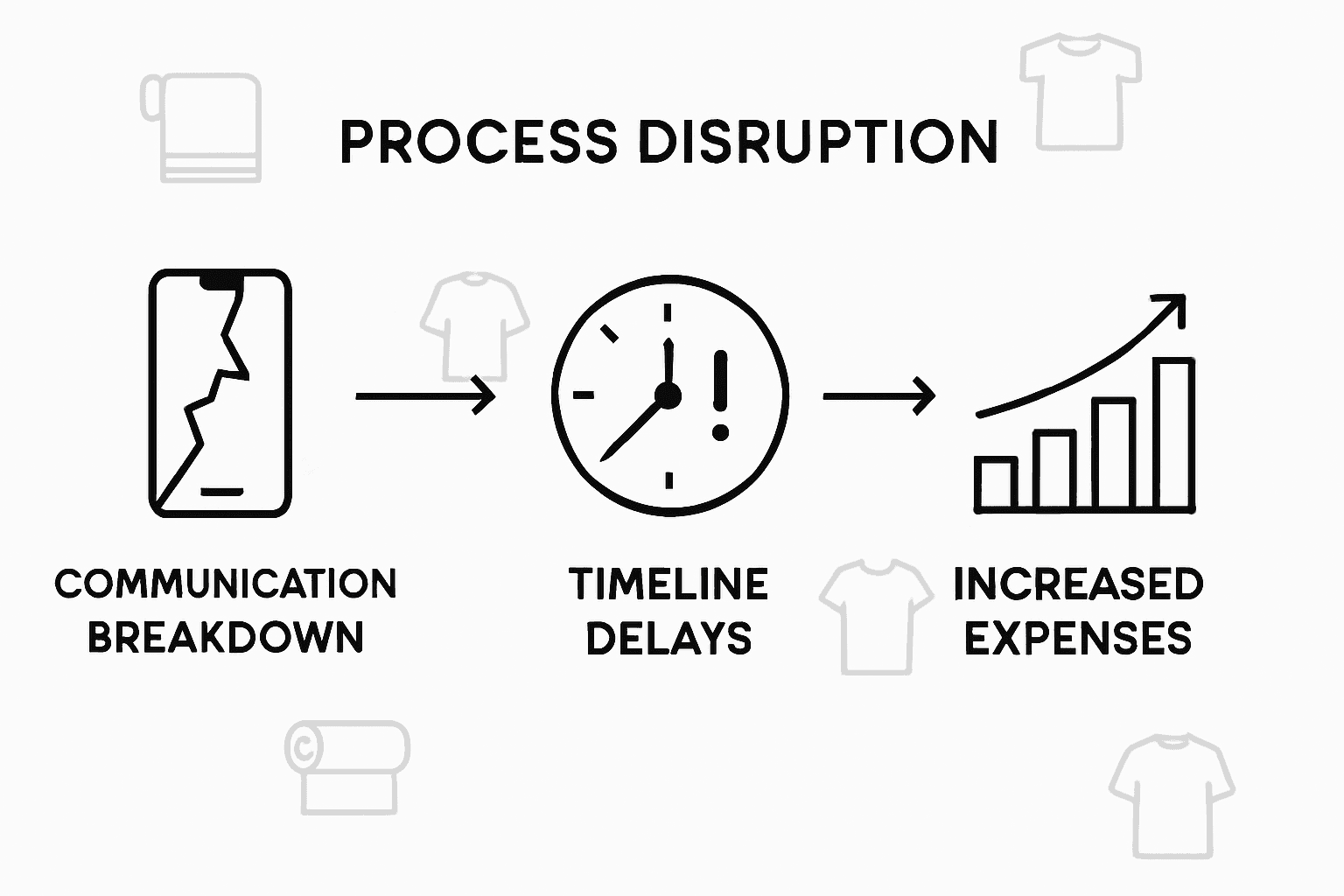
Timeline disruptions represent the most immediate and visible consequence of production stress. When communication breaks down or technical specifications become ambiguous, brands experience cascading delays that exponentially compound project costs. A single miscommunication can trigger a chain reaction: pattern revisions require additional design time, fabric reordering introduces shipping delays, and sample iterations consume weeks of potential production momentum. These seemingly minor interruptions can push product launches back by months, destroying carefully planned marketing strategies and seasonal market opportunities.
Fashion product performance forecasting studies demonstrate that stress-induced mismanagement directly correlates with significant financial losses. Overproduction, rushed manufacturing, and reactive decision-making can inflate production costs by 30-50% above initial budgets. Small brands are particularly vulnerable, where each production misstep can potentially consume critical financial reserves. Unexpected expenses emerge through rush shipping, last-minute design modifications, excess inventory, and increased quality control requirements—transforming what should be a predictable process into a financial minefield.
The psychological impact of these timeline and cost disruptions cannot be understated. Brand founders and design teams experience mounting pressure as delays accumulate, creating a negative feedback loop of anxiety and reactive management. Each postponed milestone increases stress levels, further reducing the team's capacity for strategic problem-solving. This emotional strain makes rational decision-making more difficult, potentially triggering additional mistakes that further extend timelines and increase costs.
Pro Tip: Build Buffer Zones: Intentionally create 15-20% additional time and budget margin in your production planning to absorb unexpected complications, providing financial and emotional breathing room during high-stress manufacturing stages.
Common Pitfalls in Factory Communication
Factory communication represents a minefield of potential misunderstandings that can dramatically derail apparel production processes. Technostress dramatically impacts organizational communication, creating intricate barriers that prevent smooth information exchange between brands and manufacturing partners.
The most prevalent communication pitfalls emerge from technical specification ambiguity. Designers frequently use imprecise language or incomplete technical packages that leave critical details open to interpretation. Measurement specifications might lack precise tolerances, fabric descriptions could be vague, or color references might not include exact pantone codes. These seemingly minor communication gaps can trigger extensive redesigns, sample iterations, and unexpected production delays that consume weeks of potential manufacturing momentum.
Work-family conflict research highlights how personal stress and communication challenges intersect in professional environments. Factory communication breakdowns often stem from cultural differences, language barriers, and misaligned expectations between brands and manufacturers. Offshore production introduces additional complexity, where nuanced communication becomes even more challenging. Small brands particularly struggle with establishing clear communication protocols, often relying on informal communication channels that lack documentation and create significant risk.
Technological communication tools paradoxically can create additional stress. Email chains become convoluted, messaging platforms fragment conversations, and version control of technical documents becomes nearly impossible. Each communication platform introduces potential misunderstandings, with critical details easily lost in translation. Brands must develop robust, systematic communication frameworks that prioritize clarity, precision, and comprehensive documentation across all interaction points.
Pro Tip: Standardize Communication Protocols: Create a comprehensive communication template with explicit sections for technical specifications, include mandatory visual references, and require written confirmation for every critical production detail to minimize potential misunderstandings.
Proven Solutions to Reduce Production Stress
Mitigating production stress requires a strategic, multifaceted approach that addresses the complex challenges inherent in apparel manufacturing. Advanced automation technologies demonstrate significant potential for streamlining production processes and reducing operational complexity, offering brands innovative pathways to minimize stress and increase efficiency.
Communication optimization represents the first critical strategy for reducing production stress. Brands must develop comprehensive technical packages that eliminate ambiguity, including precise measurement specifications, detailed fabric descriptions, and exact color references. Implementing standardized communication templates with mandatory visual references and requiring written confirmation for critical production details can dramatically reduce misunderstandings. Digital collaboration platforms that provide real-time document tracking and version control can help brands maintain clarity and accountability throughout the production process.
Zero-waste production methodologies offer another powerful approach to reducing manufacturing stress. By implementing sustainable design practices that minimize material waste and optimize resource utilization, brands can create more predictable and efficient production workflows. This approach not only reduces financial uncertainty but also introduces a systematic framework for managing production challenges. Brands can leverage technology and strategic planning to create more resilient, adaptable manufacturing processes that inherently reduce operational pressure.
Technological integration emerges as a transformative solution for production stress management. Advanced software platforms can provide real-time production tracking, predictive analytics for potential delays, and comprehensive project management tools. These technologies enable brands to anticipate challenges, make data-driven decisions, and maintain greater control over complex manufacturing processes. By replacing reactive management with proactive strategic planning, brands can systematically dismantle the sources of production-related anxiety.
Below is a comparison of proven solutions for reducing apparel production stress:
| Solution Type | Key Action | Long-Term Benefit |
|---|---|---|
| Communication Process | Implement standardized templates | Fewer misunderstandings |
| Technology Integration | Use real-time tracking software | Faster issue resolution |
| Zero-Waste Methodology | Adopt material-efficient design | Predictable costs, less waste |
| Diagnostic Assessment | Monthly review of pain points | Early detection of bottlenecks |
Pro Tip: Create a Production Stress Diagnostic: Develop a monthly assessment framework that tracks communication gaps, production delays, and unexpected costs, allowing your team to continuously identify and address potential stress triggers before they escalate.
Overcome Apparel Production Stress with Proven Expertise
The challenges of apparel production stress highlighted in the article reveal the very real struggles brands face with poor communication, unclear timelines, and fragmented vendors. If you find yourself overwhelmed by misaligned expectations, costly delays, and lack of accountability in your manufacturing process, you are not alone. Protek & Friends specializes in transforming these pain points into strengths by offering a founder-led system focused on clarity, planning, and consistent communication.
Stop guessing and start producing with confidence. Visit Protek & Friends to discover how our full-package clothing production studio manages every step from sourcing and technical development to quality control and shipping. Our intentional approach means you begin with one style to build trust and precision before scaling. We ensure no surprise costs or late samples derail your vision. Ready to shift from chaos to calm? Learn how to reduce production stress and guarantee structured, predictable results by partnering with Protek & Friends. Take the first step toward stress-free apparel production today.
Frequently Asked Questions
What are the main causes of apparel production stress?
The main causes of apparel production stress include communication breakdowns, financial constraints, technical complexity, and vendor reliability issues. Misaligned expectations and ambiguous technical specifications can lead to delays and additional costs.
How can brands mitigate production stress in their manufacturing processes?
Brands can mitigate production stress by implementing standardized communication protocols, developing comprehensive technical packages, and integrating technology solutions for real-time tracking and project management. These strategies help anticipate challenges and reduce misunderstandings.
How does production stress impact timelines and costs for apparel brands?
Production stress can significantly disrupt timelines and inflate costs by causing delays due to miscommunications and technical challenges. These disruptions can lead to rushed manufacturing and overproduction, which may increase expenses by 30-50% above initial budgets.
What role does technology play in reducing stress in apparel production?
Technology plays a crucial role by providing real-time production tracking, predictive analytics for potential issues, and streamlined project management. These tools allow brands to shift from reactive management to proactive planning, helping to minimize stress and enhance production efficiency.