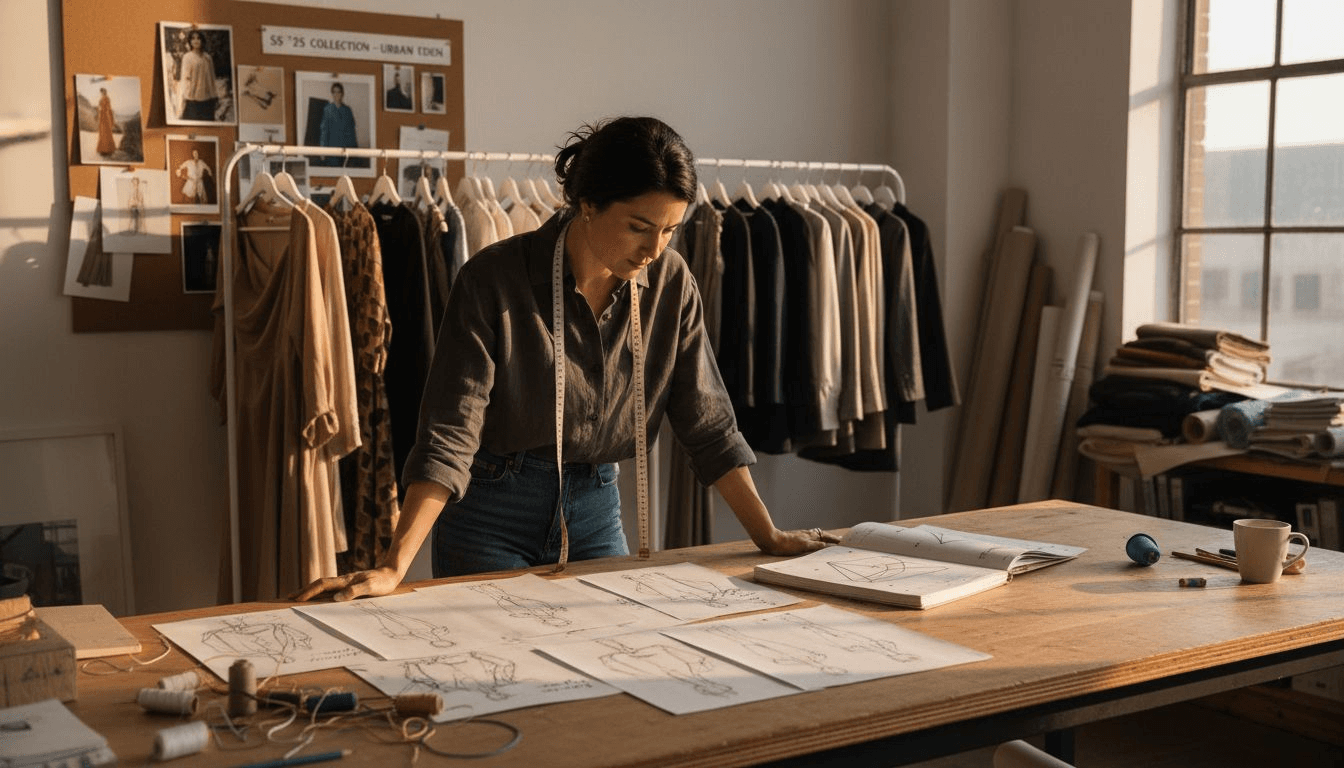
Launching an American clothing line involves more than picking fabrics and colors. Every year, over 60 percent of apparel startups cite unclear requirements as their biggest obstacle, leading to costly delays and mistakes. Understanding each step from defining your vision to final delivery can mean the difference between a thriving business and wasted resources. This guide lays out a structured approach so you can move from concept to finished product with clarity and confidence.
Table of Contents
- Step 1: Define Vision And Align On Requirements
- Step 2: Plan Production Stages And Set Clear Milestones
- Step 3: Source Materials And Develop Technical Details
- Step 4: Execute Sampling And Approve Prototypes
- Step 5: Oversee Bulk Production And Conduct Quality Checks
- Step 6: Arrange Shipping And Finalize Delivery
Quick Summary
| Key Point | Explanation |
|---|---|
| 1. Define Your Vision Clearly | Establish a detailed vision and requirements document to guide your apparel production process effectively. |
| 2. Plan Production Stages Thoroughly | Break down the production process into clear, measurable phases with defined timelines to track progress and avoid delays. |
| 3. Source Quality Materials | Develop a comprehensive materials specification and evaluate suppliers thoroughly to ensure product quality and consistency. |
| 4. Execute Rigorous Sampling | Conduct detailed prototype evaluations, focusing on technical specifics and real-world performance to ensure high-quality final products. |
| 5. Implement Strict Quality Control | Create a structured inspection process during bulk production to meet predetermined standards and maintain brand reputation. |
Step 1: Define vision and align on requirements
Defining your apparel production vision and aligning on specific requirements sets the foundation for a successful clothing line. This crucial step transforms abstract ideas into a concrete roadmap that guides every subsequent decision in your production journey.
Start by conducting a comprehensive brainstorming session where you document the core vision for your collection. Consider questions like: What aesthetic are you aiming to create? Who is your target customer? What makes your clothing unique? Explore apparel production technology principles to understand how technical parameters connect directly to your design goals. This means getting extremely specific about fabric weights, desired stretch percentages, intended wear environments, and precise fit specifications.
Next, create a detailed requirements document that breaks down every aspect of your collection. Include precise measurements, fabric composition percentages, color specifications with Pantone references, and expected quality standards. Document not just what you want but why you want it. The more clarity you bring to this stage, the smoother your entire production process will become. Think of this document as your production blueprint that communicates your vision to manufacturers with zero ambiguity.
Pro tip: Document everything visually. Sketches, mood boards, fabric swatches, and reference images will communicate your vision far more effectively than words alone and reduce potential misunderstandings during production.
Step 2: Plan production stages and set clear milestones
Planning your production stages and establishing clear milestones will transform your clothing line from a concept to a structured manufacturing process. This critical step creates a roadmap that helps you track progress, manage expectations, and prevent costly delays.
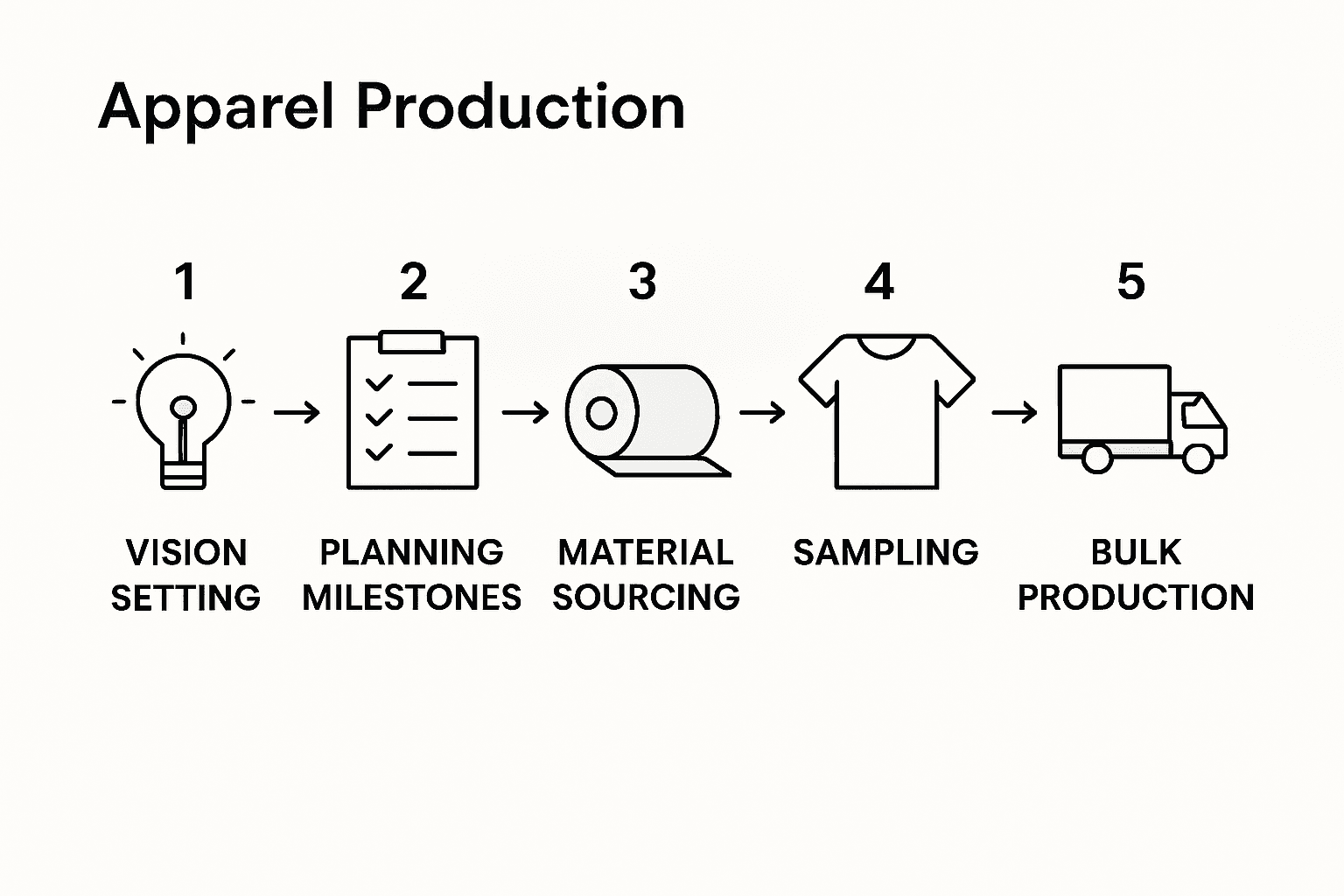
Robust order scheduling techniques reveal the importance of breaking down your production into specific, measurable stages. Begin by mapping out each phase of your apparel creation journey. Typical stages include design finalization, pattern making, fabric sourcing, initial sampling, prototype development, fit testing, final production, quality control, and shipping. For each stage, define specific deliverables and realistic timelines. Be precise about what needs to happen and by when. Create a visual timeline or spreadsheet that allows you to track progress and quickly identify potential bottlenecks.
Work closely with your manufacturing partner to validate and refine these milestones. Insights from assistant fashion designer training materials emphasize the importance of collaborative planning. Schedule regular check ins to review progress, discuss potential challenges, and make necessary adjustments. Build some buffer time into your timeline for unexpected complications. Remember that flexibility combined with clear expectations creates the most successful production runs.
Pro tip: Use project management tools like Trello or Asana to create transparent, shareable timelines that keep all team members aligned and accountable throughout the production process.
Compare methods for managing production timelines in apparel development:
| Method | Strengths | Limitations |
|---|---|---|
| Manual Spreadsheets | Easy setup, flexible formats | Prone to errors, hard to scale |
| Project Management Apps | Real-time updates, team visibility | Learning curve, platform cost |
| Dedicated ERP Systems | Automated alerts, integrated data | Expensive, complex setup |
Step 3: Source materials and develop technical details
Sourcing materials and developing precise technical details is where your clothing line transforms from concept to tangible reality. This critical stage determines the quality, performance, and overall aesthetic of your final product.
Advanced fabric selection algorithms highlight the importance of strategic material sourcing. Start by creating a comprehensive materials specification document that details exact fabric requirements. Consider factors like fiber composition, weight, stretch percentage, durability, and performance characteristics. Research multiple suppliers and request fabric swatches to physically evaluate texture, color, and quality. Compare options not just on price but on consistency, lead times, and minimum order quantities. Pay special attention to how different materials behave during washing, stretching, and wear.
Lean manufacturing principles in garment development emphasize the need for meticulous technical documentation. Develop detailed technical packets that include precise measurements, construction techniques, finishing specifications, and quality control parameters. Work with a pattern maker to create initial technical drawings that translate your design vision into exact manufacturing instructions. These drawings should include front and back views, detailed measurements for each size, stitch types, seam allowances, and specific construction notes. The more precise your technical details, the smoother your production process will be.
Pro tip: Create a physical reference board with fabric swatches, color chips, and construction details to help communicate your vision clearly to manufacturers and ensure everyone is aligned on the exact specifications.
Step 4: Execute sampling and approve prototypes
Executing sampling and approving prototypes is your critical quality control checkpoint where design meets reality. This stage transforms your technical specifications into a physical garment that must precisely match your original vision.
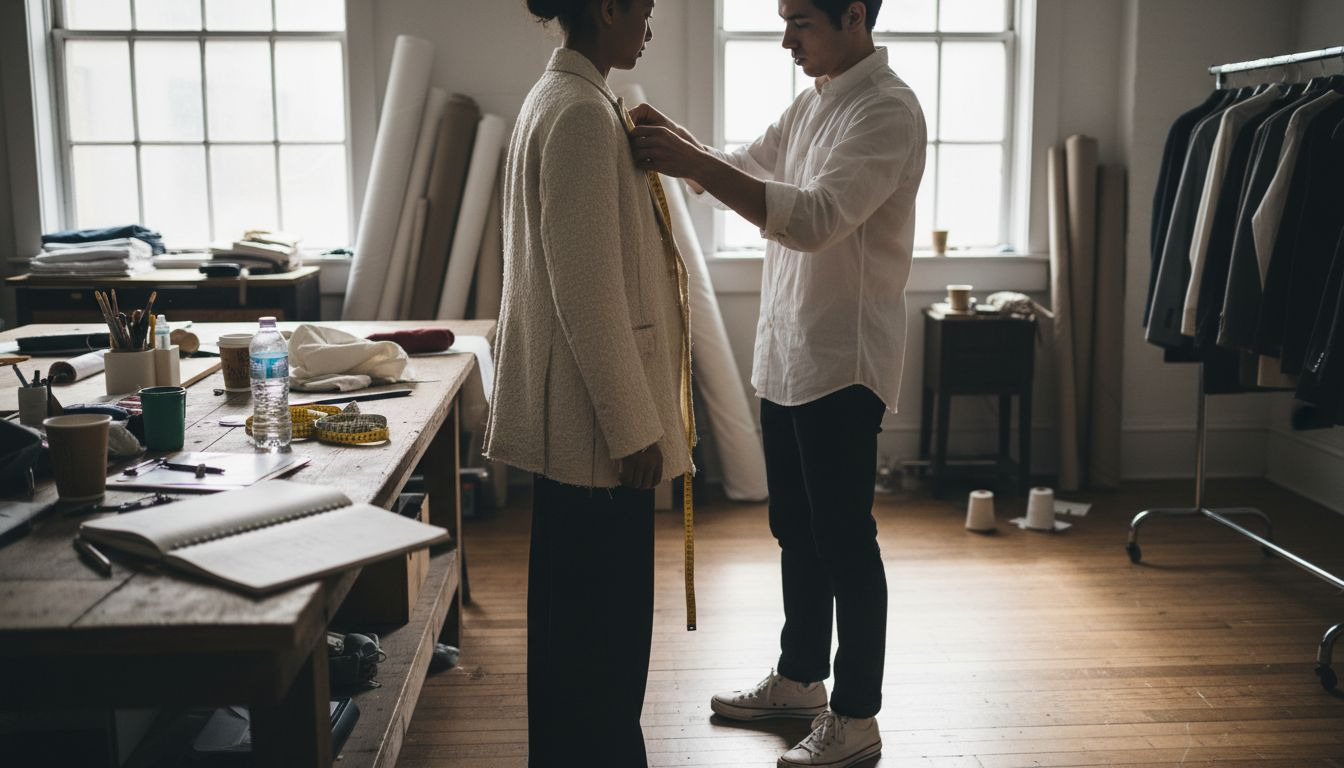
Sample development strategies from garment production research emphasize the importance of a systematic prototype evaluation process. Request your first prototype and conduct a comprehensive review that goes beyond visual appearance. Inspect every technical detail including seam quality, fabric behavior, fit across different body measurements, and construction integrity. Create a detailed feedback document that provides specific instructions for adjustments. Communicate not just what needs changing but why each modification matters. This means measuring exact differences in millimeters for pattern adjustments, specifying precise stitch types, and documenting how each change impacts the overall design.
Schedule an in person fitting session where you can physically interact with the prototype. Bring measuring tape, take detailed notes, and photograph the garment from multiple angles. Test the prototype under different movement conditions to understand its real world performance. Pay attention to stretch recovery, seam strength, and how the fabric drapes on an actual body. Your goal is creating a sample that not only looks good on a hanger but performs exceptionally when worn.
Pro tip: Always request multiple prototype iterations and keep comprehensive documentation of each version to track your design evolution and maintain clear communication with your manufacturing partner.
Step 5: Oversee bulk production and conduct quality checks
Overseeeing bulk production and conducting rigorous quality checks transforms your carefully developed prototype into a consistent, market ready collection. This stage is where your design vision becomes a tangible reality that meets professional manufacturing standards.
Systematic fabric inspection techniques reveal the critical importance of comprehensive quality monitoring during production. Establish a structured inspection process that evaluates every production batch against your original technical specifications. This means checking fabric consistency, color accuracy, stitch precision, and overall garment construction. Create a detailed quality control checklist that breaks down exactly what needs examination. Random sampling is not enough. Implement a percentage based inspection strategy where you review a statistically significant number of pieces from each production run. Look for subtle variations in fabric tension, color matching, pattern alignment, and construction techniques.
Comprehensive textile testing methodologies emphasize the need for performance verification beyond visual inspection. Conduct mechanical tests that simulate real world wear conditions. This includes stretch recovery tests, colorfastness evaluations, seam strength assessments, and fabric durability measurements. Document every test result meticulously and establish clear acceptance criteria. Be prepared to reject entire production batches that do not meet your predetermined quality standards. Communication with your manufacturing partner should be direct and unambiguous about any detected issues.
Pro tip: Develop a standardized quality report template that allows for rapid identification and communication of any production discrepancies, ensuring swift resolution and minimal manufacturing delays.
Step 6: Arrange shipping and finalize delivery
Arranging shipping and finalizing delivery marks the culmination of your apparel production journey. This final stage transforms your meticulously crafted collection from a manufacturing project into a market ready product ready to reach customers.
Robust order scheduling strategies from fashion industry research highlight the critical importance of precise shipping coordination. Begin by confirming all logistics details with your manufacturing partner. This includes verifying exact packaging specifications, understanding shipping method options, and establishing clear handoff protocols. Create a comprehensive shipping manifest that documents every detail about your production run quantity, individual package weights, dimensions, and any special handling requirements. Select a shipping method that balances cost effectiveness with delivery speed and product protection. Consider factors like transit time, insurance options, tracking capabilities, and potential customs requirements if shipping internationally.
Develop a systematic approach to final delivery verification. Request detailed shipping documentation including tracking numbers, estimated delivery dates, and signed confirmation of package conditions. Establish a clear communication protocol with your shipping partner to quickly address any potential transit issues. Schedule a comprehensive final review once shipments are received to ensure every package matches your original production specifications. Document any discrepancies immediately and have a predetermined process for handling potential shipping related quality concerns.
Pro tip: Create a digital tracking spreadsheet that allows real time monitoring of your entire production shipment, enabling you to proactively manage logistics and provide transparent updates to your sales channels or customers.
Here's a summary comparing key considerations and business impact at each major apparel production step:
| Production Step | Key Considerations | Potential Business Impact |
|---|---|---|
| Vision & Requirements | Precise target, clear documents | Reduces miscommunication costs |
| Production Planning | Timeline mapping, milestone clarity | Improves deadline reliability |
| Materials & Technical Details | Supplier quality, technical packets | Enhances product consistency |
| Sampling & Prototyping | Fit testing, version tracking | Minimizes costly late-stage changes |
| Quality Control & Production | Inspection rigor, acceptance criteria | Ensures consistent brand reputation |
| Shipping & Delivery | Logistics tracking, clear protocols | Reduces delivery delays, errors |
Achieve Smooth Apparel Production with Expert Planning and Clear Communication
The article highlights how essential detailed production planning and clear milestones are for a stress-free clothing line launch. Common challenges like unclear timelines, miscommunication, and inconsistent quality can quickly turn your vision into a costly headache. If you are tired of chasing late samples or guessing if your factory fully understands your technical specifications, you are not alone. These pain points directly affect deadlines and the overall brand reputation.
At Protek & Friends, we solve these exact issues by managing every step of your apparel production with founder-led clarity and accountability. Our full-package clothing production studio specializes in precise line planning, technical development, sampling, quality control, and dependable shipping across USA and China. Our intentional system means no surprises—only smooth, predictable progress that lets you focus on designing and growing your brand without constant firefighting.
Explore how Protek & Friends ensures quality control at every stage to avoid late-stage changes and costly delays. Let us help you bring your production timeline guide from concept to reality with transparent communication and structured milestones.
Ready to experience apparel production that feels organized, professional, and supportive? Visit Protek & Friends today to get started on your first style with a team that makes clarity and quality the priority.
Frequently Asked Questions
How do I start defining my clothing production vision?
To start defining your clothing production vision, conduct a brainstorming session focused on your collection's aesthetic, target customer, and unique features. Document your ideas in detail to create a foundation for your requirements.
What key components should I include in my production timeline?
Your production timeline should include key stages such as design finalization, fabric sourcing, sampling, prototype approval, and shipping. Structure it with measurable milestones to track progress and manage expectations effectively.
How can I ensure my materials meet the production requirements?
To ensure your materials meet production requirements, create a materials specification document detailing fabric fiber composition, weight, and performance characteristics. Evaluate multiple suppliers through swatches and comparisons to choose the best option based on quality and consistency.
What should I focus on during prototype evaluation?
During prototype evaluation, focus on inspecting technical details like seam quality, fit, and fabric behavior. Create detailed feedback documentation to communicate specific adjustments needed to align the prototype with your design vision.
How do I perform effective quality control during bulk production?
To perform effective quality control during bulk production, establish a structured inspection process that checks every batch against your original specifications. Conduct random sampling and document the results to ensure quality standards are met consistently.
What steps should I take to arrange shipping and final delivery?
To arrange shipping and final delivery, confirm details with your manufacturing partner, including packaging specifications and shipping methods. Create a comprehensive shipping manifest to document quantities and special requirements for a smooth handoff.