
Many scaling fashion brands believe production oversight means simply watching a factory work. That's wrong. Production oversight is a comprehensive management system spanning design review through delivery coordination. Brands with structured production oversight report 25-40% fewer quality issues and 15-30% faster time to market. This article explains what fashion production oversight is, why it matters for your brand's margins and reputation, and how to apply it effectively to eliminate costly surprises.
Table of Contents
- What Is Fashion Production Oversight?
- Why Production Oversight Matters For Scaling Brands
- Key Components Of Production Oversight
- Communication And Transparency In Production Oversight
- Cost Control Through Production Oversight
- Technology Tools In Production Oversight
- Advantages Of Production Partnerships Over Factories
- Discover Professional Fashion Production Oversight With Protek & Friends
Key Takeaways
| Point | Details |
|---|---|
| Comprehensive Scope | Production oversight covers seven phases from concept development through delivery coordination, requiring specialized documentation at each stage. |
| Measurable Quality Impact | Structured oversight reduces quality defects by 25-40% and speeds time to market by 15-30% compared to unmanaged production. |
| Documentation and Communication | Clear documentation before payment and regular updates throughout production prevent cost overruns and quality surprises. |
| Technology Enhancement | ERP systems and production management software reduce material shortages by 30% and delays by 40% when properly implemented. |
| Partnership Advantage | Professional production partnerships offer 20% cost savings through hybrid manufacturing while maintaining control and transparency. |
What is Fashion Production Oversight?
Fashion production oversight is a comprehensive management process that integrates planning, coordination, documentation, and control across your entire production lifecycle. It's not passive observation. It's active management that ensures your production meets quality standards, stays within budget, and delivers on schedule.
Production oversight spans seven main production phases: concept development, tech pack creation, material sourcing, sampling, bulk production management, quality control, and delivery coordination. Each phase requires specific documentation and structured communication protocols.
The goal is simple but critical: ensure your production meets quality, cost, and schedule objectives so your brand can scale predictably. Without this structure, you're gambling with your margins and reputation every time you place an order.
Effective oversight involves:
- Design and technical review before production starts
- Detailed material specifications and sourcing documentation
- Sampling protocols with fit correction processes
- Cost breakdown mapping and timeline management
- Regular quality control checkpoints during bulk production
- Delivery coordination with final inspection
This systematic approach transforms production from a stressful guessing game into a boring, predictable process. That's exactly what you want. Professional full-package clothing production services integrate these phases with clear accountability at each step.
Many brands confuse technical components like tech packs with full oversight. Tech packs are essential documentation, but oversight encompasses the entire management system that uses those documents to drive results.
Why Production Oversight Matters for Scaling Brands
Fast fashion cycles demand agile, coordinated production oversight. Your customers expect new collections quickly, but speed without control destroys margins and damages brand reputation.
Delays, cost overruns, and quality inconsistencies occur in over 60% of unmanaged productions. That's not acceptable when you're trying to scale. One bad production run can wipe out an entire season's profit.
Without structured oversight, you face:
- Timeline shifts that miss critical selling windows
- Cost escalations from rework and quality failures
- Inconsistent quality that damages customer trust
- Communication breakdowns that compound small problems into disasters
Misalignment causes 10-20% production cost increases due to rework and defects. Those aren't acceptable margins for error when you're competing in a tight market.
Production oversight balances creativity with operational efficiency. Your designs can be innovative, but your production process must be systematic. That's how you protect margins while maintaining quality standards.
Pro tip: Prioritize building detailed tech packs and establishing regular update schedules before your first payment. This upfront investment reduces misunderstandings and rework costs by 30-40% throughout production.
Professional full-package manufacturing solutions eliminate uncertainty by replacing reactive problem solving with proactive management systems. You get early warnings instead of last-minute disasters.
Key Components of Production Oversight
Effective production oversight breaks down into specific processes with clear documentation requirements at each stage. Understanding these components helps you evaluate whether your current production partner provides real oversight or just order processing.
-
Tech pack creation: Tech packs contain 10-15 critical design and material details serving as blueprints. They specify measurements, materials, construction methods, and finishing requirements.
-
Material sourcing: Document fabric specifications, test results, and supplier qualifications. Verify samples match specifications before bulk ordering.
-
Sampling protocols: Establish fit correction processes with clear revision cycles. Most brands need 2-3 sample rounds before bulk production.
-
Bulk production monitoring: Track progress against timelines with regular factory updates. Identify bottlenecks early when they're still manageable.
-
Quality control checkpoints: Active supplier management and inspections reduce defects by 20-35%. Conduct in-process inspections, not just final checks.
-
Delivery coordination: Verify final production matches approved samples before shipment. Document any deviations immediately.
This table shows how oversight tasks mitigate specific production risks:
| Production Phase | Oversight Task | Risk Mitigated |
|---|---|---|
| Design Review | Tech pack validation | Specification errors, construction issues |
| Sourcing | Material testing and documentation | Quality failures, supply delays |
| Sampling | Fit correction protocols | Sizing problems, design flaws |
| Bulk Production | Progress monitoring and inspections | Timeline slips, quality defects |
| Delivery | Final inspection and documentation | Shipment errors, specification deviations |
Quality control deserves special attention. Defects caught during production cost 10x less to fix than defects discovered after delivery. In-process inspections at 25%, 50%, and 100% completion catch problems when they're still manageable.
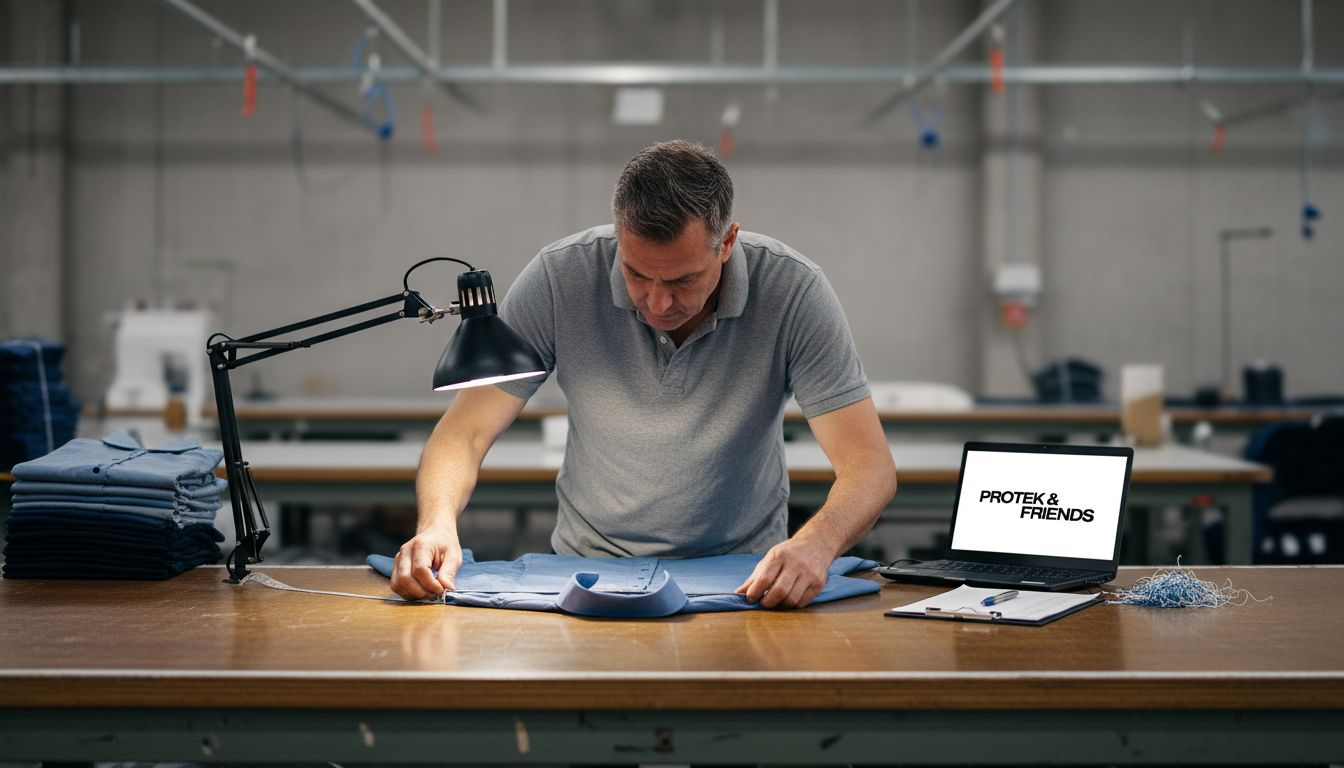
Pro tip: Use standardized inspection checklists that match your tech pack specifications. This consistency reduces subjective judgment errors and ensures every production batch meets the same standards.
Professional partners provide sampling and prototyping recommendations based on your product complexity and production history. They know when shortcuts make sense and when they create expensive problems.
Communication and Transparency in Production Oversight
Clear, documented communication throughout production reduces unexpected issues more effectively than any other single factor. Most production disasters stem from communication failures, not technical problems.
Documenting terms and costs upfront prevents surprises and builds trust. You should receive detailed cost breakdowns before making any payments. This includes material costs, labor rates, minimum order quantities, and timeline expectations. Verbal agreements create disputes. Written documentation creates accountability.
Regular updates enable proactive issue resolution:
- Weekly progress reports during bulk production
- Immediate notification of any specification questions
- Early warning of potential timeline or cost impacts
- Photo documentation of in-process quality checks
Professional production partners commit to transparency and timely communication unlike reactive factory models. Traditional factories often hide problems until they become crises. Professional partners surface issues early when solutions are still simple and inexpensive.
Clear, documented communication before payment and throughout the production cycle reduces uncertainties, enabling brand owners to avoid costly mistakes and delays.
This isn't about micromanagement. It's about having the right information at the right time to make informed decisions. You don't need daily updates when production runs smoothly. You need immediate alerts when something deviates from plan.
Transparency extends beyond progress updates to include honest assessments of feasibility and risk. A professional partner tells you when a design detail will cause production problems, not after you've paid for samples. They explain cost tradeoffs clearly so you can make informed decisions about where to invest and where to economize.
The importance of communication and quality control in oversight becomes obvious when you experience production anxiety. Brands working with structured partners report that production feels boring because updates arrive regularly and problems get solved before they escalate. That's what professional oversight delivers.
Cost Control through Production Oversight
Disciplined oversight protects your margins by reducing rework, quality failures, and unexpected cost escalations. Cost control isn't about finding the cheapest factory. It's about eliminating waste throughout your production process.
Cost overruns typically stem from quality defects and rework due to poor oversight. A sizing error caught after bulk production costs 50-100x more to fix than the same error caught during sampling. Misalignment causes 10-20% cost increases while structured oversight reduces defects by 25-40%.
Structured oversight allows accurate forecasting, minimizing waste and delays. When you know actual lead times and defect rates, you can plan inventory and cash flow accurately. Surprises destroy financial planning.
This table contrasts traditional factory models with professional oversight:
| Factor | Traditional Factory | Professional Oversight |
|---|---|---|
| Cost Documentation | Verbal quotes, changing prices | Detailed breakdowns before payment |
| Quality Control | Final inspection only | In-process checkpoints at 25%, 50%, 100% |
| Communication | Reactive when problems occur | Regular updates and early warnings |
| Problem Resolution | Client discovers issues after delivery | Partner surfaces issues during production |
| Cost Predictability | Frequent overruns and surprises | Accurate forecasting with minimal variance |
Cost control best practices in production oversight:
- Establish detailed tech packs to eliminate specification ambiguity
- Conduct material testing before bulk fabric orders
- Implement sampling protocols with clear revision limits
- Schedule in-process inspections to catch defects early
- Document all changes and cost impacts in writing
- Maintain open communication about feasibility and tradeoffs
Professional partners offer cost control advantages through hybrid manufacturing models that balance domestic quality control with overseas cost efficiency. You don't have to choose between quality and affordability when your partner manages both effectively.
The goal isn't minimum cost per unit. It's maximum value delivered to your customers at a price that protects your margins. Sometimes paying 10% more for better oversight saves 30% in rework and delay costs.
Technology Tools in Production Oversight
Production management software and ERP systems enhance visibility, scheduling, and quality tracking to support modern fashion production oversight. Technology doesn't replace human judgment, but it makes structured oversight scalable and efficient.
Various software tools offer real-time production visibility and quality management. Cloud platforms let you track order status, review inspection photos, and approve samples from anywhere. This matters when you're managing overseas production or juggling multiple factories.
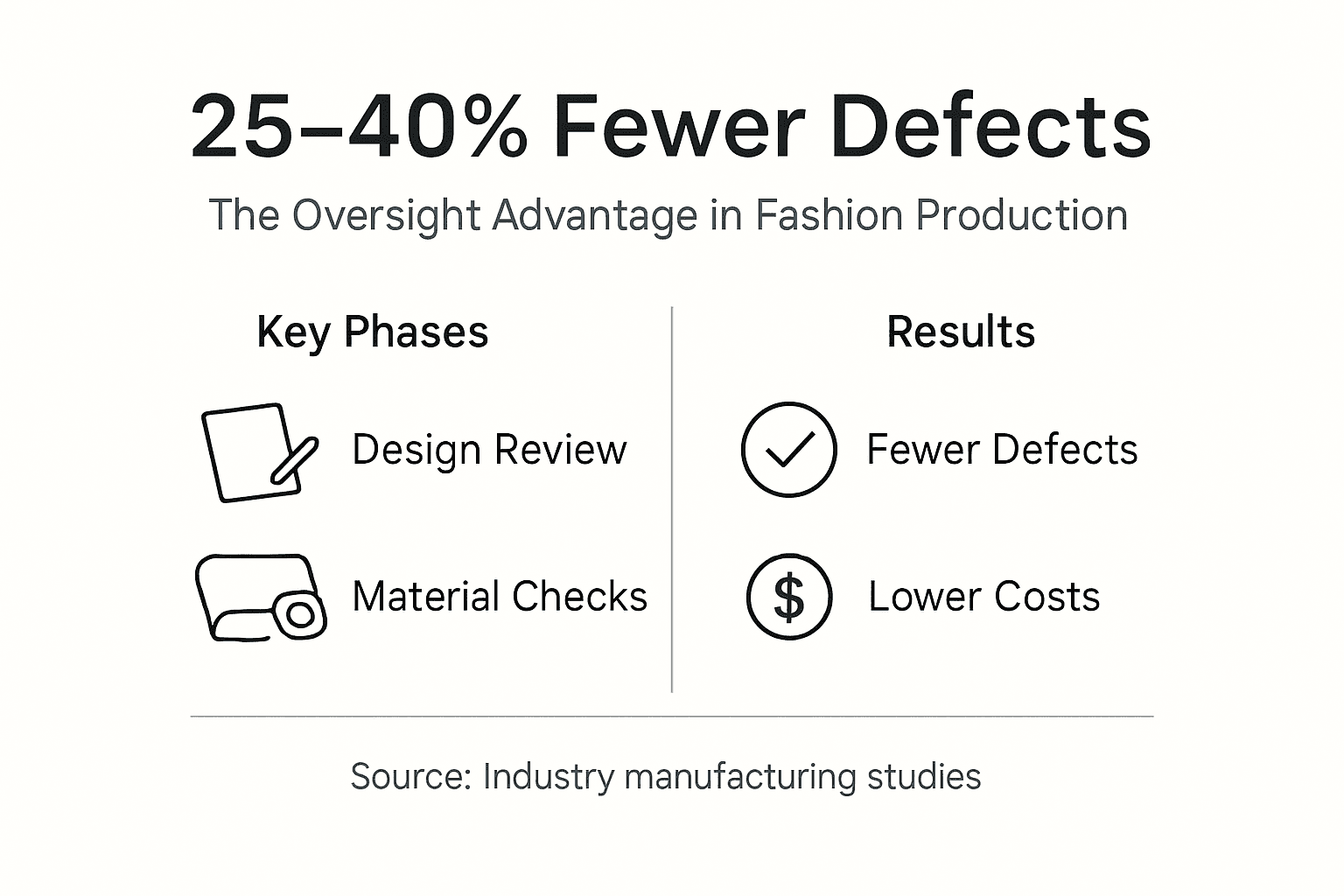
ERP adoption reduces material shortages by 30% and delays by 40%. ERP systems integrate planning and supply chain functions to prevent the coordination failures that cause most production problems. They track material availability, production capacity, and timeline dependencies automatically.
Technology supports remote monitoring critical for overseas or hybrid manufacturing models. You can't visit your factory weekly when it's 6,000 miles away. Digital tools provide the visibility you need to manage production effectively without constant travel.
Key technology features contributing to efficient oversight:
- Real-time order tracking and status updates
- Digital sample approval workflows with version control
- Automated quality inspection checklists and photo documentation
- Material inventory tracking linked to production schedules
- Cost tracking against budgets with variance alerts
- Communication logs that document decisions and changes
ERP systems cut material shortages 30% and production delays 40%, proving technology's impact on fashion production efficiency.
The ERP impact on production planning extends beyond simple tracking to predictive analytics. Modern systems identify potential bottlenecks before they cause delays, allowing proactive intervention.
Technology works best when it supports structured human processes, not replaces them. Software can track whether an inspection happened on schedule, but experienced production managers interpret those inspection results and decide what corrective action makes sense. The combination of technology-enabled visibility and human expertise delivers the best oversight outcomes.
Advantages of Production Partnerships over Factories
Scaling brands benefit from partnering with professional production oversight firms offering structured processes, transparency, and hybrid manufacturing flexibility over traditional factory arrangements. The difference isn't subtle. It's transformational.
Structured partnerships replace chaotic factory order-taking with clear, documented processes. Traditional factories take orders and solve problems as they occur. Professional partners prevent problems through systematic oversight and early intervention.
Hybrid manufacturing with professional oversight reduces costs by up to 20% compared to domestic-only production. You get cost efficiency without sacrificing quality control or communication. The partner manages the complexity of coordinating domestic and overseas production based on each product's requirements.
Partnerships reduce anxiety by offering clarity, communication, and consistent updates. Most brand owners experience stress when placing production orders because they've been burned by timeline shifts, cost changes, and communication breakdowns. Professional partnerships eliminate that uncertainty by replacing chaos with systems.
Key benefits of professional production partnerships:
- Transparency: Detailed documentation before payment with regular progress updates throughout production
- Cost control: Hybrid models balance quality and affordability while eliminating surprise overruns
- Flexibility: Adapt production location and methods based on product requirements and timeline needs
- Quality assurance: Systematic inspection protocols catch defects early when fixes are simple and inexpensive
- Risk reduction: Early problem identification and resolution prevent small issues from becoming disasters
Good production should feel boring. Clear updates arrive on schedule. Problems get solved early. Zero surprises. That's what professional production partnerships deliver.
The partnership model works because incentives align. Your success drives their success. They profit by helping you scale efficiently, not by maximizing production volume regardless of quality outcomes.
Discover Professional Fashion Production Oversight with Protek & Friends
Scaling your fashion brand requires production oversight that protects quality, controls costs, and eliminates surprises. Protek & Friends delivers exactly that through structured processes, transparent communication, and a hybrid manufacturing model that balances domestic control with overseas efficiency.
Our clothing production services cover design review, material sourcing, sampling, bulk production management, and quality control. We document everything before you pay and provide regular updates throughout production. See how Protek compares to other manufacturers and review our sampling guidance before bulk production to understand how professional oversight protects your margins and reputation.
Frequently Asked Questions About Fashion Production Oversight
What phases does production oversight cover?
Production oversight covers seven phases: concept development, tech pack creation, material sourcing, sampling and fit correction, bulk production management, quality control inspections, and delivery coordination. Each phase requires specific documentation and communication protocols to ensure quality and timeline targets are met.
How does a tech pack improve production quality?
A tech pack serves as your production blueprint, containing 10-15 critical specifications including measurements, materials, construction methods, and finishing details. This documentation eliminates ambiguity and provides objective quality standards that factories and inspectors can verify throughout production.
Why is communication critical during manufacturing?
Clear communication enables early problem identification when solutions are simple and inexpensive. Regular updates and documented specifications prevent misunderstandings that cause costly rework. Most production disasters stem from communication failures, not technical limitations.
Can technology tools replace manual oversight?
Technology enhances oversight efficiency but cannot replace human judgment. Software provides visibility, tracking, and documentation, but experienced production managers interpret data and make informed decisions about corrective actions. The combination of technology and expertise delivers optimal results.
What are the benefits of professional production partnerships?
Professional partnerships offer structured processes, transparent communication, cost control through hybrid manufacturing, and systematic quality assurance. They reduce production anxiety by preventing problems rather than reacting to crises, delivering predictable outcomes that support brand scaling.