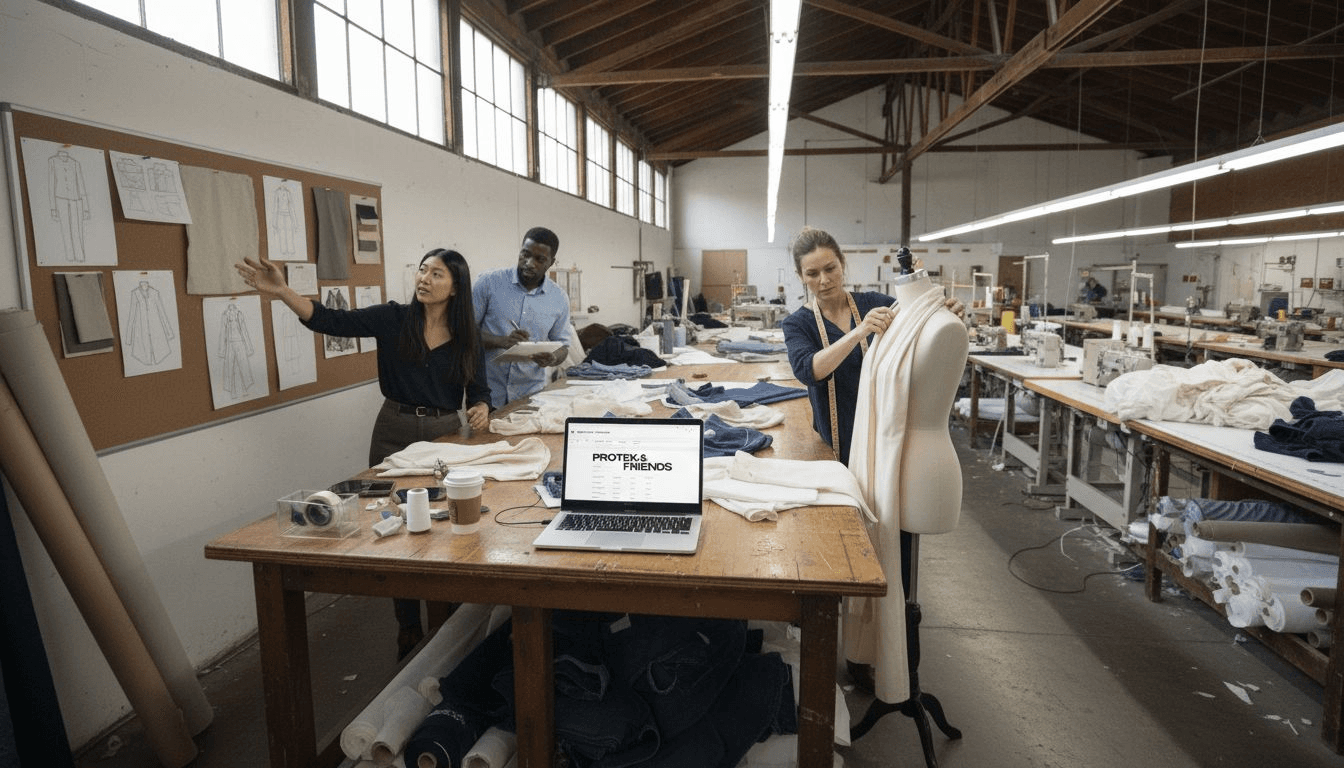
Managing five different vendors across multiple countries often leads to lost emails, shifting prices, and missed deadlines. For founders building fashion brands in North America, these complexities threaten growth and consistency as collections scale. Choosing a full package production solution means trusting one partner to own every step, from tech pack to delivery. Discover how this approach simplifies your workflow, protects your margins, and keeps quality steady as your brand expands.
Table of Contents
- Defining Full Package Production in Fashion
- Hybrid Models: USA vs. Overseas Manufacturing
- Step-By-Step Full Package Production Process
- Benefits for Scaling Fashion Brands
- Risks, Common Pitfalls, and How to Avoid Them
Key Takeaways
| Point | Details |
|---|---|
| Full Package Production | Streamlines the entire garment creation process by having one partner manage design, sourcing, manufacturing, and logistics. |
| Hybrid Manufacturing Models | Combine domestic and overseas production to optimize cost, speed, and quality based on specific garment needs. |
| Emphasis on Quality Control | Ensures consistent product quality and brand reputation through rigorous inspections at every production phase. |
| Clear Communication is Key | Regular updates and transparent communication with production partners prevent misunderstandings and delays. |
Defining Full Package Production in Fashion
Full package production means one partner handles everything from your initial sketch to finished garments delivered to your warehouse. No jumping between fabric suppliers, pattern makers, sample factories, and bulk manufacturers. One entity owns the entire process.
Here's what that actually covers:
- Design & Technical Review — Your concept gets translated into a tech pack with specs, measurements, and construction details
- Fabric Sourcing — Finding the right material, negotiating minimums, and securing samples
- Pattern Making & Sampling — Building the first samples and running fit corrections
- Cost Breakdown — Transparent pricing before you commit to bulk production
- Bulk Manufacturing — Managing the actual production run with timeline oversight
- Quality Control — Inspecting finished goods against your specifications
- Logistics & Delivery — Coordinating shipment to your door
Why does this matter? Most brands work with fragmented teams. You email a pattern maker in one city, a fabric vendor in another, and a factory in a third country. Communication breaks down. Costs creep up. Timelines shift. Accountability vanishes.
Full package manufacturing consolidates all of that into a single relationship where one partner has skin in the game and owns every step.
You're not managing five different vendors anymore. You're managing one.
The Real Difference
Traditional factories simply produce what you give them. They take your patterns, your fabric, and your specs — then make units. That's transactional.
A full package partner works backwards from your business. They ask questions before samples are made. They flag construction issues early. They hunt for fabric that fits your budget. They protect your margins.
Full package isn't just manufacturing — it's taking responsibility for the outcome.
This approach works because both parties want the same result: a product that ships on time, hits quality standards, and doesn't blow through your budget.
Pro tip: Before committing to any full package partner, confirm they handle pattern making and sample revisions in-house. If they outsource these steps, you lose the integrated advantage and create the exact fragmentation you're trying to avoid.
Hybrid Models: USA vs. Overseas Manufacturing
Hybrid manufacturing isn't new, but it's become essential for brands that want speed, cost control, and reliability. The strategy is simple: produce some items domestically and others overseas, depending on what makes sense for each style.
Here's the reality: The United States has shifted from producing over 40% of apparel domestically to less than 3%. But that doesn't mean domestic manufacturing is dead — it means brands are using hybrid supply chain models that blend the strengths of both approaches.
Why Split Production?
Each location has real advantages. You need to pick the right tool for each job.
Domestic (USA) production works best for:
- Quick turnarounds on reorders and seasonal adjustments
- Smaller production runs where overseas minimums don't make sense
- Complex cuts or specialty finishes that need hands-on quality control
- Rush orders or last-minute design changes
- Building inventory without long lead times
Overseas production works best for:
Here's a quick comparison of domestic versus overseas clothing production to guide your supply chain strategy:
| Production Aspect | Domestic (USA) Advantage | Overseas Advantage |
|---|---|---|
| Speed | Rapid turnaround for reorders | Lowest unit cost on bulk |
| Order Volume | Flexible for small batches | Efficient for large volumes |
| Quality Oversight | Easier hands-on management | Advanced specialty processes |
| Lead Time | Short, adaptable timelines | Longer, but predictable |
| Inventory Risk | Low due to quick restocks | High, requires forecasts |
- High-volume orders where cost per unit matters most
- Standard basics that scale easily (t-shirts, basics, simple knits)
- Styles with long, predictable lead times
- Specialty finishing like embroidery, dyeing, or specialty knits that require specialized equipment
- When you can commit to minimums and plan ahead
The Hybrid Play
You're not choosing one location. You're choosing both strategically.
Production planning becomes about capacity, timeline, and cost. A brand might manufacture core basics overseas in bulk to hit margin targets. Simultaneously, they produce seasonal styles domestically for flexibility and faster restocks. When a style sells better than expected, the domestic line fills the gap without waiting four months.
Hybrid models couple shorter production cycles of domestic manufacturing with the scalability and cost advantages of offshore production.
This requires clear decision-making upfront. Which styles go where? What's your reorder strategy? How do you manage two separate production timelines without losing your mind?
That's where clothing production services with dual capabilities matter. You need one partner who can execute both paths seamlessly.
Pro tip: Map your annual styles into three buckets before choosing production locations: core basics (overseas), seasonal items (domestic for flexibility), and limited runs (domestic for speed). This clarity prevents costly mistakes and keeps timelines manageable.
Step-By-Step Full Package Production Process
Full package production follows a deliberate sequence. Each step builds on the previous one. Skip any step and problems compound down the line.
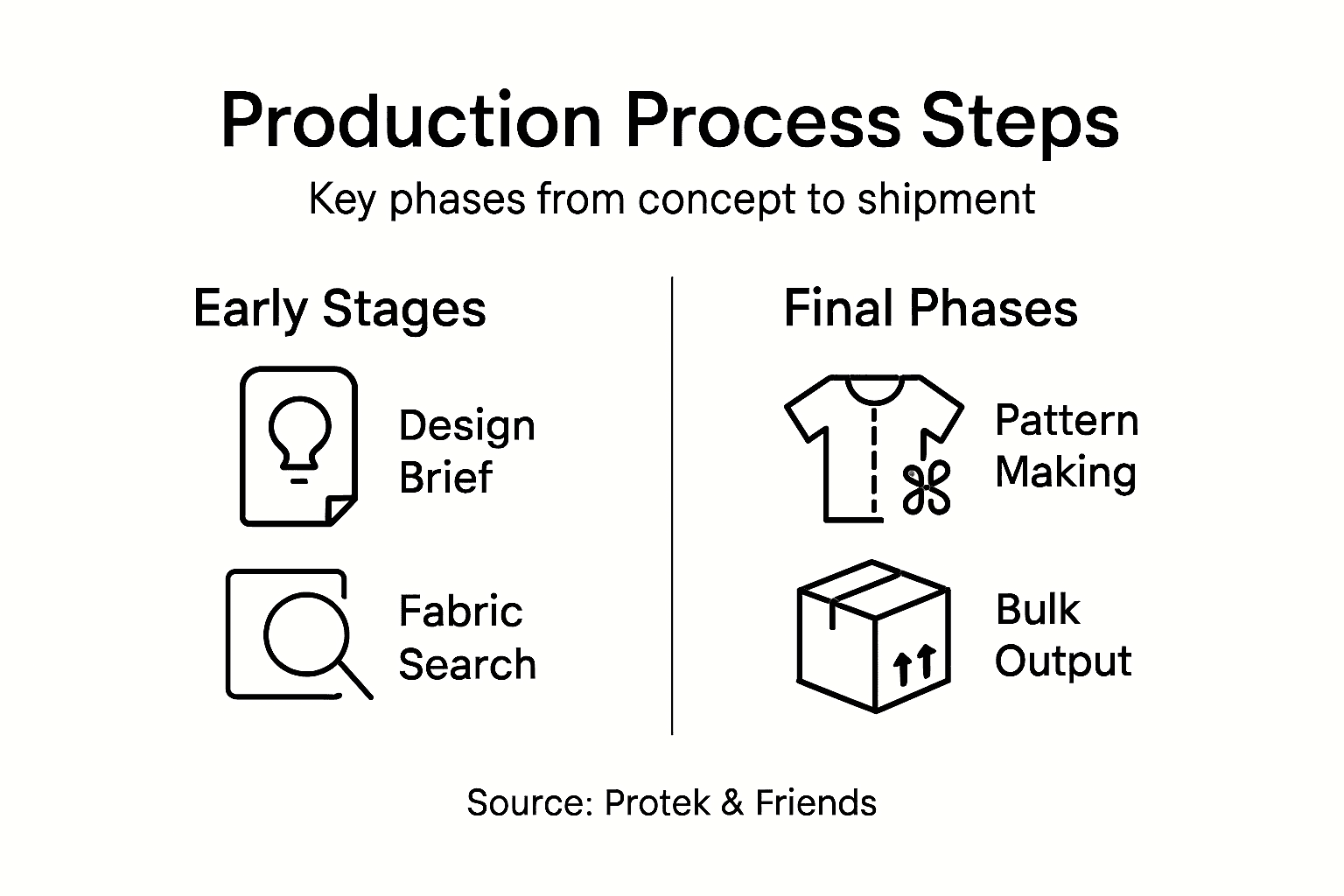
Here's how it actually works from start to finish:
Phase 1: Design & Technical Documentation
Your initial sketch isn't enough. The factory needs a tech pack — a detailed document with measurements, fabric specs, construction details, and design notes.
This step prevents the most common problem: miscommunication. You think you're clear. The factory interprets it differently. Six weeks later, samples arrive and they're wrong.
- Sketch or design concept
- Detailed measurements for every size
- Fabric composition and weight specifications
- Construction details (seams, finishes, buttons, zippers)
- Color specifications and any special requests
Phase 2: Fabric Sourcing & Sampling
The right fabric doesn't always exist off-the-shelf. Your partner needs to hunt for it, negotiate minimums, and pull samples.
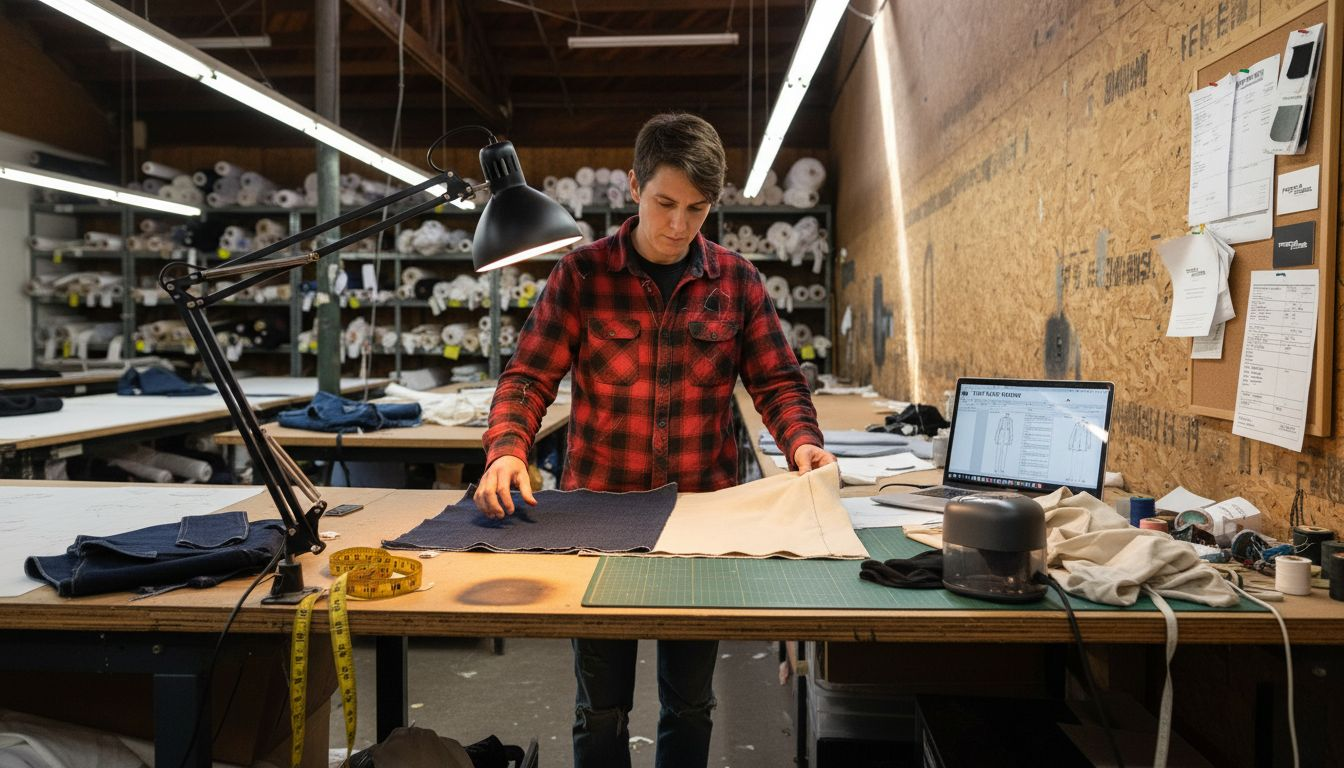
This takes time. Budget 2-4 weeks minimum for fabric sourcing. Longer if you need dyed-to-order or specialty materials.
Once fabric is sourced, a small sample arrives for your approval before committing to bulk yardage.
Phase 3: Pattern Making & First Samples
Your tech pack becomes a pattern. The factory cuts and sews the first sample — usually one size in one color.
This is where fit issues emerge. Most samples need adjustments. Arm holes are too tight. Length is off. Sleeve width doesn't work.
That's normal. That's why samples exist.
Phase 4: Fit Corrections & Revisions
You approve the first sample or request changes. The pattern gets revised and a second sample is made. This cycle repeats until fit is locked.
This typically takes 1-3 revision rounds. Budget 2-4 weeks for this phase.
The sample phase feels slow, but it's where you prevent expensive bulk production mistakes.
Phase 5: Cost Breakdown & Approval
Once samples are approved, your production partner provides a detailed cost sheet. Material cost. Labor. Overhead. Profit. All itemized.
You review pricing, negotiate if needed, and approve the cost before moving to bulk production.
Phase 6: Bulk Production
Once costs are locked, the factory orders materials and schedules production. This is where scale happens.
Production timelines depend on order size, factory capacity, and complexity. Expect 4-8 weeks for standard orders. Longer for specialty finishing.
Your partner should provide regular updates on production status and address problems early.
Phase 7: Quality Control & Inspection
Before shipment, finished goods are inspected against your specifications. Seams checked. Colors verified. Packaging confirmed.
Defects are flagged and separated. Your partner reports findings before the shipment leaves.
Phase 8: Logistics & Delivery
Once inspection passes, goods are packaged and shipped to your warehouse or retail location. Your partner coordinates timelines and manages documentation.
Why does why fashion brands need production partners matter? Because every step requires accountability. A partner who owns the process catches problems early instead of letting them reach your customer.
Pro tip: Document approvals at every phase — fabric, first sample, revised samples, cost sheet, production start. This creates a clear record of what was approved and prevents disputes later.
The following table summarizes each phase of full package production and its business impact:
| Phase | Main Focus | Business Value |
|---|---|---|
| Design & Tech Documentation | Detailed tech pack creation | Reduces miscommunication, increases accuracy |
| Fabric Sourcing & Sampling | Material selection | Ensures right quality, controls cost |
| Pattern Making & Sampling | Developing initial samples | Identifies fit issues early |
| Fit Corrections & Revisions | Refining fit | Prevents costly mistakes at scale |
| Cost Breakdown & Approval | Transparent pricing | Enables margin management |
| Bulk Production | Manufacturing at scale | Delivers consistent quality |
| Quality Control & Inspection | Final product checks | Protects brand reputation |
| Logistics & Delivery | Shipping coordination | Streamlines delivery to market |
Benefits for Scaling Fashion Brands
Scaling a fashion brand without structure is chaos. You're managing multiple suppliers, tracking revisions across email threads, watching timelines slip, and hoping quality stays consistent. Full package production eliminates that friction.
Here's what changes when you scale with a real partner:
One Point of Accountability
Instead of chasing five vendors, you manage one relationship. Your production partner owns every step — fabric sourcing, sampling, bulk production, quality control, and logistics.
Problems get solved faster because there's no finger-pointing between suppliers. One entity is responsible for the outcome.
Predictable Timelines
When multiple vendors are involved, delays compound. Fabric arrives late. Pattern maker is backed up. Factory can't start until both are ready. Suddenly you're two months behind.
With full package production, your partner controls the entire timeline and flags delays before they impact your deadline.
Cost Control & Margin Protection
Fragmented suppliers make pricing chaos. You quote fabric from one vendor, labor from another, finishing from a third. Quotes change. Minimums vary. Your margins disappear.
Full package partners provide transparent, itemized costs. You see exactly where money goes and can negotiate smartly.
Key benefits of consolidated production:
- Single cost sheet with no hidden fees
- Bulk material ordering power lowers fabric costs
- Consistent pricing across multiple production runs
- Early cost visibility before samples are made
- Easier margin management as you scale
Quality Consistency
When you scale from one collection to five, keeping quality consistent gets harder. Different factories interpret specs differently. Fabric sources vary. Finishing quality drifts.
Your full package partner maintains your standards across all production runs because they own quality control.
Scaling with one trusted partner keeps your brand promise consistent, even as volume grows.
Faster Time to Market
With clear timelines and reduced handoffs, you move from concept to finished product faster. Seasonal collections launch on schedule. Reorders fill quickly. You can react to market demand instead of being locked into rigid timelines.
This speed is a competitive advantage. Smaller brands move faster than large corporations.
Room to Scale Up or Down
Unlike traditional factories that demand huge minimums, full package partners work with brands at different volumes. A 500-unit run works. A 5,000-unit run works. Your partner manages both without friction.
This flexibility lets you test new styles without overcommitting inventory.
Peace of Mind
You stop worrying about whether the factory will deliver, whether fabric is the right color, or whether seams will hold. Your partner handles it. Communication is clear. Updates are regular. Problems are solved early.
That peace of mind is worth more than you think. It lets you focus on design, marketing, and selling instead of production crisis management.
Pro tip: As you scale, establish a quarterly business review with your production partner to review quality metrics, timeline performance, and cost trends. This keeps both parties aligned and catches issues before they become expensive problems.
Risks, Common Pitfalls, and How to Avoid Them
Full package production isn't risk-free. But most problems are preventable with clear planning and the right partner. Here are the real pitfalls you'll face and how to sidestep them.
Underestimating Lead Times
This is the number one mistake. Brands assume production takes 8 weeks. Then sampling takes 4 weeks. Fabric sourcing takes 3 weeks. Suddenly you're behind.
Underestimating lead times is common because brands don't account for every step.
How to avoid it:
- Add buffer time between sampling and bulk production
- Plan backwards from your launch date, not forwards from today
- Include fabric sourcing time in your timeline (2-4 weeks minimum)
- Budget 2-4 weeks for sample revisions
- Never assume the first sample will be perfect
Vague Technical Specifications
You send a sketch. The factory interprets it one way. You expected something different. Samples arrive wrong.
This happens because tech packs aren't detailed enough. Measurements are missing. Fabric specs are vague. Construction details are assumed.
Clear, detailed tech packs prevent this completely.
Picking the Wrong Partner
Not every factory can handle every garment type. A t-shirt specialist doesn't have the equipment for structured blazers. A woven factory struggles with knits. A partner without experience in your category will waste your time and money.
Vet your partner's experience before committing.
Questions to ask potential partners:
- What garment categories do you specialize in?
- What's your typical order size and lead time?
- How do you handle sampling and revisions?
- What quality control systems are in place?
- Can you provide references from brands like mine?
Insufficient Quality Control
You skip detailed inspections to save time. Finished goods ship with loose seams, color inconsistencies, or construction defects. Your customer receives poor quality. Your brand reputation takes a hit.
Quality control at every production stage prevents expensive problems from reaching customers.
Your partner should inspect samples at every revision round and final goods before shipment.
Poor Communication
You send one email. Your partner interprets it differently. You assume updates are automatic. They assume you're monitoring progress yourself. Surprises emerge late.
Clear, regular communication prevents this. Weekly check-ins during production. Status updates without being asked. Problems flagged early.
Capacity Surprises
Your partner quotes 6 weeks. Then production gets delayed because the factory is overbooked. Or they accept an order they can't actually handle. Suddenly your timeline is unrealistic.
Confirm production capacity and dates before approving costs. Get timelines in writing.
Cost Creep
You agreed to a price. Then extras appear: rushed shipping fees, revision charges, material upcharges. Your cost per unit rises 15%. Your margins shrink.
All costs should be in the initial quote. Revised samples should be included. Shipping and duties should be transparent upfront.
Pro tip: Before placing your first bulk order, run a small test production of 200-500 units. This reveals quality issues, timeline realities, and cost accuracy without overcommitting inventory.
Bring Your Fashion Vision to Life with Confidence
The article highlights challenges like miscommunication, shifting timelines, and fragmented vendors that can overwhelm fashion brands during full package production. If you are ready to stop navigating these pitfalls and start working with a partner who takes full ownership of every step from design to delivery, Protek & Friends offers exactly the structure and clarity you need. With our hybrid manufacturing model covering both USA and overseas production, we ensure transparent pricing, detailed documentation, and seamless communication that protects your margins and meets deadlines.
Why settle for chaotic factory guessing when you can partner with experts who operate like your production teammate? Our process includes design and technical review, fabric sourcing, fit corrections, cost breakdowns, quality control, and logistics coordination so nothing is left to chance. Explore how full package production can simplify your supply chain and discover the peace of mind that comes from smooth execution at Protek & Friends.
Take control of your production journey now. Visit Protek & Friends and see how our full service manufacturing helps serious brands like yours scale efficiently without surprises. Learn more about our clothing production services and start your path to hassle-free fashion production today.
Frequently Asked Questions
What is full package production in fashion?
Full package production is a model where one partner manages the entire process of clothing production, from design and fabric sourcing to final delivery. This approach eliminates the need for multiple vendors and facilitates better communication and accountability.
How does full package production improve the design process?
Full package production streamlines the design process by providing a single point of accountability, which helps prevent miscommunication and delays. The manufacturing partner translates initial sketches into detailed tech packs, ensuring that specifications are clear and that samples meet required quality standards.
What are the advantages of using a hybrid manufacturing model?
Hybrid manufacturing combines domestic and overseas production to leverage the strengths of both. This model allows brands to achieve quick turnarounds on seasonal items while producing high-volume items overseas, optimizing cost and efficiency based on specific needs.
What steps are involved in the full package production process?
The full package production process includes several key phases: design and technical documentation, fabric sourcing, pattern making, fit corrections, cost breakdown, bulk production, quality control, and logistics. Each phase builds on the previous one to ensure a seamless flow from concept to finished garment.
Recommended
- Why Fashion Brands Need Production Partners — protekandfriends.com
- Los Angeles Full-Package Clothing Production (USA + China) — Protek & Friends — protekandfriends.com
- Clothing Production Services in Los Angeles (USA + China) | Protek & Friends — protekandfriends.com
- Los Angeles Full-Package Clothing Production (USA + China) | Protek & Friends
- Why Use Sublimation for Textiles: Lasting Impact and Value – SubliBlanks Limited