
Scaling a Los Angeles fashion brand brings big opportunities, but problems often start before the first fabric is cut. When production details, approvals, and sourcing are unclear, misunderstandings lead to costly delays and margin erosion. Creating a clear approval process, reliable material sourcing, and using structured production controls helps brands maintain quality and accountability. This guide breaks down steps that keep your factory aligned, protect your profits, and ensure every unit meets your standards.
Table of Contents
- Step 1: Define Production Details and Approvals
- Step 2: Source Materials and Finalize Samples
- Step 3: Map Timeline and Secure Costs
- Step 4: Oversee Bulk Production and Quality
- Step 5: Coordinate Delivery and Verify Completion
Quick Summary
| Key Insight | Explanation |
|---|---|
| 1. Create a detailed tech pack | A tech pack outlines garment specifications, preventing ambiguity in production and ensuring the factory knows exactly what to produce. |
| 2. Establish clear approval stages | Document who is responsible for approvals at each stage to avoid delays and confusion during production. |
| 3. Source materials carefully | Analyze materials for quality, cost, and sustainability before bulk production to prevent issues that can affect the final product. |
| 4. Develop a comprehensive timeline | Create a detailed timeline including sampling, sourcing, production, and shipping to keep the project on track and avoid surprises. |
| 5. Oversee quality during production | Regularly inspect production at key checkpoints to catch issues early and ensure consistency with approved samples. |
Step 1: Define Production Details and Approvals
Before your factory starts cutting fabric, you need to lock down what you're actually making. This means documenting every detail about your garment, the materials, the process, and who approves what at each stage. It sounds boring, but this step prevents most of the problems that hit you later.
Start by creating a clear tech pack that outlines your garment specifications. Your tech pack should include fit measurements, fabric specifications, thread types, trim details, and construction methods. This document becomes your baseline for sampling and production. Without it, you're asking the factory to guess what you want.
Next, establish production and process controls that document how your garment will be manufactured. This includes standard operating procedures for each step, equipment that will be used, and quality checkpoints where inspectors verify the work meets your standards. These controls ensure every unit comes out consistent.
You also need to identify who approves what:
- Pre-production approval: You sign off on samples before bulk production starts
- Material approval: Fabric and trim samples are tested and approved
- Process approval: The factory's production method is reviewed and accepted
- Quality gates: Inspections happen at key stages during bulk production
Document your approval workflow so the factory knows exactly when to stop and wait for your sign-off. Many brands lose control because they never specify who decides and when. Your factory shouldn't guess. If you're unclear, production delays follow.
Create a simple approval checklist. List every item that needs your review before the factory moves forward. Include sample fit, color matching, seam quality, and any special finishes. Share this checklist upfront so expectations align.
Here's a quick summary of key garment production approval stages and their importance:
| Approval Stage | Responsible Party | Impact on Production | Typical Outcome |
|---|---|---|---|
| Pre-production approval | Brand owner | Prevents costly mistakes | Sample signed off |
| Material approval | Brand/factory | Ensures material quality | Fabrics and trims cleared |
| Process approval | Factory management | Confirms method suitability | Production method set |
| Quality gates | Inspector/brand | Maintains product standards | Early defect detection |
Define approvals before sampling starts, not after you see problems in bulk production.
Once your tech pack and approval process are locked, share them with your factory. Make sure they understand the quality standards, the documentation requirements, and the timeline for getting your sign-offs. Factories respect clear instructions. Ambiguity creates delays.
Pro tip: Build a simple approval sign-off sheet (email, spreadsheet, or shared document) that tracks dates and who approved each stage. This creates a paper trail that protects you if disputes arise and keeps everyone accountable.
Step 2: Source Materials and Finalize Samples
Now that your tech pack is locked, you need to find the right materials and test them in samples. Material sourcing shapes your entire production. Get this wrong, and your bulk production suffers from the start. The goal here is to identify suppliers, approve fabrics and trims, and confirm everything works in your actual garment construction.
Start by sourcing the specific fabrics and trims your tech pack calls for. You'll be working with cotton, polyester, blends, or specialty fibers depending on your design. Don't assume all cotton is the same. Different suppliers deliver different qualities, hand feel, and dye consistency. Request fabric swatches from at least two or three suppliers so you can compare weight, color, and feel side by side.
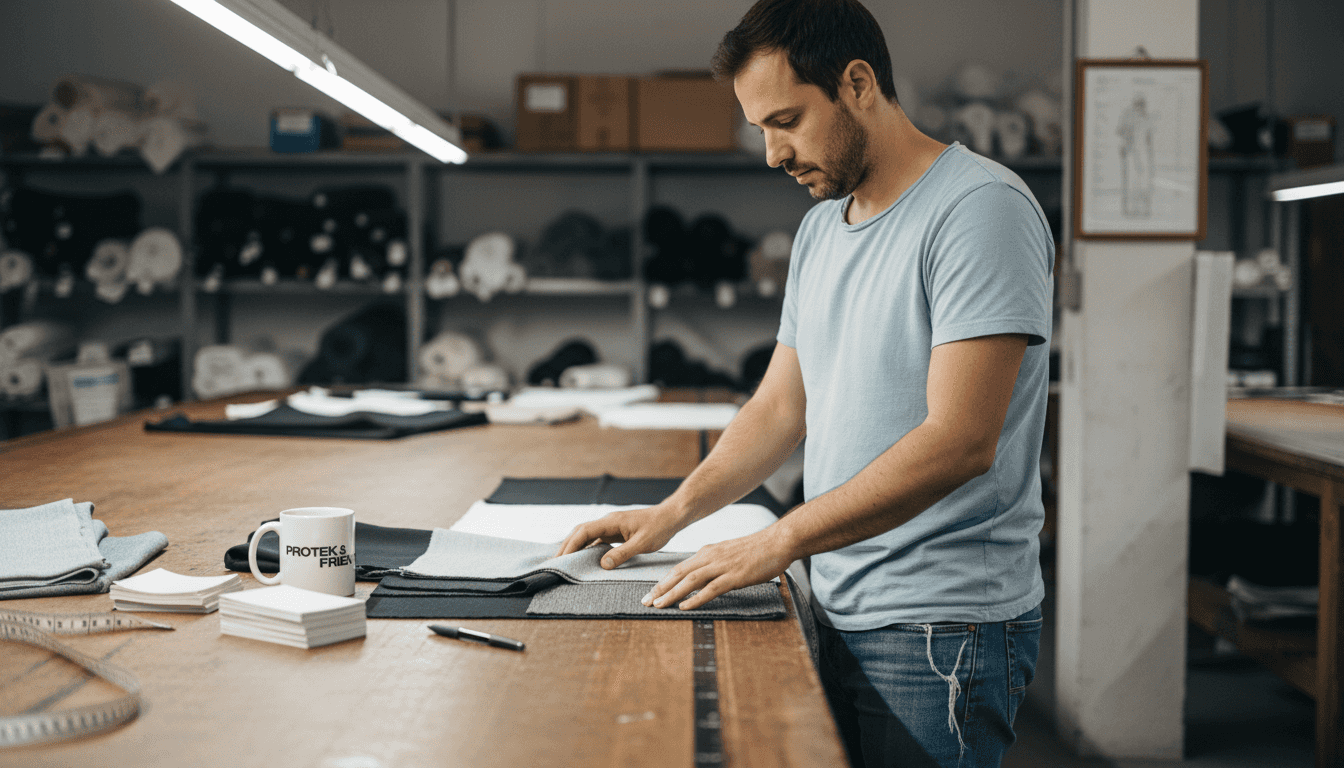
Once you have swatches, test them. Send samples to your factory so they can produce a test garment in that fabric. This is where you see if your beautiful design actually works in production. The fit might shift slightly. The fabric might behave differently than you expected. Colors might print or dye differently on finished goods. This is normal, and it's why sampling exists.
When evaluating materials, consider these factors:
- Fiber content and quality: Does the fabric meet your design standards and durability needs?
- Color consistency: Will dyes or prints reproduce accurately batch to batch?
- Cost impact: Does the material cost align with your target production budget?
- Sustainability credentials: Can you verify where materials come from and their environmental impact?
- Availability: Can the supplier deliver the quantity you need on your timeline?
You can reference a materials directory to identify reliable suppliers and understand material pedigrees across the industry. This transparency helps you make informed sourcing decisions before committing to bulk production.
Below is a comparison of common garment material sourcing options:
| Material Type | Strengths | Risks | Typical Uses |
|---|---|---|---|
| Cotton | Soft, breathable | Color variation, shrinkage | T-shirts, casual wear |
| Polyester | Durable, low cost | Less breathable, pilling | Sportswear, uniforms |
| Blended fabrics | Balanced properties | May hide quality issues | Fashion, flexible designs |
| Specialty fibers | Unique features, eco-friendly | High price, limited supply | Premium, eco collections |
Once fabrics are approved, do the same process for trims. Thread, buttons, zippers, labels, and elastic all matter. A cheap zipper fails and damages your brand reputation. Test trims in your samples and get written approval before production starts.
Approve materials in samples before bulk production, not after thousands of units are made.
After sampling is complete and you're happy with fit, fabric, and construction, get formal written approval from your factory. Document which specific fabric dye lot, which trim supplier, and which construction method you approved. This becomes your reference for bulk production. If something looks different later, you have proof of what you signed off on.
Pro tip: Request small reserve samples of approved fabrics and trims from your supplier and keep them in your files. If bulk production quality doesn't match samples, these reserves let you compare side by side and prove whether the issue is production drift or supplier change.
Step 3: Map Timeline and Secure Costs
You need a realistic timeline and locked costs before you commit to production. Vague timelines and surprise invoices kill margins and create stress. This step forces you to get specific about when everything happens and what you'll actually pay.
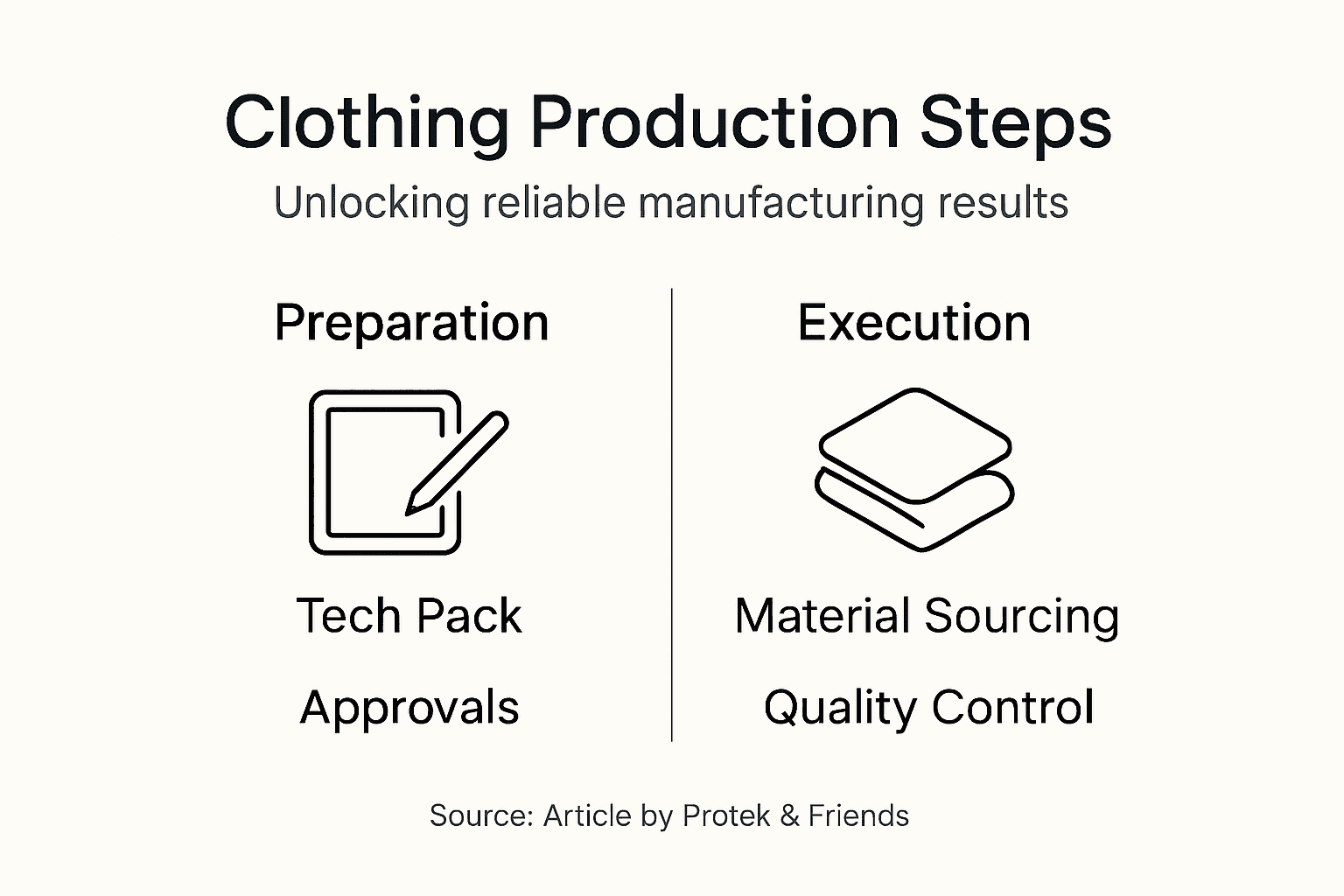
Start by breaking down your production timeline into phases. Sampling takes weeks, not days. Material sourcing takes time. Bulk production has lead times. Quality control requires inspection windows. Build your timeline backward from when you need finished goods in your warehouse.
Your timeline typically looks like this:
- Sampling phase: 2 to 4 weeks for fit approval and revisions
- Material sourcing: 1 to 3 weeks to confirm fabrics and trims are available
- Pre-production approval: 1 to 2 weeks for factory to set up production
- Bulk production: 4 to 8 weeks depending on order size and complexity
- Quality inspection: 1 to 2 weeks for checks and packing
- Shipping: 2 to 4 weeks if overseas, 1 to 2 weeks domestically
Make this timeline visible to your factory. Ask them to commit to dates and flag risks early. If they can't meet your timeline, you know it now, not after you've committed money.
Next, secure your costs. Understanding fixed and variable costs of production helps you build an accurate budget. Request detailed cost breakdowns from your factory that include fabric, trims, labor, and overhead. Don't accept vague pricing like "$8 per unit." You need itemized costs so you know where money goes.
Make sure you know what's included in the price:
- Material costs: Fabric, trim, thread, labels, hang tags
- Labor costs: Pattern making, cutting, sewing, finishing
- Overhead: Factory operations, quality control, packing
- Shipping: Internal factory shipping to port or warehouse
- Contingency buffer: Add 5 to 10 percent for unexpected costs
Once you have costs and timeline, document it all in a production agreement or email from your factory. Get written confirmation of dates and prices. This protects both sides. If costs change later, you have proof of what was promised.
Lock timeline and costs in writing before production starts. Handshake deals create disputes.
If the timeline feels tight or costs feel high, negotiate now. It's far easier to adjust before production begins than to rush production or absorb unexpected charges.
Pro tip: Build a simple production calendar with key milestones (sample approval date, fabric confirmation date, production start date, QC date, shipping date) and share it with your factory weekly. When everyone sees the same timeline, delays get flagged immediately instead of discovered late.
Step 4: Oversee Bulk Production and Quality
Once bulk production starts, your job shifts from planning to oversight. You're watching the factory execute your tech pack consistently, spotting problems early, and ensuring quality matches your samples. This is where most brands lose control because they go silent and hope everything works out.
Set up a communication rhythm with your factory from day one. Weekly updates should cover production progress, any issues encountered, and photos of work in progress. You want visibility into what's happening without micromanaging. If the factory can't commit to weekly communication, that's a red flag.
Establish clear quality checkpoints during production. Work with your factory to inspect garments at key stages.
- After cutting: Check that pieces are cut accurately and match your tech pack measurements
- After sewing major seams: Verify seam quality and stitch count before the entire garment is assembled
- After finishing: Inspect hems, closures, and any special details before packing
- Final inspection: 100 percent inspection of finished goods before shipment
Implement production and process controls that document how quality will be managed throughout bulk production. These controls include standard operating procedures, process monitoring, equipment maintenance, and environmental conditions. Your factory should have written inspection procedures that specify what passes and what fails.
Request photos at each checkpoint. Have your factory send you photos of garments before and after major production steps. This creates accountability and gives you proof of quality if disputes arise later.
Don't wait until the end to catch problems. If seam quality is poor after 500 units, you want to know immediately so the factory can correct the process before making 10,000 more. Early catches save money and time.
Quality problems discovered in bulk production cost far more to fix than problems caught in sampling.
Schedule a pre-shipment inspection with a third-party quality control company if your order is large or if you're overseas. They'll inspect a random sample and provide a detailed report. This protects you from shipping defective goods to customers.
Keep records of all communications, photos, and inspection reports. If quality issues emerge after delivery, you have documentation of what the factory delivered and what you approved.
Pro tip: Ask your factory for real-time production photos taken by their quality team, not polished marketing photos. Photos of seams, thread tension, hem consistency, and button placement show actual production quality far better than finished product glamour shots.
Step 5: Coordinate Delivery and Verify Completion
Production is done, but your order isn't complete until goods arrive at your warehouse in sellable condition. This final step involves coordinating shipping, tracking progress, and verifying that what arrives matches what you paid for and approved.
Work with your factory to confirm the exact shipping date and method. Are they shipping by ocean freight, air, or ground? How long will transit take? Get tracking numbers and carrier information so you can monitor the shipment in real time. Don't assume anything ships on schedule without confirmation.
Before goods leave the factory, conduct a final verification inspection. Request photos of packed cartons showing proper labeling, quantity counts, and condition. Have the factory provide a packing list that itemizes what's in each carton, SKU by SKU. This prevents confusion when boxes arrive at your warehouse.
Coordinate the planning and expediting of delivery by staying in touch with your factory about any shipping delays or logistics issues. If a shipment gets held at customs or delayed at the port, you want to know immediately so you can communicate with customers or adjust your sales timeline.
When goods arrive at your warehouse or fulfillment center, do a receiving inspection:
- Count cartons: Verify the number of boxes received matches the packing list
- Spot check quality: Open several cartons and inspect garments for damage or defects
- Verify SKUs and sizes: Make sure the mix of sizes and colors matches your order
- Check for documentation: Ensure all tags, labels, and hang tags are in place
If you discover damage or missing units, document it immediately with photos. Don't accept shipments with obvious issues. Contact your factory the same day to resolve discrepancies while the shipment is still fresh in everyone's memory.
Complete your receiving inspection before accepting the shipment as final. Once you sign off, the factory's liability ends.
After you've verified completion and everything matches your approval, formally close out the order with your factory. Send an email confirming receipt, quantity, and quality acceptance. This formal closure prevents future disputes about what was delivered.
Pro tip: Request a Bill of Lading (BOL) from your freight forwarder the day goods ship, and share it with your warehouse team before arrival. This gives them advance notice of what's coming, carton counts, and expected delivery dates so receiving goes smoothly.
Bring Clarity and Control to Your Clothing Production Journey
Managing clothing production for reliable results requires more than just good intentions. The article highlights common challenges including unclear approval stages, unexpected costs, shifting timelines, and quality control issues that cause stress and threaten your brand’s reputation. If you recognize the frustration of vague communication or fear costly mistakes after bulk production starts you are not alone. Effective production demands clear documentation, structured development processes, and timely approvals.
At Protek & Friends, we transform this chaos into confidence. With a hybrid manufacturing model based in the USA and overseas, we specialize in guiding small to mid-size brands through every step—from technical review to fabric sourcing and sampling, cost and timeline mapping, bulk production oversight, quality inspections, and delivery coordination. We do not just take orders but act as your trusted production partner who values transparent communication and detailed documentation to protect your margins and ensure zero surprises.
Ready to replace anxiety with systems that work Visit Protek & Friends today to learn how our structured approach empowers serious brand owners to produce correctly and scale efficiently. Discover how our structured development process and clear documentation eliminate guesswork so your clothing production feels reliable and boring in the best way. Take control of your next production order with a partner who understands your goals and stands by your quality standards.
Frequently Asked Questions
What is a tech pack and why is it important in clothing production?
A tech pack is a detailed document that outlines all specifications for your garment, including fit measurements, fabric types, and construction methods. It is crucial for ensuring the factory accurately produces your designs, preventing costly mistakes. Start by creating a comprehensive tech pack before sampling to serve as your project’s foundation.
How can I ensure quality control during bulk production?
To maintain quality during bulk production, establish clear quality checkpoints at critical stages like cutting, sewing, and finishing. Communicate regularly with your factory and implement standard operating procedures to monitor these checkpoints effectively. Schedule weekly updates to address any issues early and prevent quality problems from affecting your final product.
What steps should I take to verify materials before production?
Before proceeding with production, always send fabric and trim samples to your factory for testing in a sample garment. Evaluate the material quality, color consistency, and cost before approving them for bulk production. Confirm these details in writing to protect against future discrepancies.
How can I create a realistic production timeline?
To develop a realistic production timeline, break down all phases, including sampling, material sourcing, and quality control, estimating the duration for each step. Build your timeline backward from your desired delivery date to ensure all tasks are accounted for and track potential delays proactively. Aim to have a detailed timeline within two weeks after finalizing your tech pack.
What is the best way to handle shipping and delivery coordination?
Coordinate shipping and delivery by confirming the shipping date and method with your factory, along with obtaining tracking information for real-time updates. Conduct a final verification inspection of packed goods before shipping to ensure everything is in order. Always check documentation, such as packing lists, to prevent misunderstandings upon arrival.
How do I document approvals during the production process?
Document approvals by creating a checklist that lists all items needing your review, such as sample fit and material colors. Use a sign-off sheet to track dates and responsible parties for each stage, ensuring that your factory knows when to halt production for your approval. Keep this documentation organized to resolve disputes should they arise later.