
Scaling your fashion brand shouldn't feel chaotic. Yet over 60% of brands experience communication breakdowns and higher defect rates when relying on factories alone. A production partner transforms this uncertainty into structured growth by managing every phase of development with transparency and systems. This guide explains their critical role and shows you how to work with them effectively.
Table of Contents
- Understanding the role of production partners vs. traditional factories
- How structured processes enable predictability in scaling
- Quality control: the production partner's key role
- Hybrid manufacturing models supporting scalable growth
- Common misconceptions and why they're harmful
- Practical case studies of production partnership success
- Applying the framework: choosing and working with your production partner
- Partner with experts for predictable, high-quality scaling
- Frequently asked questions
Key takeaways
| Point | Details |
|---|---|
| Production partners differ from factories | They provide strategic collaboration with structured workflows, documentation, and proactive communication instead of transactional order fulfillment. |
| Structured processes reduce delays and costs | Pre-production documentation, regular communication protocols, and systematic milestone tracking create predictability during scaling. |
| Integrated quality control lowers defect rates | Multi-phase checkpoints ensure consistent standards, reduce returns, and protect brand reputation better than reactive factory fixes. |
| Hybrid models balance speed, cost, and risk | Combining domestic and overseas manufacturing provides agility for demand fluctuations while protecting margins during disruptions. |
| Partnership selection is crucial | Choosing the right production partner with proven systems prevents the costly mistakes that occur when brands misunderstand production roles. |
Understanding the role of production partners vs. traditional factories
A production partner acts as your strategic collaborator through every stage of bringing collections to market. They manage design review, fabric sourcing, sampling, fit corrections, cost breakdowns, timeline coordination, bulk production, quality control, and delivery logistics. This end-to-end involvement creates transparency and reduces risk through proactive problem solving.
Traditional factories operate differently. They focus exclusively on manufacturing what you order. Communication tends to be minimal and transactional. When issues arise, you discover them late because factories rarely flag problems proactively. Factories alone lack the proactive communication and quality management systems that production partners provide.
Here's what production partners handle that factories typically don't:
- Technical design review to catch production issues before sampling
- Coordinated fabric sourcing with quality verification
- Multiple fit correction rounds with documentation
- Transparent cost breakdowns before you commit
- Timeline mapping with contingency planning
- Ongoing quality control at every production phase
- Delivery coordination with logistics troubleshooting
This comprehensive approach means fewer surprises. You gain visibility into potential problems early when they're cheaper and easier to fix. The right partner becomes an extension of your team, invested in your success beyond a single purchase order.
Many brands discover this difference only after experiencing costly delays or quality failures with factory-only relationships. Understanding these distinctions upfront helps you structure partnerships that support sustainable growth rather than create ongoing stress. Explore how clothing production services integrate these elements.
How structured processes enable predictability in scaling
Predictability starts with documentation. Before production begins, a solid partner maps every cost component and timeline milestone in writing. You see fabric costs, labor rates, sampling fees, shipping estimates, and payment schedules laid out clearly. This transparency eliminates the surprise markups or hidden charges that erode margins.
Communication protocols create the second layer of predictability. Instead of chasing updates or wondering about production status, you receive regular reports on a set schedule. Weekly status reports improved issue resolution speed by 35% by catching problems early. These updates include:
- Current production phase and completion percentage
- Any material delays or quality concerns identified
- Upcoming milestones and required decisions from your team
- Photos or samples showing work in progress
- Revised timelines if issues require adjustments
Systematic milestone tracking replaces guesswork with accountability. Your partner monitors each production stage against the agreed timeline. When fabric delivery runs late or a fit issue emerges, you know immediately rather than discovering it weeks later when options are limited.
This structured approach transforms anxiety into confidence. You can plan marketing launches, coordinate retail deliveries, and manage cash flow because production timelines become reliable. The chaos that typically accompanies scaling dissolves when clear processes replace reactive firefighting.
Pro Tip: Request weekly production reports even when everything runs smoothly to establish the communication rhythm before issues arise.
Consistent processes also make it easier to scale volume over time. Once systems work for one collection, they replicate smoothly for subsequent runs. You're not reinventing workflows or reexplaining standards with each order. Learn more about maintaining consistency through styling tips designer clothes approaches.
Quality control: the production partner's key role
Quality control embedded throughout production catches defects before they multiply. Production partners implement checkpoints at fabric inspection, pre-production sampling, inline checks during bulk manufacturing, and final audits before shipping. Each phase targets specific quality risks that factories handling only final inspection often miss.
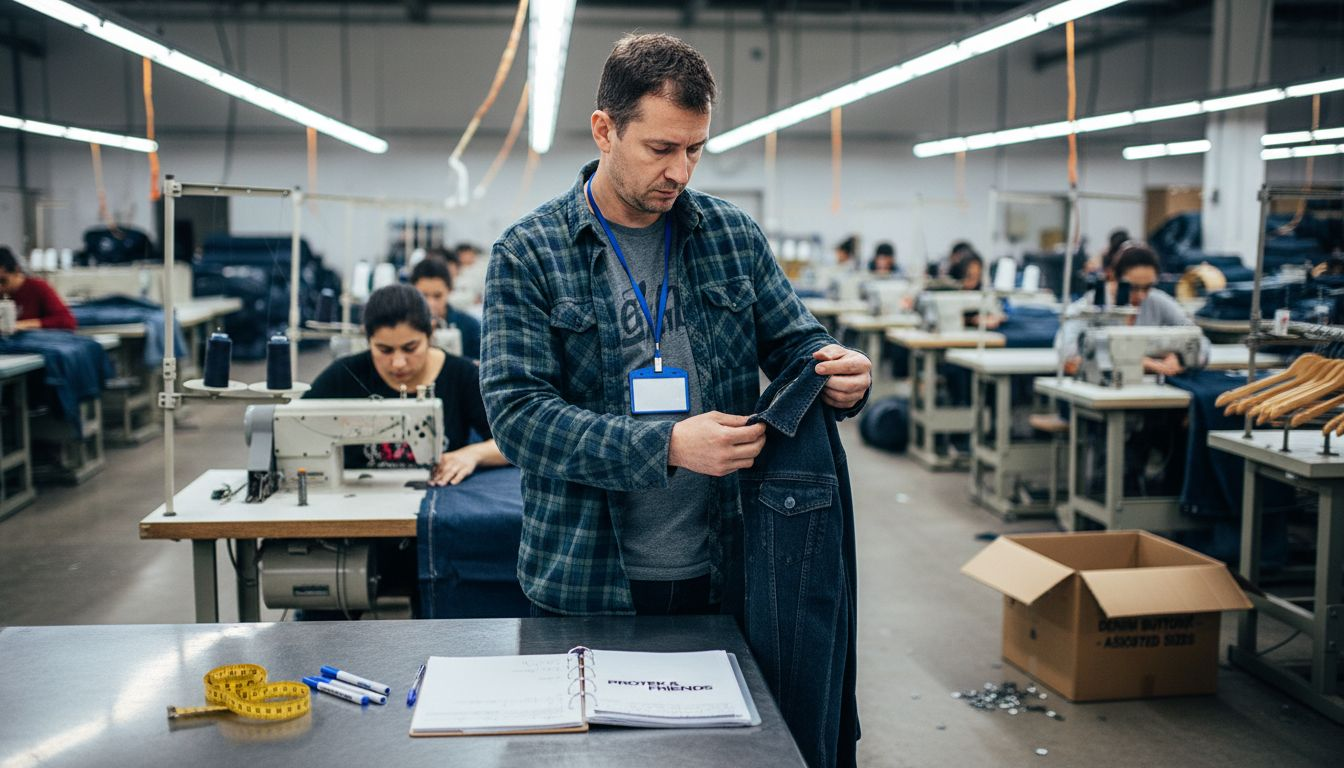
Fabric inspection happens when materials arrive at the facility. Partners check for color consistency, weight accuracy, defects like holes or misprints, and shrinkage potential. Catching substandard fabric here prevents wasting time and money on garments that will fail later standards.
Fit and construction reviews during sampling ensure your designs translate correctly to production. Partners identify issues like pattern adjustments needed, stitch quality concerns, or finishing details that need clarification. You approve samples only after these corrections, establishing the quality baseline for bulk production.
Inline quality checks during manufacturing monitor consistency as production runs. Random garment inspections verify measurements, stitch integrity, and construction details match approved samples. Early detection allows immediate corrections rather than discovering thousands of defective units at final inspection.
Here's how production partner quality control compares to traditional factory approaches:
| Quality Control Feature | Production Partner | Traditional Factory |
|---|---|---|
| Fabric inspection | Standard pre-production checkpoint | Often skipped or minimal |
| Fit review process | Multiple correction rounds documented | Limited to initial sample |
| Inline monitoring | Regular checks during production | Rare or inconsistent |
| Final audit thoroughness | Detailed inspection with documentation | Basic pass/fail review |
| Defect response | Immediate correction protocols | Reactive after completion |
| Quality reporting | Transparent metrics shared with brand | Minimal communication |
This rigorous approach reduces defect rates significantly. Brands working with quality-focused partners typically see 40% fewer customer returns related to construction or fit issues. Lower return rates protect your reputation and improve unit economics.
Pro Tip: Ask potential partners for their quality control checklist and defect rate data from recent production runs to verify their systems.
Compare different production approaches or explore full package clothing manufacturer options that integrate quality control.
Hybrid manufacturing models supporting scalable growth
Hybrid manufacturing combines domestic and overseas production to balance speed, cost, and risk. This model gives you flexibility that single-location strategies can't match. When demand spikes unexpectedly or you need quick turnarounds, domestic facilities respond fast. For larger volume runs where cost efficiency matters more than speed, overseas partners deliver savings.
Domestic manufacturing units excel at rapid response and quality oversight. Shorter shipping times mean you can test market response with smaller batches before committing to volume. Easier facility visits allow hands-on quality monitoring. Communication happens in real time without language barriers or time zone delays.
Overseas manufacturing provides cost advantages for established products and larger runs. Labor and overhead rates lower per-unit costs significantly once you've validated designs and demand. Volume production becomes more economical, protecting margins as you scale.
Hybrid models combine speed advantages of domestic with cost benefits of overseas production while mitigating supply chain risks. If one region faces disruptions, you maintain production capacity through the other. This resilience proved critical during recent global supply chain volatility.
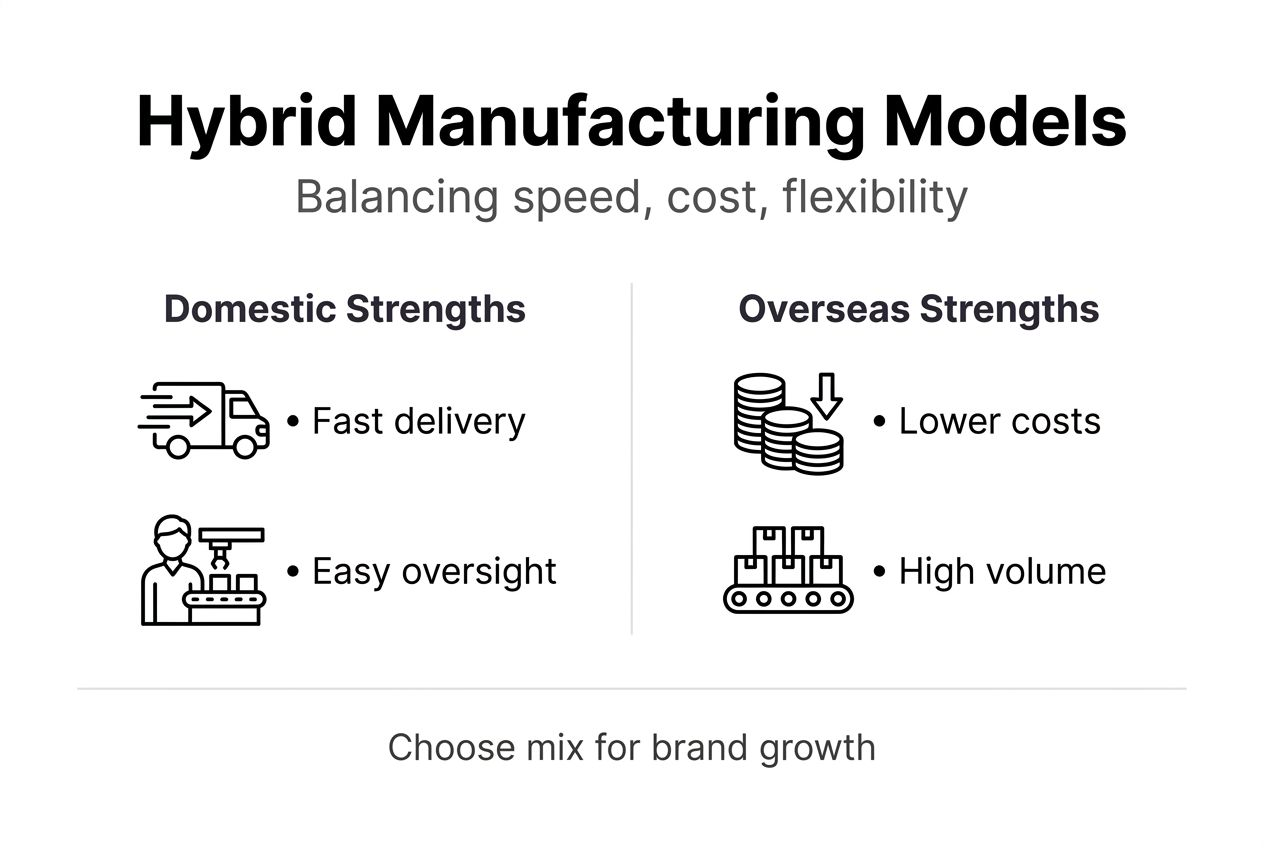
Here's how hybrid and overseas-only models compare on key metrics:
| Metric | Hybrid Model | Overseas-Only Model |
|---|---|---|
| Lead time flexibility | High (2-4 weeks domestic option) | Low (8-12 weeks typical) |
| Cost per unit at volume | Moderate (balanced approach) | Lowest (economies of scale) |
| Quality control ease | High (domestic oversight available) | Moderate (distance challenges) |
| Supply chain risk | Lower (geographic diversification) | Higher (single point of failure) |
| Market testing speed | Fast (quick domestic sampling) | Slow (long international shipping) |
| Communication simplicity | Higher (fewer barriers) | Lower (language, time zones) |
The optimal mix depends on your product categories and business stage. New or complex designs benefit from domestic development before overseas scaling. Established products with proven demand shift toward overseas volume production. Partners managing hybrid models help you allocate production strategically across both channels.
This flexibility supports steady growth without forcing you to choose between speed and cost. You optimize each collection or production run based on current priorities rather than being locked into a single approach. Visit difference between 3pl and 4pl to understand related logistics models.
Common misconceptions and why they're harmful
Many brands assume factories alone can manage scaling because they handle manufacturing. This misconception causes preventable problems. Over 60% of brands scaling without production partners experience chaotic orders, unexpected costs, and quality failures. Factories focus on making what you specify but rarely provide the strategic oversight needed to catch design issues, coordinate timelines, or manage quality systematically.
Another dangerous belief is that cost overruns are simply inevitable during production scaling. Brands accept surprise expenses as normal rather than recognizing them as symptoms of poor planning and documentation. Transparent cost breakdowns created upfront by production partners eliminate most surprise charges. When you understand every component cost before committing, budgets stay predictable.
Some brand owners think communication failures are unavoidable when working with manufacturers. They expect delays in responses, unclear status updates, and discovering problems late. Structured communication protocols actually reduce these failures by over 30%. Regular reporting schedules, clear escalation paths, and proactive issue alerts replace reactive chaos with manageable workflows.
Here's how misconceptions compare to reality:
| Misconception | Reality |
|---|---|
| Factories can manage full scaling | Factories lack integrated communication, quality management, and strategic coordination needed for reliable scaling |
| Cost overruns are inevitable | Transparent documentation and systematic tracking control costs predictably when proper processes exist |
| Communication will always be difficult | Structured protocols, regular reporting, and proactive alerts reduce communication issues significantly |
| Quality problems are normal during growth | Multi-phase quality control catches defects early, making consistent quality achievable at scale |
| Speed requires sacrificing quality or cost | Hybrid models and proper planning allow optimizing for multiple priorities simultaneously |
When these misconceptions remain uncorrected, brands face:
- Repeated production delays disrupting marketing and sales plans
- Unexpected costs eroding profit margins on collections
- Quality issues damaging brand reputation and customer trust
- Stressful relationships with manufacturers lacking clear communication
- Difficulty scaling beyond initial production runs due to chaos
Recognizing these false beliefs early helps you structure partnerships correctly from the start. Understanding what production partners actually provide versus what factories do prevents costly mistakes that slow growth. Explore comprehensive clothing production services that address these realities.
Practical case studies of production partnership success
A Los Angeles denim brand faced typical scaling challenges after their second collection sold faster than expected. Working with a factory alone, they experienced three-week delays, surprise fabric cost increases, and inconsistent sizing across the production run. Returns jumped to 18% due to fit issues.
Switching to a production partner with hybrid manufacturing capabilities transformed their results. The partner implemented weekly status calls, documented all costs before sampling, and conducted inline quality checks during production. The brand's third collection delivered on schedule with 25% shorter lead times and 15% lower overall costs due to transparent pricing and better fabric sourcing.
Quality improvements proved even more dramatic. Multi-phase quality control reduced defect rates by 40%. Returns dropped from 18% to under 7%. Consistent sizing and construction quality strengthened customer confidence. The brand could focus on design and marketing rather than firefighting production problems.
Communication became predictable. Instead of chasing updates, the brand received detailed reports every Tuesday covering current production status, upcoming decisions needed, and any emerging issues. Early problem detection allowed quick resolution before delays occurred. The structured approach eliminated the anxiety that had accompanied previous production runs.
Key lessons from this partnership:
- Transparent documentation prevents surprise costs and enables accurate financial planning
- Regular communication protocols catch issues early when they're easier and cheaper to fix
- Systematic quality control throughout production delivers consistent results at scale
- Hybrid manufacturing provides flexibility to optimize for both speed and cost
- Strong partnerships reduce stress and allow brand owners to focus on growth strategy
Similar results appear across brands that transition from factory-only relationships to structured production partnerships. The common thread is replacing reactive chaos with proactive systems. When processes, quality standards, and communication become predictable, scaling becomes manageable rather than overwhelming.
Applying the framework: choosing and working with your production partner
Selecting the right production partner requires evaluating specific capabilities and cultural fit. Look for partners offering hybrid manufacturing options, transparent documentation practices, proven quality control systems, and strong communication protocols. These elements indicate they operate strategically rather than just transactionally.
Verify their track record by requesting references from brands at similar production volumes. Ask about defect rates, on-time delivery percentages, and how the partner handles problems when they arise. Strong partners share this data confidently because their systems produce consistent results.
Once you select a partner, structured onboarding sets the foundation for success:
- Complete initial technical review of your designs to identify production considerations early
- Develop samples with documented fit corrections and construction details
- Finalize cost breakdowns covering all components including fabric, labor, finishing, and shipping
- Map detailed timelines with milestones, decision points, and contingency buffers
- Begin bulk production with clear quality standards and inspection schedules
- Maintain ongoing quality monitoring through inline checks and final audits
- Coordinate delivery logistics with tracking and communication throughout shipping
Establish communication protocols during onboarding. Define report frequency, preferred contact methods, escalation procedures for urgent issues, and decision-making authority on both sides. Clear expectations prevent misunderstandings later.
Maintain the collaborative relationship through regular touchpoints even between production runs. Review what worked well and what could improve after each collection. Update processes as your brand evolves and production needs change. Strong partnerships adapt together rather than requiring renegotiation constantly.
Consider these collaboration best practices:
- Share your brand standards document covering quality expectations, labeling requirements, and packaging specifications upfront
- Provide clear technical packs with measurements, construction details, and material specifications
- Respond promptly to partner requests for decisions or approvals to avoid delaying timelines
- Visit production facilities when possible to build relationships and understand operations firsthand
- Budget appropriate time for sampling and revisions rather than rushing to bulk production
Pro Tip: Regularly revisit partnership terms as your production volume grows to ensure pricing, minimums, and processes still align with your evolving needs.
Explore Los Angeles full-package clothing production options or consider how brand marketing integrates with production planning.
Partner with experts for predictable, high-quality scaling
Scaling your fashion brand requires more than finding someone to make your clothes. You need a production partner with proven systems that eliminate chaos and deliver predictability. Protek & Friends specializes in helping brands like yours move from concept to finished product with structure and control.
Our hybrid manufacturing model balances domestic speed with overseas cost efficiency. Transparent documentation covers every cost before you commit. Rigorous quality control at multiple checkpoints ensures your products meet standards consistently. We operate as your strategic partner, not just another factory taking orders.
We work best with brand owners ready to scale with professional systems. If you value clear communication, documented processes, and quality control over empty promises, we should talk. Explore our clothing production services, compare Protek to typical factories, or learn more about Los Angeles full-package clothing production that supports sustainable growth.
Frequently asked questions
What is the difference between a production partner and a factory?
Production partners manage your entire development process including design review, sourcing, quality control, communication, and timeline coordination. Factories focus specifically on manufacturing the orders you place. Partners act as strategic collaborators invested in your success, while factories operate transactionally on individual purchase orders. This fundamental difference determines whether scaling feels structured or chaotic.
How do production partners improve communication and project transparency?
Production partners implement regular status reporting schedules, typically weekly, that keep you informed about production progress, emerging issues, and upcoming decisions needed. Weekly updates improve issue detection and resolution speed by 35% compared to reactive communication. You gain visibility into every production phase rather than discovering problems after they've already caused delays or defects.
What quality control measures do production partners implement to ensure product standards?
Quality control happens at multiple checkpoints including fabric inspection when materials arrive, pre-production sampling with fit corrections, inline checks during bulk manufacturing, and comprehensive final audits before shipping. Each phase targets specific defect risks. This systematic approach reduces customer returns by 40% compared to factories that only inspect finished goods reactively.
Why are hybrid manufacturing models beneficial for scaling fashion brands?
Hybrid models provide flexibility to optimize each production run for speed or cost depending on current priorities. Domestic facilities enable quick market testing and rapid response to demand changes. Overseas production delivers cost efficiency for established products at volume. Geographic diversification also reduces supply chain risk if one region faces disruptions. Learn more about logistics approaches at difference between 3pl and 4pl.
What criteria should I use to select the right production partner for scaling?
Prioritize partners offering transparent documentation of costs and timelines, proven quality control systems with measurable defect rates, hybrid manufacturing capabilities for flexibility, and structured communication protocols. Request references from similar-sized brands and verify their track record on on-time delivery and problem resolution. Cultural fit matters too since you'll collaborate closely. Find experienced partners at Los Angeles full-package clothing production.