
Skipping fit samples leads to bulk production disasters. Brands without a structured fit sampling process face defect rates 35% higher than those who test systematically. Fit samples are not optional extras, they are the quality control layer that protects your margins, timelines, and reputation. This guide clarifies what fit samples do, debunks common misconceptions, and shows you how to implement a fit sampling workflow that reduces errors, cuts costs, and supports scalable growth.
Table of Contents
- Introduction to fit samples in fashion production
- Common misconceptions about fit samples
- Fit sample process: best practices and workflow
- Quantifying the impact of fit samples on quality, cost, and timelines
- Comparison framework: fit samples versus prototype and pre-production samples
- Implementing fit sampling for scalable production
- Summary and next steps for brand owners
- Frequently asked questions about fit samples in fashion production
Key takeaways
| Point | Details |
|---|---|
| Early error detection | Fit samples identify fit and construction issues before bulk production, preventing costly rework. |
| Common misconceptions delay production | Confusing fit samples with prototype or pre-production samples misaligns expectations and timelines. |
| Structured feedback reduces revisions | Documented fit sample feedback can reduce revision cycles by 40%, accelerating approvals. |
| Measurable quality and efficiency gains | Fit samples reduce defect rates by up to 35% and cut lead times by up to 25%. |
| Scalable production workflows | Implementing fit sampling supports repeatable, efficient processes for growing brands. |
Introduction to fit samples in fashion production
Fit samples are physical prototypes created to verify sizing, construction accuracy, and fabric behavior before bulk production begins. Unlike prototype samples, which explore design concepts and aesthetics, fit samples focus on sizing and construction accuracy rather than purely aesthetics. They answer critical questions: Does this garment fit the target body correctly? Will the seams hold under stress? Does the fabric behave as expected?
For fashion brands scaling production, fit samples are essential quality control checkpoints. They expose hidden problems like pattern grading errors, seam allowances that distort fit, or fabric stretch that changes garment dimensions. Catching these issues early prevents reproducing defects across hundreds or thousands of units.
When you work with a full package clothing manufacturer, fit samples become the documented proof that your design translates correctly into a production-ready garment. Without them, you gamble on bulk orders with no verification.
Key reasons fit samples matter for scaling brands:
- They test sizing consistency across graded sizes to ensure your XS and XXL both fit correctly.
- They reveal construction flaws like puckering seams, misaligned panels, or unstable hems.
- They confirm fabric performance, checking stretch recovery, drape, and behavior after washing.
- They provide a reference standard for factory quality control during bulk production.
Fit samples shift risk from expensive bulk corrections to affordable early testing. The goal is not perfection in one round but systematic improvement across 2-3 controlled iterations.
Common misconceptions about fit samples
Many brand owners confuse fit samples with prototype samples or pre-production samples, leading to misaligned expectations and wasted time. Understanding these distinctions prevents costly delays.
Prototype samples explore design ideas. They test aesthetics, silhouette, and style directions. Fit samples, by contrast, validate technical accuracy. Confusing fit samples with prototype or pre-production samples results in misaligned expectations and delays because you ask the wrong questions at the wrong stage.
Another common error is believing more fit sample rounds automatically mean better quality. In reality, 2-3 rounds with clear, documented feedback produce optimal results. Excessive rounds often signal poor communication, not thoroughness. Each round should address specific fit or construction issues identified in the previous version.
Brand owners also mistakenly treat fit samples as final approvals. Fit samples verify fit and construction, not production readiness. Pre-production samples fulfill that role, testing the actual bulk production process with final materials and methods.
Pro Tip: Create a simple checklist for each fit sample round. List specific fit points to evaluate (shoulder width, armhole depth, waist placement) and construction details to inspect (seam finish, topstitching alignment, button placement). This keeps feedback focused and actionable.
Miscommunication with factories often stems from unclear sample purposes. If you request a fit sample but evaluate it like a prototype, the factory receives conflicting signals. Be explicit: "This fit sample tests sizing and construction only. We will address color and trim details in the pre-production sample."
For guidance on optimal sample rounds, review how many samples before bulk production to align your workflow with industry best practices.
Fit sample process: best practices and workflow
A structured fit sample workflow eliminates guesswork and accelerates approvals. Most brands need 2-3 fit sample rounds, each with a defined purpose.
Round 1 evaluates overall fit and major construction elements. You check sizing against your spec sheet, assess garment proportions on a fit model, and identify glaring issues like incorrect pattern grading or misplaced seams. Expect this sample to reveal significant adjustments.
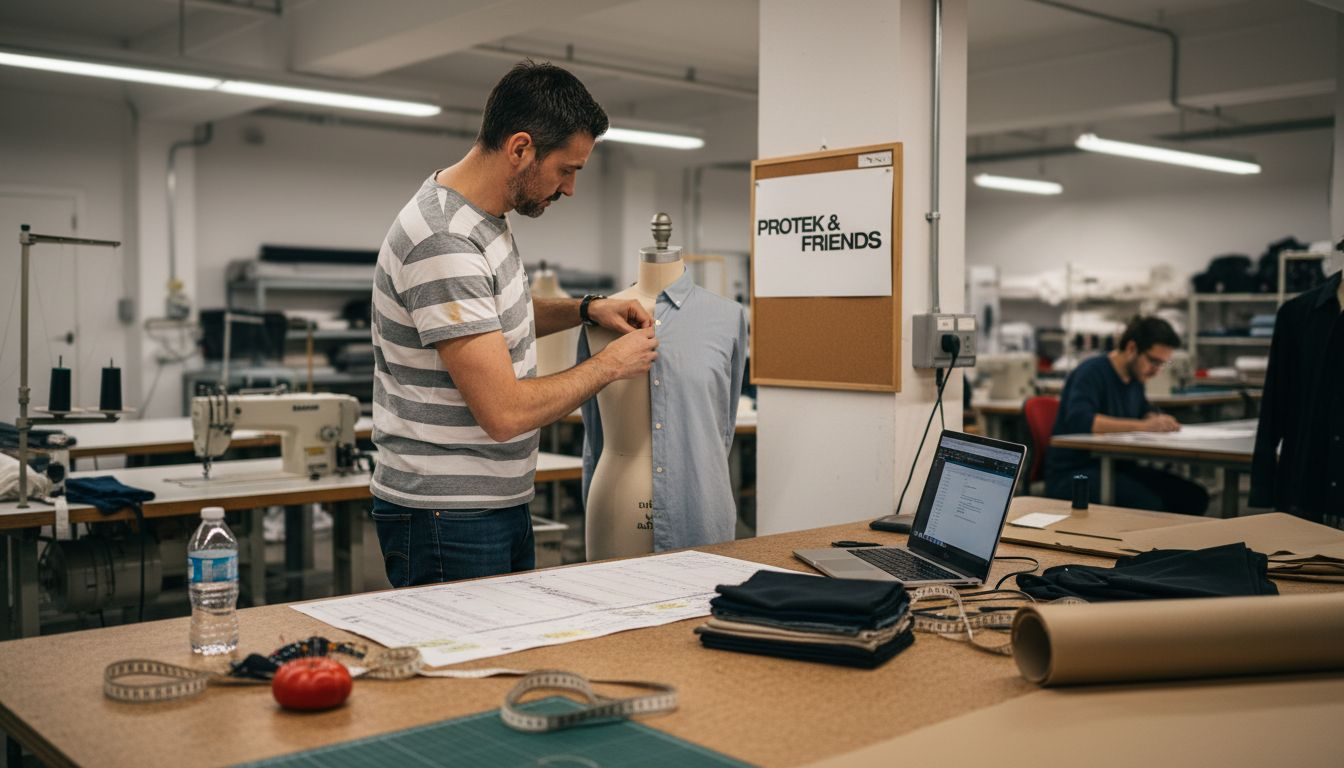
Round 2 addresses the corrections from Round 1. You verify the factory implemented your feedback accurately and refine smaller details like hem length, sleeve pitch, or dart placement. This round typically gets you 80-90% to your target fit.
Round 3 is optional and handles final tweaks. Use it only if Round 2 revealed new issues or if your product requires extremely precise fit standards (like tailored suiting or performance activewear).
Documenting feedback clearly is critical. Vague notes like "fix the fit" waste time. Instead, provide measurable instructions: "Increase shoulder width by 0.5 inches" or "Lower armhole depth by 0.25 inches." This precision can reduce revisions by 40% because the factory understands exactly what to change.
- Conduct fit sessions with consistent models wearing the same undergarments and shoes each time.
- Photograph every angle (front, back, side) and annotate images with specific feedback.
- Record measurements at key points (bust, waist, hip, inseam) and compare against your spec sheet.
- Share detailed written notes alongside photos, referencing specific pattern pieces or construction methods.
- Set clear deadlines for each round to maintain production momentum.
Pro Tip: Assign clear roles within your team. Your designer focuses on aesthetic alignment, your technical designer handles measurements and construction, and your production manager coordinates factory communication. This prevents conflicting feedback.
Balancing overhead costs with quality gains requires an efficient sampling cycle. Fit samples add 5-10% to upfront development costs but prevent far costlier bulk production errors. For more on structuring your sample strategy, see fit sample rounds guidance.
Quantifying the impact of fit samples on quality, cost, and timelines
Fit samples deliver measurable improvements in production quality, cost control, and speed to market. Brands that implement structured fit sampling report significant operational gains.
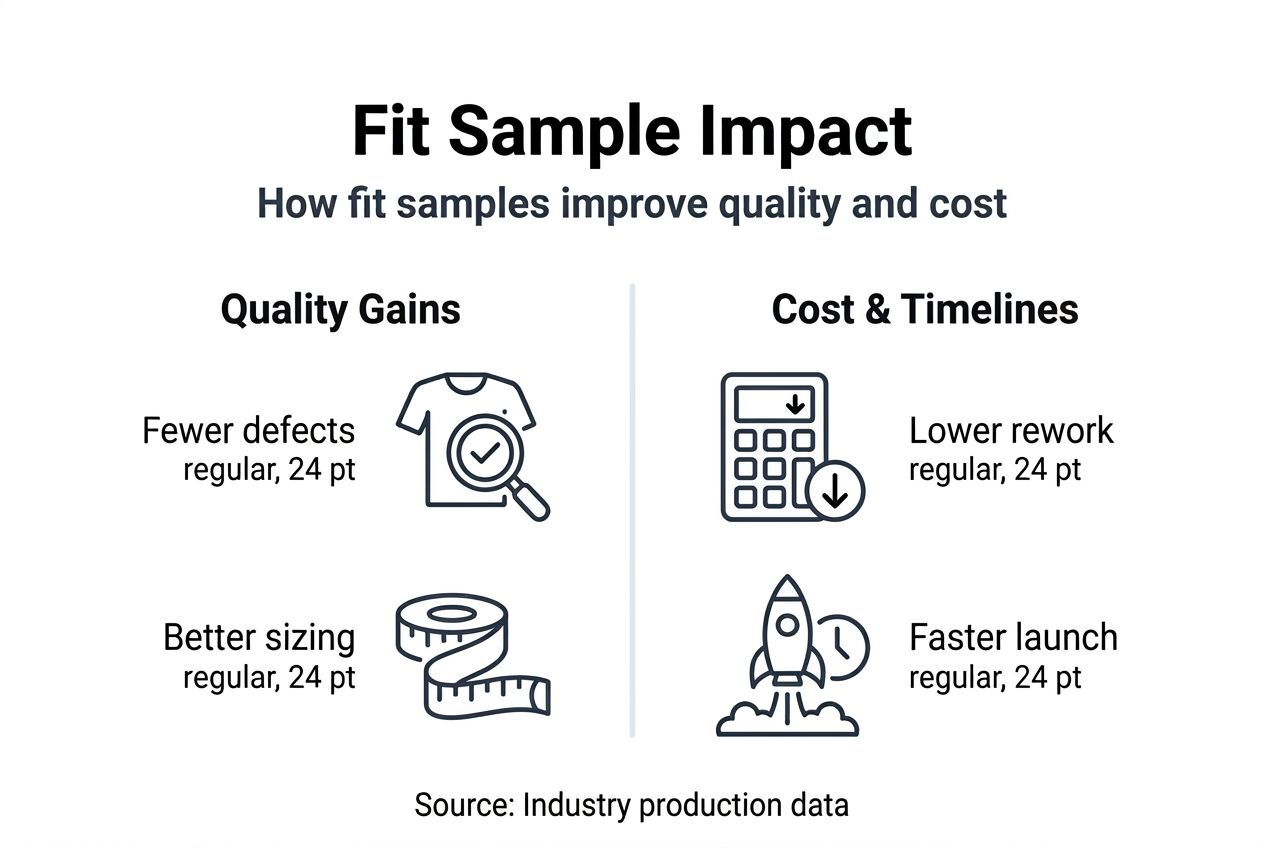
Fit samples can reduce production errors by 25-30% by catching sizing inconsistencies, pattern mistakes, and construction flaws before bulk orders begin. Every error eliminated in sampling prevents defects multiplied across hundreds or thousands of units.
Defect rates drop 20-35% with a structured fit sampling process. This reduction translates directly to fewer customer returns, lower replacement costs, and stronger brand reputation. Quality control becomes proactive rather than reactive.
Lead times decrease by 15-25% because fewer post-production corrections are needed. When bulk production runs smoothly without emergency fixes, you hit delivery windows consistently and avoid costly air freight to recover delayed timelines.
Production overhead increases 5-10% to cover sampling costs, but rework cost savings exceed 20%. The math is simple: paying for 2-3 fit samples costs far less than scrapping or reworking defective bulk inventory.
| Metric | Impact with Fit Samples | Impact without Fit Samples |
|---|---|---|
| Production Errors | 25-30% reduction | Baseline (100%) |
| Defect Rates | 20-35% lower | Baseline (100%) |
| Lead Times | 15-25% faster | Baseline (100%) |
| Upfront Overhead | 5-10% increase | 0% (but hidden costs emerge later) |
| Rework Costs | 20%+ savings | Baseline (100%) |
These improvements compound over multiple production runs. A brand producing four collections per year sees cumulative savings and efficiency gains that strengthen margins and market positioning.
Fit sampling is not an expense, it is an investment in production reliability. For brands working with a full package clothing production partner, systematic fit sampling becomes the foundation of scalable quality.
Comparison framework: fit samples versus prototype and pre-production samples
Understanding when to use each sample type prevents confusion and aligns your production timeline with realistic expectations.
Prototype samples explore design concepts. They test silhouette, style details, and aesthetic direction. Materials may be stand-ins, construction can be rough, and fit is secondary. Use prototypes in early design development to evaluate creative ideas before committing to technical specifications.
Fit samples verify sizing and construction accuracy. They use production-intent fabrics and construction methods to test how the garment fits on the body and whether seams, hems, and details execute correctly. Use fit samples after finalizing your design to ensure technical accuracy before bulk production.
Pre-production samples confirm bulk production readiness. They are made by the actual production line using final materials, trims, and processes. Use pre-production samples as the final approval checkpoint before placing your bulk order. They answer: "Will the factory replicate this exact garment consistently?"
Confusing these purposes causes delays. Requesting fit corrections on a prototype wastes time because prototypes are not built to production standards. Expecting a fit sample to include final trims and labels creates miscommunication because fit samples focus on construction, not finishing details.
| Sample Type | Primary Focus | Timing | Materials | Construction Quality |
|---|---|---|---|---|
| Prototype | Design and aesthetics | Early development | Stand-in fabrics acceptable | Rough, exploratory |
| Fit Sample | Sizing and construction | After design finalization | Production-intent fabrics | Production-standard methods |
| Pre-Production | Bulk production readiness | Final approval stage | Exact bulk materials and trims | Actual production line quality |
Using the right sample type at the right stage keeps your timeline efficient. For detailed guidance on sequencing samples correctly, visit sample types comparison.
Implementing fit sampling for scalable production
Integrating fit sampling into your production workflow requires clear systems and disciplined communication. Start by building fit sampling into your production calendar from the beginning.
Allocate 3-4 weeks per fit sample round, including manufacturing time, shipping, fit session scheduling, and feedback documentation. Rushing fit samples to save time backfires when you miss critical issues and face expensive corrections later.
Establish clear, documented communication with your manufacturer. Share detailed tech packs with measurements, construction notes, and reference images. When requesting fit samples, specify exactly what you need evaluated: sizing accuracy, seam construction, fabric behavior. Avoid vague requests that invite misinterpretation.
Systematize your feedback loops to prevent repetitive errors. Create a standard template for fit sample feedback that includes measurement tables, annotated photos, and written notes organized by garment section (bodice, sleeves, hem, etc.). Consistent formatting helps factories process feedback quickly and accurately.
- Schedule fit sessions immediately upon receiving samples to avoid timeline delays.
- Involve the same team members in every fit session to maintain consistency in evaluation criteria.
- Use the same fit models across all rounds to eliminate variables caused by body differences.
- Archive all feedback and photos to create a reference library for future collections.
Foster cross-functional collaboration among design, production, and quality teams. Designers provide aesthetic perspective, technical designers ensure spec accuracy, and production managers coordinate factory execution. When these roles work in sync, fit sampling becomes efficient and effective.
Pro Tip: Create a shared digital folder for each style where all fit sample feedback, photos, measurements, and correspondence live. This centralized documentation prevents miscommunication and provides a complete audit trail.
For brands ready to scale, partnering with a structured manufacturer eliminates sampling chaos. Explore clothing production services designed to support systematic fit sampling and quality control. Compare how different production partners handle sampling workflows at compare protek to find the right fit for your brand.
Scalable production depends on repeatable processes. Fit sampling is not a one-time task but a standard operating procedure that protects quality as you grow. Brands that systematize fit sampling report smoother production cycles, fewer surprises, and stronger margins. Learn more about structured production partnerships at full package clothing manufacturer.
Summary and next steps for brand owners
Fit samples are the quality control layer that separates successful scaling from costly production disasters. They verify sizing accuracy, construction integrity, and fabric performance before you commit to bulk orders.
The proven impact is measurable: 25-30% fewer production errors, 20-35% lower defect rates, and 15-25% faster lead times. These improvements protect your margins and reputation while supporting consistent delivery timelines.
Key best practices include:
- Conducting 2-3 structured fit sample rounds with clear, documented feedback.
- Distinguishing fit samples from prototype and pre-production samples to avoid misaligned expectations.
- Systematizing feedback loops and team collaboration to eliminate repetitive errors.
- Building fit sampling into production calendars from the start, not as an afterthought.
Common pitfalls to avoid include vague feedback that wastes rounds, confusing sample purposes that delay timelines, and skipping fit samples to save upfront costs only to face far larger rework expenses.
Adopting a structured fit sampling system is essential for scaling brands. It transforms production from chaotic guesswork into a disciplined, repeatable process that delivers consistent quality and predictable timelines.
Explore Protek & Friends clothing production services to scale your brand
Scaling a fashion brand requires more than good design. It demands structured production systems that eliminate surprises and protect margins. Protek & Friends specializes in helping serious brand owners implement fit sampling workflows that catch errors early and ensure bulk production accuracy.
Our full-package clothing production model supports brands ready to produce correctly. We provide clear documentation, systematic fit sampling, transparent communication, and quality control at every stage. Whether you need hybrid manufacturing (USA or overseas), structured development processes, or expert guidance on fit corrections, we operate as your production partner, not just a factory.
Explore how we support fit sampling and scalable production at clothing production services. Compare our approach to traditional factories at compare protek. Ready to eliminate production chaos? Visit full package clothing manufacturer to learn how we help brands scale with structure and confidence.
Frequently asked questions about fit samples in fashion production
How many fit sample rounds are typically needed for scaling brands?
Most brands need 2-3 fit sample rounds. Round 1 identifies major fit and construction issues, Round 2 verifies corrections and refines details, and an optional Round 3 handles final tweaks if necessary. More rounds do not automatically mean better quality, clear feedback and efficient communication do.
What's the difference between a fit sample and a prototype sample?
Prototype samples explore design concepts and aesthetics, often using stand-in materials and rough construction. Fit samples verify sizing accuracy and construction quality using production-intent fabrics and methods. Prototypes answer "Does this design work?" while fit samples answer "Does this garment fit and construct correctly?"
How does fit sampling reduce production costs?
Fit sampling catches errors before bulk production, preventing defects multiplied across hundreds or thousands of units. While fit samples add 5-10% to upfront development costs, they eliminate rework expenses exceeding 20% and reduce defect-related returns, protecting your margins and reputation.
Can skipping fit samples save time? What's the risk?
Skipping fit samples might save 3-4 weeks upfront but risks far longer delays fixing bulk production errors. Brands without structured fit sampling face defect rates 35% higher, leading to expensive rework, customer returns, and missed delivery windows that damage brand credibility.
How do you document fit sample feedback effectively?
Create a standard template with measurement tables, annotated photos, and written notes organized by garment section. Provide specific, measurable instructions like "increase shoulder width by 0.5 inches" rather than vague comments like "fix the fit." Clear documentation reduces revisions by 40% and accelerates approvals.