
Many brand owners view sampling as an unnecessary delay or added expense, but skipping or rushing this phase creates costly production mistakes and quality failures. Sampling is the strategic checkpoint that catches design flaws, sizing errors, and material issues before they multiply across hundreds or thousands of units. This article explains how a structured sampling process protects margins, reduces delays, and delivers consistent quality in apparel production.
Table of Contents
- Understanding the sampling process in apparel production
- Importance of sampling for cost and quality control
- Types of apparel samples and their roles
- A framework for apparel sampling processes
- Timing and cost implications of sampling
- Best practices for sampling management
- Unlock streamlined apparel production with Protek & Friends
- Frequently asked questions
Key takeaways
| Point | Details |
|---|---|
| Early validation saves money | Sampling detects design and material flaws before bulk production, preventing expensive rework and defects. |
| Different samples serve distinct roles | Proto, fit, pre-production, and salesman samples each address specific checkpoints in the production workflow. |
| Structured frameworks reduce risk | Organized sampling stages can mitigate production risks by up to 40% through systematic quality verification. |
| Clear timelines improve planning | Sample lead times typically range from 5 to 15 days, depending on complexity and material availability. |
| Effective management streamlines communication | Documentation and feedback loops between brand and factory minimize sample rework and delays. |
Understanding the sampling process in apparel production
Sampling validates your design, materials, and construction methods before committing to bulk production. Without this verification, you risk manufacturing garments that don't fit, use incorrect fabrics, or fail quality standards. Each sample type addresses specific decision points that collectively reduce the chance of bulk production failure.
A structured sampling framework categorizes samples into proto, fit, pre-production, and optional salesman samples, each addressing specific checkpoints that collectively minimize bulk production risks. These stages create a roadmap that transforms initial concepts into market-ready products.
The four primary sample types serve distinct functions:
- Proto samples test whether your design translates from sketch to physical garment, revealing construction challenges early
- Fit samples verify sizing accuracy across your size run, ensuring comfort and proportion meet brand standards
- Pre-production samples confirm that the factory can replicate approved designs consistently with correct materials and finishes
- Salesman samples support wholesale presentations and marketing campaigns, showcasing final product quality to buyers
Typical lead times vary by complexity. Proto samples often require 7 to 10 days, while fit samples may take 5 to 8 days. Pre-production samples need 10 to 15 days when confirming final materials and trims. Understanding these sampling stages and timelines helps you build realistic production schedules and avoid rushed decisions that compromise quality.
| Sample Type | Primary Purpose | Typical Lead Time |
|---|---|---|
| Proto | Design validation | 7-10 days |
| Fit | Sizing accuracy | 5-8 days |
| Pre-production | Manufacturing readiness | 10-15 days |
| Salesman | Marketing support | 8-12 days |
Importance of sampling for cost and quality control
Sampling reduces production errors by identifying design flaws, fit issues, and quality risks early, which prevents costly bulk production mistakes and improves overall production efficiency. Catching a construction error in a sample costs a few hundred dollars. Missing that same error in bulk production can cost thousands in rework, delays, and damaged customer relationships.

Sampling verifies that fabrics, trims, and colors match your specifications before large-scale cutting and sewing begins. A color mismatch discovered at the sampling stage requires ordering new fabric for one garment. The same problem found after cutting 500 units means scrapping materials, reordering, and pushing back delivery timelines.
Consider these common cost overruns prevented by effective sampling:
- Incorrect zipper lengths discovered in proto samples save the expense of replacing hardware across entire production runs
- Fit issues caught in fit samples prevent customer returns and negative reviews that damage brand reputation
- Construction weaknesses identified in pre-production samples eliminate the need for post-production repairs or replacements
- Material quality problems detected early avoid rejecting finished goods that fail inspection
Pro Tip: Always request samples made with your actual production fabrics and trims, not substitutes. Approximations hide problems that only appear when using final materials. This practice through cost savings through effective sampling ensures you approve what you'll actually receive.
The return on investment from proper sampling is substantial. Brands that skip or rush sampling often face production delays averaging 3 to 6 weeks and cost overruns reaching 20% to 40% of their initial budget. Structured sampling eliminates these surprises by validating every element before bulk commitment.
Types of apparel samples and their roles
Each sample type serves a specific function in your production workflow. Understanding when to request each type and what to approve at each stage prevents confusion and keeps your timeline on track.
-
Proto samples translate your design concept into a physical garment for the first time. Factories use these samples to identify construction challenges, test pattern accuracy, and confirm that your vision is technically feasible. You approve proto samples when the overall design, proportions, and construction method meet your expectations. Minor fit adjustments are normal at this stage.
-
Fit samples focus exclusively on sizing, comfort, and how the garment sits on the body. Factories produce fit samples in your full size run or key sizes to verify grading accuracy. You approve fit samples when measurements align with your spec sheets and the garment fits as intended across all sizes. This stage is critical for brands selling directly to consumers who expect consistent sizing.
-
Pre-production samples confirm that the factory can manufacture your approved design using final production materials and processes. These samples should be indistinguishable from what you'll receive in bulk. You approve pre-production samples only when fabrics, trims, stitching, colors, and finishes exactly match your standards. This is your last quality checkpoint before bulk cutting begins.
-
Salesman samples replicate approved pre-production samples for marketing, wholesale presentations, or photoshoots. These samples don't require technical approval since they mirror already-approved specifications. Their purpose is supporting sales activities, not validating production readiness.
Following a clear sample approval process at each stage prevents miscommunication and ensures both you and your factory agree on expectations before moving forward.
A framework for apparel sampling processes
Organizing your sampling workflow around clear decision points reduces risk and aligns expectations between your brand and factory. A structured sampling framework categorizes samples into proto, fit, pre-production, and optional salesman samples, significantly reducing risks.
Each sampling stage addresses specific questions:
- Proto stage: Is this design technically feasible? Does the construction method work? Are proportions correct?
- Fit stage: Do measurements match specs across all sizes? Is the fit comfortable and on-brand?
- Pre-production stage: Can the factory replicate approved designs with final materials? Does quality meet standards?
- Salesman stage: Do marketing samples accurately represent the final product?
Approval or revision decisions at each stage determine whether production advances or pauses for corrections. Requesting revisions during sampling costs significantly less than discovering problems in bulk production. Effective sampling risk mitigation framework practices integrate these checkpoints into your production timeline from the start.
| Stage | Key Question | Approval Criteria | Risk Addressed |
|---|---|---|---|
| Proto | Is design feasible? | Construction works, proportions correct | Design failure |
| Fit | Does sizing work? | Measurements match specs | Fit inconsistency |
| Pre-production | Can factory replicate? | Final materials meet standards | Quality variation |
| Salesman | Ready for market? | Matches approved pre-production | Misrepresentation |
Pro Tip: Document every approval and revision request with photos and written notes. This creates a reference trail that prevents disputes and ensures factory accountability throughout production.
Integrating sampling into your broader production workflow means planning these stages into your calendar before signing contracts. Brands that treat sampling as an afterthought create bottlenecks that delay launch dates and compress quality checks into rushed decisions.
Timing and cost implications of sampling
Sampling lead times directly impact your overall production schedule. Custom fabrics and specialty trims extend sampling duration because factories must source materials before constructing samples. A basic cotton tee might sample in 5 days, while a jacket with custom hardware and specialty finishes could require 15 days or more.
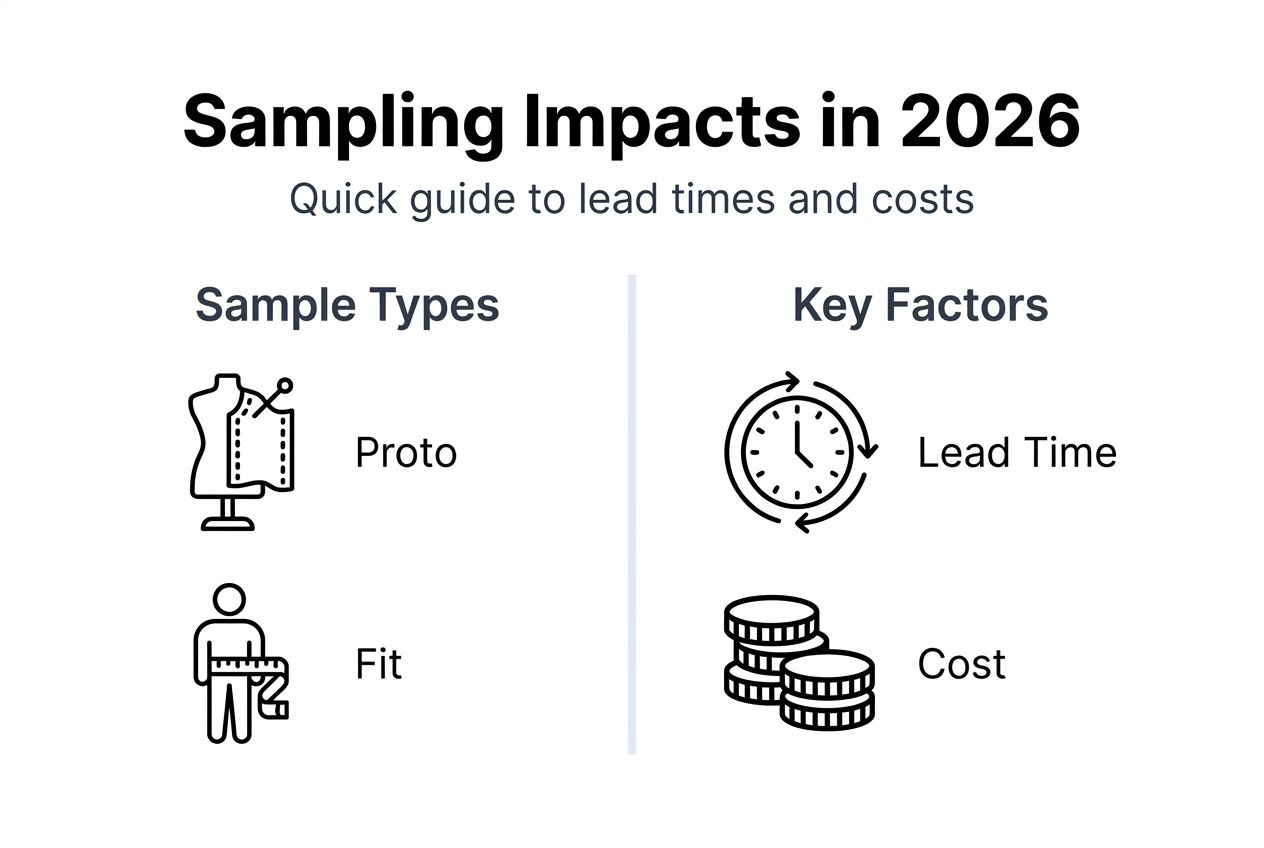
Design complexity also affects both time and cost. Garments with multiple panels, intricate stitching, or special treatments take longer to sample and cost more per unit. Simple designs with standard materials sample faster and cheaper, allowing quicker iteration if revisions are needed.
Strategies to manage sampling timelines efficiently:
- Order proto samples while finalizing fabric selections to run processes in parallel
- Approve fabrics and trims before requesting fit samples to avoid material delays
- Limit revision rounds by providing detailed tech packs and clear specifications upfront
- Build 2 to 3 weeks of buffer time into your production calendar for sampling phases
Understanding sampling timelines and cost management helps you set realistic expectations with stakeholders and avoid the panic that comes from compressed schedules. Factories prioritize clients who respect their processes and plan accordingly.
Sample costs vary widely based on construction complexity and material expense. Expect to pay $50 to $200 per sample for basic garments and $200 to $500 or more for complex pieces with custom fabrics. While this seems expensive, it's a fraction of the cost of fixing problems in bulk production.
Best practices for sampling management
Effective sample management transforms sampling from a chaotic back-and-forth into a systematic process that saves time and money. Effective sample management systems lead to improved production timelines, reduced sample loss, and enhanced communication, boosting operational efficiency.
Implement these practices to maximize sampling efficiency:
- Track every sample with a digital log that records dates, versions, feedback, and approvals. This prevents confusion about which version is current.
- Establish communication protocols that define how feedback is shared, who approves samples, and expected response times from both sides.
- Use feedback loops where factory questions are answered quickly and revision requests include specific, measurable changes rather than subjective opinions.
- Minimize rework by investing time in detailed tech packs and clear specifications before sampling begins. Vague instructions guarantee multiple revision rounds.
Pro Tip: Create a sample approval checklist that covers construction, fit, materials, trims, colors, and finishes. Use this checklist every time to ensure consistent evaluation and prevent overlooking critical details.
Clear sample workflow and communication protocols eliminate the common frustration of endless sample revisions that delay production and inflate costs. When both brand and factory understand expectations and processes, sampling becomes predictable and efficient.
Storing approved samples properly protects your investment and provides reference points for future production runs. Label each sample clearly, photograph it from multiple angles, and keep it in a climate-controlled space to prevent deterioration.
Unlock streamlined apparel production with Protek & Friends
Applying these sampling best practices requires a production partner who understands the process and values quality as much as you do. Protek & Friends specializes in structured apparel production that replaces guesswork with systems.
Our clothing production services include comprehensive sampling support that guides you from proto through pre-production with clear documentation and transparent communication. We help fashion brands avoid costly mistakes by catching problems early and confirming quality before bulk production begins.
Whether you need sample planning advice or full-package production solutions, Protek & Friends delivers the structure and expertise that make production feel predictable instead of stressful. We specialize in small to mid-size runs with professional systems designed for serious brand owners ready to protect their margins and timelines.
Frequently asked questions
What are the main types of apparel samples and their purposes?
Proto samples validate initial design and construction feasibility, revealing technical challenges early. Fit samples focus on sizing accuracy and comfort across your size run. Pre-production samples ensure the factory can replicate approved designs with final materials and quality standards. Salesman samples support marketing and wholesale presentations by showcasing final product quality.
How long does the sampling process typically take?
Sampling timelines vary by garment complexity and material availability, typically ranging from 5 to 15 days per sample type. Proto samples often require 7 to 10 days, fit samples take 5 to 8 days, and pre-production samples need 10 to 15 days. Custom fabrics or specialty trims extend these timelines, so planning buffer time into your production schedule prevents delays.
Why is sampling essential for cost control in apparel production?
Sampling catches design flaws, fit issues, and material problems before bulk production begins, preventing expensive rework and defects. Correcting errors during sampling costs hundreds of dollars, while fixing the same problems in bulk production costs thousands. Effective sampling also reduces production delays and protects brand reputation by ensuring consistent quality.
How many sample rounds should I expect before bulk production?
Most structured production workflows include three core sample rounds: proto, fit, and pre-production. Each round addresses specific validation needs and decision points. Brands with detailed tech packs and clear specifications often need only one revision per stage, while those with vague requirements may require multiple rounds that extend timelines and increase costs.
What should I look for when approving pre-production samples?
Pre-production samples must exactly match your approved specifications using final production materials. Check that fabrics, trims, stitching, colors, and finishes align with your standards. Measurements should match spec sheets, construction should be clean and consistent, and overall quality should represent what you expect in bulk. This is your last checkpoint before bulk cutting, so approve only when everything is correct.