
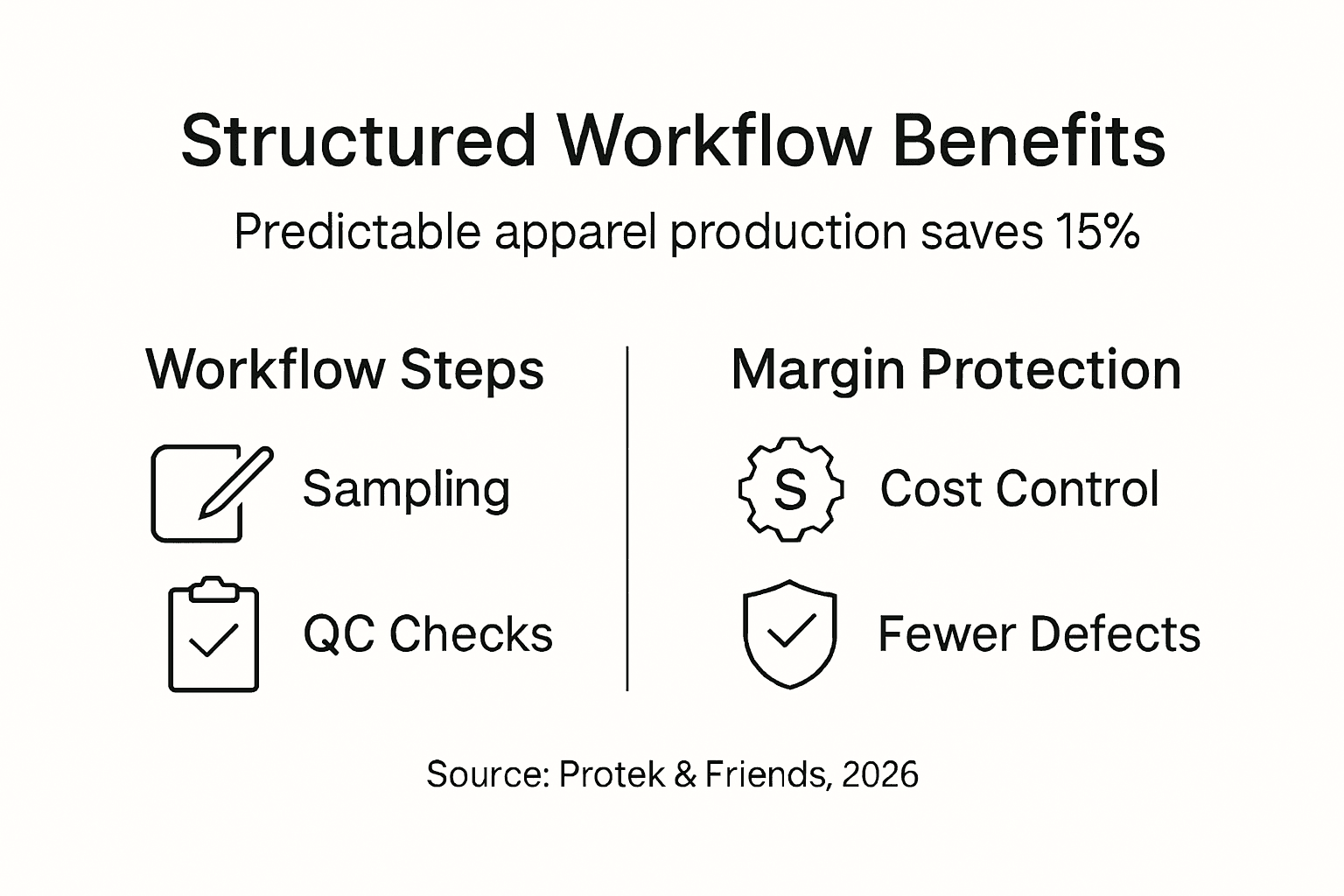
Most independent fashion brands believe faster production always saves money. Yet rushing orders often increases costs by up to 15% due to quality failures, rushed sampling, and surprise reworks. For brands scaling operations, protecting margins requires structured apparel production workflows that deliver predictable timelines, transparent costs, and consistent quality. This guide walks you through building those systems step by step.
Table of Contents
- Introduction to Apparel Production Workflows
- Step by Step Apparel Production Workflow Design
- Best Communication Practices with Factories
- Quality Control Standards and Checkpoints
- Documentation Essentials Before Bulk Production
- Hybrid Manufacturing Advantages for Increased Flexibility
- Common Misconceptions About Production Workflows and Margin Protection
- Practical Workflow Implementation Tips for Scaling Brands
- Streamline Your Apparel Production with Protek & Friends
- Frequently Asked Questions
Key Takeaways
| Point | Details |
|---|---|
| Structured workflows reduce delays | Clear processes prevent cost overruns and timeline surprises during production scaling. |
| Documentation prevents budget surprises | Technical packs and detailed cost breakdowns eliminate hidden charges and misunderstandings. |
| Quality control protects margins | Strategic QC checkpoints reduce defects by 30 to 40 percent, safeguarding brand reputation. |
| Hybrid manufacturing optimizes costs | Balancing U.S. and overseas production offers flexibility in lead times and pricing. |
Introduction to Apparel Production Workflows
A structured apparel production workflow is a documented, stepwise process with defined communication protocols and quality checkpoints at every stage. For independent brands scaling operations, this structure is the difference between sustainable growth and chaotic surprises.
Most scaling brands face three recurring pain points. Timelines shift without warning. Costs balloon due to hidden charges or quality reworks. Product quality varies batch to batch, damaging brand reputation and customer trust.
Unstructured workflows create unpredictability. When you lack clear documentation, manufacturers interpret specs differently. When you skip sampling phases, bulk production reveals fit issues too late. When you ignore quality checkpoints, defects multiply and reworks drain margins.
Structured processes tailored to small and mid size production runs solve these problems. You gain visibility into every phase. You catch issues early when fixes cost less. You build repeatable systems that scale without chaos.
Key elements of a structured workflow include:
- Documented technical specifications that eliminate guesswork
- Transparent cost breakdowns with no surprise charges
- Regular communication checkpoints to track progress
- Quality control stages integrated into production milestones
- Timeline mapping with clear deliverable dates
Without structure, production feels like gambling. With it, production becomes predictable and margin protection becomes possible.
Step by Step Apparel Production Workflow Design
Every successful apparel production run follows six core phases. Each phase serves a specific purpose in protecting your margins and ensuring quality.
-
Design and Technical Review: Your manufacturer analyzes design feasibility, construction methods, and potential production challenges before quoting. This prevents costly surprises during bulk production when changes become expensive.
-
Fabric Sourcing and Sampling: You test fabric quality, weight, and performance before committing to bulk orders. Sampling reveals how materials behave during cutting, sewing, and finishing, preventing product failures.
-
Fit Correction and Revisions: Sample garments undergo fit testing and adjustments. Catching fit issues now prevents returns and customer complaints later, directly protecting margins.
-
Cost Breakdown and Timeline Mapping: Detailed pricing with material costs, labor, finishing, and shipping ensures budget transparency. Timeline maps with milestone dates build trust and enable accurate launch planning.
-
Bulk Production Management: Milestone tracking keeps production moving. Regular updates on cutting, sewing, finishing, and packing stages prevent delays from snowballing.
-
Quality Control Checks: Inspections at fabric receipt, during production, and before shipping catch defects early when fixes cost less than returns or brand damage.
Protek & Friends structures full package clothing production around these six phases, creating predictability for brands scaling operations. Each phase includes documentation and communication protocols that eliminate guesswork.
Skipping phases to save time backfires. Rushing to bulk without sampling risks expensive reworks. Skipping cost breakdowns invites budget surprises. Missing quality checks means defects reach customers, harming reputation and margins.
A step by step apparel production workflow transforms chaos into predictable outcomes. You know what happens when. You catch problems early. You protect margins through prevention rather than damage control.

Best Communication Practices with Factories
Clear, documented communication prevents the misunderstandings that cause delays and cost overruns. Without communication protocols, scope creep happens silently until invoices arrive with surprise charges.
Establish these communication standards with your manufacturing partners:
- Weekly progress reports with photos documenting each production stage
- Shared digital platforms for specs, approvals, and change orders to maintain records
- Defined approval workflows so everyone knows who decides on fabric substitutions or construction changes
- Documented change order process that includes cost and timeline impacts before implementation
- Regular video calls during critical phases like sampling and pre production meetings
Transparent communication directly impacts cost control. When manufacturers understand requirements clearly, they quote accurately. When you document changes, you avoid disputes over what was agreed. When you maintain regular updates, you catch problems before they cascade.
Pro Tip: Create a shared production calendar with your manufacturer that marks fabric delivery, cutting start, sewing milestones, QC dates, and shipping deadlines. Visual timelines prevent miscommunication about expectations.
Accountability requires documentation. Verbal agreements fade. Written specifications, approval emails, and change order records protect both parties. When disagreements arise, documentation resolves them quickly.
Brands working with clothing production services benefit from structured communication systems already in place. You spend less time chasing updates and more time growing your brand.
Communication clarity equals cost predictability. Ambiguity breeds surprises. Structure eliminates ambiguity.
Quality Control Standards and Checkpoints
Integrating quality control at defined production stages decreases defects, maintains brand integrity, and protects margins. Without QC checkpoints, problems multiply silently until finished goods arrive defective.
Implement three types of quality checks:
- Pre production fabric testing to verify weight, color consistency, shrinkage, and performance before cutting
- In line production monitoring during cutting and sewing to catch construction errors before entire batches are affected
- Final garment inspection checking measurements, stitching quality, finishing details, and packing before shipping
QC feedback loops with manufacturers prevent defects from repeating. When inspectors document issues and communicate them immediately, manufacturers adjust processes before problems multiply. This collaborative approach improves quality over time.
Structured quality control reduces defects by 30 to 40 percent, preventing costly reworks and supporting brand reputation. Every defect that reaches customers costs more than catching it during production. Returns, replacements, and reputation damage all drain margins.
Align QC stages to workflow milestones:
- Fabric arrives: test samples before approving bulk cutting
- First garments sewn: inspect construction methods and measurements
- Mid production: random sampling to verify consistency
- Production complete: final inspection of random units from each style and size
Pro Tip: Define acceptable quality limits in your technical pack. Specify stitch count per inch, seam allowances, measurement tolerances, and finishing standards. Clear standards make QC objective rather than subjective.
Quality control is not an expense. It is margin protection. Preventing defects costs less than fixing them after production or losing customers to poor quality.
Documentation Essentials Before Bulk Production
Crucial documentation minimizes surprises and aligns brand and factory expectations before bulk manufacturing starts. Without standardized documents, misunderstandings become expensive.
Technical packs are your primary tool. A complete tech pack includes:
- Detailed technical sketches showing construction from multiple angles
- Fabric specifications with fiber content, weight, and finishing requirements
- Measurements for all sizes with clear tolerances
- Colorways and pantone references
- Trim and hardware specifications
- Stitching and finishing details
- Labeling and packaging requirements
Transparent cost breakdowns control budgets and prevent hidden charges. Detailed quotes separate fabric costs, labor, trims, finishing, quality control, and shipping. You understand exactly what drives pricing and can make informed decisions.
Timeline mapping with clear milestones tracks production progress and manages expectations. A production calendar marking fabric ordering, sampling completion, bulk cutting, sewing milestones, QC dates, and shipping deadlines keeps everyone aligned.
| Documentation Type | Key Components | Benefits for Margin Protection |
|---|---|---|
| Technical Pack | Sketches, specs, measurements, materials | Eliminates interpretation errors that cause reworks |
| Cost Breakdown | Itemized pricing for all production elements | Prevents surprise charges and budget overruns |
| Timeline Map | Milestone dates with deliverable expectations | Enables planning and catches delays early |
| Sample Approval | Photos and written sign off on prototypes | Creates clear reference preventing scope creep |
Brands benefit from understanding sample requirements before bulk production to build adequate testing and revision time into schedules. Rushed sampling leads to bulk production mistakes.
Documentation is not bureaucracy. It is clarity that protects margins by preventing misunderstandings and enabling informed decisions.
Hybrid Manufacturing Advantages for Increased Flexibility
Hybrid manufacturing models combine U.S. and overseas production, allowing brands to optimize cost, speed, and quality for different product categories and order volumes.
Traditional overseas production offers lower per unit costs but longer lead times and more complex communication. Domestic U.S. production provides faster turnaround and easier collaboration but higher costs per piece. Hybrid models strategically use both.
| Factor | Overseas Only | U.S. Only | Hybrid Model |
|---|---|---|---|
| Lead Time | 90 to 120 days | 30 to 45 days | 30 to 120 days based on choice |
| Cost per Unit | Lowest | Highest | Flexible based on strategy |
| Communication | Time zones and language challenges | Same time zone, same language | Choose based on order complexity |
| Quality Control | Requires travel or third party inspection | Direct oversight possible | Integrated QC regardless of location |
| Minimum Order Qty | Often higher | More flexible | Flexible based on location choice |
Strategic decision making factors include order size, product complexity, timeline urgency, and budget constraints. Use domestic production for small test runs, complex construction requiring close collaboration, or rush orders. Use overseas production for larger volumes where cost efficiency matters and longer timelines work.
Hybrid manufacturing supports margin protection by balancing speed, cost, and quality. You are not locked into one model. You choose the right fit for each collection or product category.
Small brands scaling operations gain flexibility without sacrificing control. You can test products domestically, then scale overseas once demand proves out. Or produce core items overseas while handling special editions domestically.
Common Misconceptions About Production Workflows and Margin Protection
Widespread myths cause brands to make costly workflow mistakes. Understanding reality helps you avoid pitfalls that erode margins.
Myth 1: Faster production always lowers costs. Reality shows the opposite. Rushing production increases costs up to 15 percent due to quality issues and defect reworks. Compressed timelines force shortcuts. Sampling gets abbreviated. Quality checks get skipped. Mistakes multiply and fixing them costs more than doing it right initially.
Myth 2: Quality control is optional and too expensive. Reality proves QC saves money. Strategic quality checkpoints reduce defects by 30 to 40 percent. Every defect caught during production costs less than returns, replacements, or reputation damage. QC is margin protection, not an expense.
Myth 3: Documentation slows production down. Reality demonstrates the opposite. Clear documentation lowers production failures and speeds decision making. When manufacturers understand requirements precisely, they execute correctly the first time. Ambiguity causes delays through revisions and corrections.
"Rushing production to meet tight deadlines often backfires, increasing costs by up to 15 percent as quality issues require expensive reworks and damage brand reputation with customers."
These misconceptions share a common thread. They prioritize short term speed over sustainable systems. Brands that chase quick wins sacrifice long term margin protection and quality consistency.
Understanding these realities helps you make informed decisions. Structure beats chaos. Documentation beats assumptions. Quality control beats damage control.
Practical Workflow Implementation Tips for Scaling Brands
Implementing structured workflows requires deliberate steps and expert guidance. Start with these actionable approaches.
Initiate structured workflows systematically:
- Start with documentation. Create or refine technical packs for your core products first. Build templates you can replicate.
- Assign clear roles. Designate who approves samples, who communicates with manufacturers, who manages timelines, and who conducts quality checks.
- Establish communication protocols. Set weekly update schedules. Create shared folders for specs and approvals. Document changes in writing.
- Integrate QC checkpoints. Add quality inspections to your production calendar at fabric receipt, mid production, and final inspection.
- Build timeline buffers. Add two weeks to quoted lead times for unexpected delays or revisions.
Integration tips for daily production management include linking communication and QC checkpoints. When manufacturers send weekly updates, require photos documenting current production stage and any issues encountered. Visual evidence prevents miscommunication.
Coordinating with hybrid manufacturing partners optimizes lead times and costs. Discuss order volume thresholds where overseas production becomes cost effective. Identify products suited for domestic quick turns versus overseas bulk runs. Build relationships with both to maintain flexibility.
Common pitfalls to avoid include skipping sampling phases to save time and neglecting documentation updates when making changes. Both create expensive problems during bulk production.
Pro Tip: Start small. Implement structured workflows on one product category first. Refine your systems. Then expand to other categories. Trying to restructure everything simultaneously overwhelms teams and increases mistakes.
Maintain flexibility while enforcing workflow discipline. Systems provide structure, not rigidity. When genuine emergencies require adjustments, document why and how. Learn from exceptions to improve standard processes.
Streamline Your Apparel Production with Protek & Friends
Scaling your fashion brand requires production partners who understand structured workflows and margin protection. Protek & Friends specializes in helping independent brands move from concept to finished product with clarity and control.
We offer hybrid manufacturing with transparent workflows tailored for small to mid size production runs. Our process includes design review, fabric sourcing, fit correction, detailed cost breakdowns, bulk production management, and integrated quality control. You get predictability, not surprises.
Explore clothing production services in Los Angeles designed for brands ready to scale with professional systems. We help you avoid common scaling pitfalls through documentation, communication protocols, and quality standards that protect your margins.
Want to understand how we differ from traditional factories? Compare Protek to other manufacturers to see how structured workflows and transparent processes benefit your brand. We also provide sampling guidance before bulk production so you build adequate testing into your timeline.
Protek & Friends eliminates production anxiety through systems that make good production feel boring. Clear updates. Early problem solving. Zero surprises. If you are ready to protect your margins and scale with structure, we are ready to partner with you.
Frequently Asked Questions
What is a structured apparel production workflow and why is it important?
A structured workflow is a documented, stepwise production process with clear communication protocols and quality checkpoints at every stage. It matters because unstructured production creates unpredictable timelines, surprise costs, and inconsistent quality that damage margins and brand reputation.
How can I improve communication with my factory partners?
Establish weekly progress reports with photos, use shared digital platforms for specs and approvals, create documented change order processes, and maintain production calendars marking all milestone dates. Clear documentation prevents misunderstandings that cause delays and cost overruns.
What quality control checks should I plan before bulk production?
Implement three QC stages: pre production fabric testing for weight and performance, in line monitoring during cutting and sewing, and final garment inspection before shipping. Strategic checkpoints reduce defects by 30 to 40 percent, protecting margins through prevention.
How does hybrid manufacturing benefit small fashion brands?
Hybrid models let you choose U.S. production for quick turns and complex items or overseas production for larger volumes where cost efficiency matters. This flexibility optimizes lead times and costs without locking you into one manufacturing location.
What common mistakes should I avoid when scaling production?
Never skip sampling phases to save time or rush bulk production without detailed documentation. Both create expensive reworks. Also avoid neglecting quality checkpoints and failing to document changes in writing, as these gaps lead to defects and budget surprises.
How much should I budget for sampling before bulk orders?
Plan for two to three sample rounds with revision time between each. Budget approximately 15 to 20 percent of your bulk order value for comprehensive sampling and fit testing. This investment prevents costly bulk production mistakes that damage margins far more than thorough sampling costs.