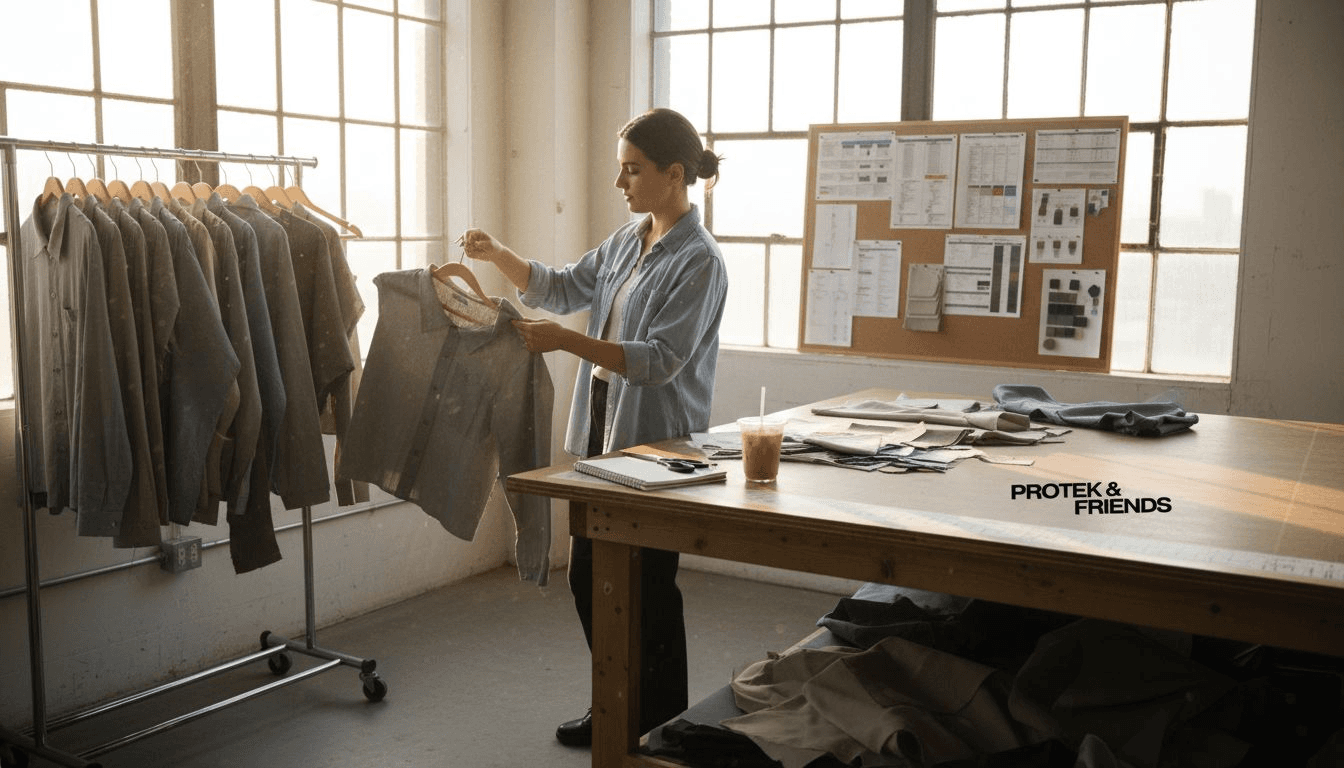
Sampling consumes 15–20% of product development budgets for mid-size fashion brands, creating massive pressure on timelines and margins. Scaling brands can't afford chaotic sampling cycles that bleed money and delay launches. This article breaks down structured best practices to optimize your fashion sampling strategy, protect quality, and control costs in 2026. You'll learn to balance physical and digital workflows, build documentation systems that prevent errors, and communicate effectively with manufacturers.
Table of Contents
- How to choose the right sampling strategy
- 1. Document everything: the tech pack and spec sheet
- 2. Material sourcing: quality and consistency matter
- 3. Embracing digital sampling and hybrid workflows
- 4. Fit testing and iterative revisions
- 5. Communication best practices with manufacturers
- Sampling strategy comparison and situational recommendations
- Streamline your fashion sampling with protek & friends
- Frequently asked questions about fashion sampling best practices
Key takeaways
| Point | Details |
|---|---|
| Sampling costs can reach 20% of development budgets but strategic optimization cuts waste significantly | Clear documentation, material vetting, and hybrid digital-physical workflows reduce errors and delays |
| Tech packs and spec sheets serve as critical communication tools | Detailed specs minimize rework cycles and ensure manufacturer alignment with design intent |
| Digital sampling cuts costs by 60–80% when used strategically | Hybrid workflows balance speed and accuracy by combining virtual iterations with physical validation |
| Fit testing across multiple sessions prevents expensive production mistakes | Iterative revisions with clear documentation catch sizing issues before bulk orders |
| Transparent manufacturer communication protects timelines and budgets | Regular updates and documented feedback loops eliminate surprises and costly delays |
How to choose the right sampling strategy
Choosing the right sampling approach depends on brand size, budget, production location, timeline urgency, and sustainability priorities. Your sampling strategy must align with where you are in your growth journey. A startup burning cash needs different solutions than an established brand scaling to 10,000 units per style.
Several key factors shape your decision. Production scale and budget constraints determine whether you can absorb the cost of multiple physical samples or need digital alternatives. Sustainability goals push brands toward workflows that minimize fabric waste and carbon footprint. Time to market matters because fashion windows close fast.
Production location dramatically affects sampling feasibility and costs. Sampling overseas introduces longer lead times but lower per-unit costs. Local sampling in Los Angeles or New York delivers speed and control but at premium prices. The role of sampling in fashion production varies based on these geographic considerations.
Physical sampling offers the highest accuracy for fit, drape, and color but carries the steepest price tag and longest timelines. Digital sampling slashes costs and accelerates cycles but introduces limitations around fabric simulation. Hybrid approaches split the difference by using 3D tools for early iterations and reserving physical samples for final validation.
Brands that segment sampling workflows by product category and life cycle stage achieve higher accuracy in timing and costs. Core basics with proven fit patterns need fewer samples than experimental designs. Seasonal trend pieces warrant faster, leaner sampling than evergreen staples.
Consider these criteria when selecting your approach:
- Brand maturity: startups prioritize speed and cost, established brands emphasize consistency
- Order volumes: higher MOQs justify more sampling investment
- Product complexity: intricate construction requires more physical validation
- Retail channel: direct to consumer allows more flexibility than wholesale commitments
- Factory relationships: trusted partners enable streamlined sampling, new vendors need more oversight
1. Document everything: the tech pack and spec sheet
Your tech pack is the single most important tool for sampling success. Clear and detailed tech packs including precise measurements, fabric specs, construction details, and labeling requirements are critical to reduce sampling errors and improve communication. Without bulletproof documentation, you're gambling with your budget.
A complete tech pack includes graded measurements for all sizes, fabric composition and weight specs, construction diagrams with stitch types, trim and hardware callouts, colorways with Pantone references, and labeling placement. Spec sheets maintain consistency across fit, fabric hand, and color accuracy between samples and production runs.
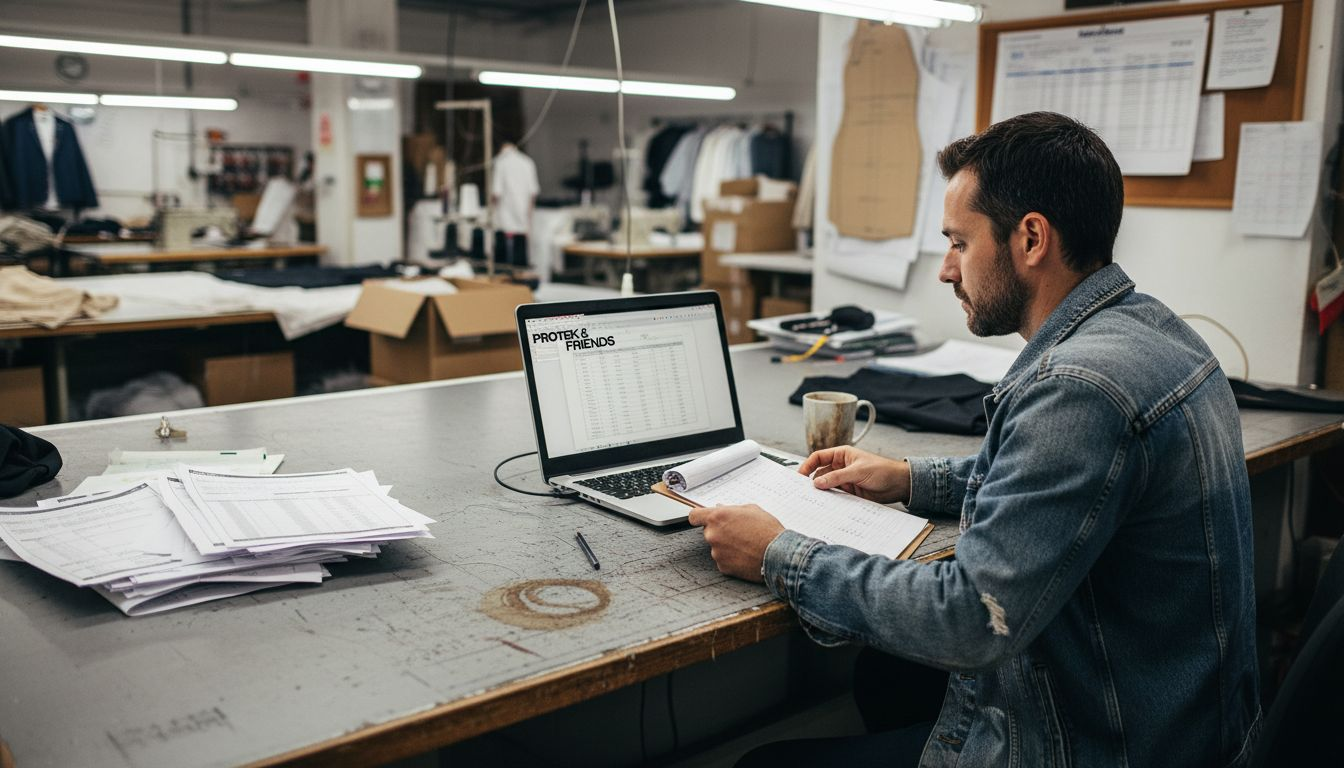
Manufacturers can't read your mind. When your tech pack says "heavyweight cotton" without specifying 10 oz per square yard, you'll get samples in 6 oz fabric that drapes completely wrong. When you skip seam allowance callouts, patterns get interpreted differently across sample makers.
Detailed documentation cuts rework cycles by 40% or more. Each revision round costs money, burns time, and pushes your launch date. Getting samples right on the first or second attempt instead of the fourth protects your margins and sanity. Clear instructions help factories deliver results closer to your design intent from the start.
Standardizing your tech pack format across collections creates efficiency. Train your team and your manufacturers on one template. Update it as you learn what information prevents the most errors. Include photos of similar garments when introducing new construction techniques.
Pro Tip: Version control your tech packs religiously. Number every revision and date stamp all changes. When sampling issues arise, you need to trace exactly which spec version the factory used.
Building systems to manage clothing production starts with documentation discipline. Your tech pack becomes the legal reference if quality disputes arise. It protects you when a manufacturer tries to cut corners or claims your original specs were unclear.
2. Material sourcing: quality and consistency matter
Material quality makes or breaks your sampling accuracy. You can't validate a design using placeholder fabrics that bear no resemblance to production materials. Sourcing materials should prioritize quality, lead time, pricing, MOQs, and sustainability impact to maintain sample integrity.
Evaluate suppliers on reliability and capacity to meet your standards consistently. A vendor offering rock-bottom prices means nothing if they can't deliver the same hand feel or color consistency across orders. Request strike-offs and lab dips before committing to large yardage.
Balance price and lead time against minimum order quantities carefully. Luxury fabrics from Italian mills might require 500-meter MOQs that dwarf your sampling needs. Domestic suppliers often accommodate smaller orders at higher per-yard costs but faster turnaround.
Inconsistent materials create misleading samples that don't represent what your customers will receive. Imagine approving samples in beautiful Japanese denim, then switching to cheaper alternatives for production. Your fit, stretch recovery, and wash characteristics change completely. Returns skyrocket because the product doesn't match expectations.
Sustainability in material sourcing supports brand values and reduces waste. Deadstock fabrics work well for sampling and limited releases. Organic and recycled content options carry premium pricing but align with conscious consumer demands. Document sustainability credentials for marketing and transparency.
Long lead times or poor quality materials delay sampling and increase costs. If your fabric supplier needs 12 weeks to ship, you're adding three months to development before sampling even starts. Quality issues requiring material replacements double that timeline.
Pro Tip: Order 20–30% extra fabric for sampling and first production runs. You'll need it for fit revisions, quality replacements, and future repairs or alterations.
Building relationships with reliable fabric sourcing partners creates competitive advantage. Long-term vendors give you priority during busy seasons and flexibility on MOQs. They'll hold your colorways and alert you to price increases or supply disruptions.
Testing material performance before sampling saves money. Wash tests reveal shrinkage rates. Stretch and recovery tests show whether knits will bag out. Colorfastness tests prevent dye bleeding disasters. Streamlining apparel production sampling requires material validation upfront.
3. Embracing digital sampling and hybrid workflows
Digital 3D sampling tools transform how scaling brands approach product development. Digital sampling can reduce costs by 60–80% and shorten development time from 12–16 weeks to 2–4 weeks by minimizing physical sample iterations. The technology finally delivers on its promise for brands ready to integrate it strategically.
Digital sampling uses software like CLO 3D and Browzwear to create virtual garments you can rotate, zoom, and evaluate on digital avatars. You test fit, drape, and proportion without cutting fabric or shipping samples. Brands using CLO 3D report fewer physical samples needed and shortened sampling cycles, enhancing efficiency and reducing costs.
Hybrid workflows combine digital iterations for early design exploration with final physical samples for production validation. This approach captures most digital benefits while maintaining quality confidence. You might run three digital revisions to nail the silhouette and proportions, then order one physical sample to confirm fabric behavior and fit on real bodies.
Digital tools dramatically reduce fabric waste since you're not cutting and sewing samples you'll immediately reject. Environmental impact drops when you eliminate shipping samples back and forth internationally. Carbon footprint shrinks as digital files replace physical prototypes flying across oceans.
Limitations remain around fit accuracy and fabric simulation quality. Digital fabric libraries improve constantly but still can't perfectly replicate how a unique blend drapes or recovers. Complex constructions with multiple layers or specialty finishes need physical validation. Stretch characteristics and weight distribution require real-world testing.
Strategic hybrid use cuts sampling budgets in half or more while maintaining quality standards. Early design iterations happen digitally where changes cost nothing. Pattern adjustments and style variations get tested virtually. Final pre-production samples happen physically to catch any simulation gaps.
| Sampling Method | Cost Impact | Timeline | Best Use Case |
|---|---|---|---|
| Fully Physical | Highest cost per sample | 8–12 weeks per cycle | Complex constructions, luxury products |
| Fully Digital | 60–80% cost reduction | 2–4 weeks per cycle | Simple designs, proven factories |
| Hybrid Approach | 40–60% cost reduction | 4–6 weeks per cycle | Scaling brands balancing quality and efficiency |
Adopting digital sampling requires investment in software and training. Your design team needs time to build 3D skills. Manufacturers must provide digital fabric data and integrate virtual workflows. The learning curve pays off within two to three collection cycles.
Understanding the types of garment sampling helps you deploy digital tools effectively. Fit samples benefit most from 3D since you're evaluating proportion and construction. Sales samples for showrooms and photoshoots still need physical execution.
4. Fit testing and iterative revisions
Fit testing protects you from the nightmare scenario of producing 2,000 units in the wrong size. Multiple fitting sessions with clear documentation catch issues before they become expensive disasters. Sampling mistakes commonly arise from ignoring fit variations and skipping fit testing sessions, leading to costly production defects.
Conduct at least two to three fit sessions per style using models that match your target customer measurements. First fit evaluates overall proportion and construction. Second fit checks pattern corrections. Final fit confirms production readiness. Rush this process and you'll pay for it in returns and reputation damage.
Record detailed revision notes documenting every adjustment with measurements and photos. "Make the sleeve longer" means nothing without specifying exactly how much length and at which point. Annotate fit photos showing exactly where fabric pulls, gaps, or restricts movement. This documentation becomes your revision instructions to the pattern maker.
- Schedule your first fit sample with flexible expectations and extra time for detailed notes
- Document all fit issues with precise measurements and multiple photo angles showing problems clearly
- Provide pattern maker with annotated corrections specifying exact adjustments needed
- Review revised patterns before ordering second fit sample to catch interpretation errors
- Conduct second fit with same model wearing same undergarments for consistency
- Make final minor tweaks and order pre-production sample for bulk validation
Use fit models aligned with your tech pack measurements to ensure consistency across styles and seasons. Swapping models between fits introduces variables that make it impossible to judge whether pattern changes worked. Maintain detailed fit model measurements and update them annually.
Iterative revisions minimize defect probability in final production. Each correction cycle compounds improvements. Skipping straight from first fit to production practically guarantees problems. Your margins can't absorb the cost of reworking or scrapping bulk orders.
Neglecting fit testing is the fastest way to burn cash and destroy customer trust. Every dollar spent on thorough sampling saves ten dollars in production fixes, returns, and lost sales.
How sampling affects return rates deserves serious attention. Poor fit drives 30–40% of fashion returns. Proper sampling impact on returns through rigorous fit testing protects your bottom line and customer satisfaction.
5. Communication best practices with manufacturers
Transparent communication with your manufacturer separates smooth sampling from chaotic fire drills. Poor communication with factories is a common cause of sampling failures, delays, and unexpected costs in scaling brands. You need systems, not hope.
Establish regular update and reporting protocols from day one. Weekly check-ins during sampling phases keep everyone aligned. Manufacturers should proactively flag material delays, construction challenges, or timeline slips. Waiting until deadlines pass to mention problems destroys trust and schedules.
Flag issues early and provide clear, actionable feedback immediately. When a sample arrives wrong, document problems with photos and measurements within 24 hours. Vague complaints like "this doesn't look right" waste everyone's time. Specific feedback like "sleeve length measures 23 inches, should be 24.5 per tech pack" gets results.
Define roles and responsibilities for all parties before sampling starts. Who orders materials? Who approves fabric substitutions? Who pays for shipping samples? How many revision rounds are included? What constitutes an acceptable sample versus a rejection? Clear agreements prevent disputes.
Document all communications and decisions to protect your interests. Email threads create paper trails. Shared project management platforms keep everyone working from current information. When timeline or cost disputes arise, documentation proves what was agreed versus what was delivered.
Strong communication reduces production delays and costly mistakes by catching problems while they're still fixable. A manufacturer might notice your specified zipper length won't work with the pattern but only if they feel comfortable raising concerns early. Build relationships where questions get rewarded, not punished.
Key communication practices include:
- Use shared digital folders for all specs, revisions, and approvals to ensure single source of truth
- Require photo documentation of work in progress at key milestones before proceeding
- Schedule video calls for complex technical discussions that need real-time problem solving
- Confirm all verbal agreements in writing within 24 hours to prevent misunderstandings
- Build buffer time into schedules for communication delays across time zones
Managing clothing production effectively requires treating manufacturers as partners, not vendors. The best factories prioritize clients who communicate clearly, provide complete information, and respond promptly to questions.
Sampling strategy comparison and situational recommendations
Choosing between physical, digital, and hybrid sampling approaches requires evaluating your specific constraints and priorities. Physical sampling involves high costs and long lead times, while digital sampling reduces costs and time but may lack full accuracy. Hybrid sampling balances these factors effectively for most scaling brands.
| Strategy | Cost Range | Timeline | Accuracy Level | Best For | Sustainability Impact |
|---|---|---|---|---|---|
| Physical Only | $200–800 per sample | 8–12 weeks per cycle | Highest for fit and fabric | Luxury brands, complex construction, proven fits | Highest waste and carbon footprint |
| Digital Only | $50–150 per digital sample | 2–4 weeks per cycle | 85–90% accuracy | Simple designs, established patterns, fast fashion | Lowest waste, minimal shipping |
| Hybrid Approach | $300–500 total per style | 4–6 weeks per cycle | 95% accuracy with final physical | Scaling brands, new styles, quality-focused | Moderate waste, reduced samples |
Physical sampling delivers unmatched accuracy for evaluating fabric hand, drape behavior, and on-body fit. You can test how garments move, wash, and wear. Construction details like topstitching, pocket placement, and hardware function get validated. The tradeoff is significant cost per sample and long lead times especially with overseas manufacturing.
Digital sampling cuts costs and time drastically while reducing environmental impact. You can test unlimited variations without material or labor costs. Design iterations that would take weeks happen in days. The accuracy gap narrows as software and fabric libraries improve. Limitations appear with complex fabrics, intricate construction, and exact fit validation.
Hybrid sampling offers the practical balance most scaling brands need. Use digital tools for design exploration, proportion testing, and early revisions. Order physical samples only after digital refinement to validate final fit and fabric performance. This approach captures 60–80% of digital cost savings while maintaining quality confidence.
Choose your strategy based on where you are and where you're going. Startups with tight budgets should lean heavily digital with selective physical validation. Established brands with loyal customers need consistency that physical sampling provides. Mid-size brands scaling up benefit most from hybrid approaches.
Pro Tip: Match sampling investment to product risk and margin. Core basics that reorder frequently justify thorough physical sampling. Trend-driven pieces with short lifecycles warrant faster, cheaper digital-heavy workflows.
Your sampling strategy role evolves as your brand matures. Review your approach every six to twelve months. What worked at 500 units per month breaks at 5,000 units. Scale your sampling sophistication with your growth trajectory.
Streamline your fashion sampling with protek & friends
Scaling your fashion brand requires production partners who understand structured sampling and quality control. Protek & Friends offers clothing production services that eliminate the chaos typical of factory relationships. We've built our business on clear documentation, transparent communication, and systematic processes that make sampling predictable.
Our full-package clothing production approach covers everything from tech pack review through final delivery. We support hybrid sampling workflows that balance digital efficiency with physical validation. Whether you need Los Angeles speed or overseas cost advantages, we provide structured options matched to your growth stage.
Most brand owners fear sampling because of timeline shifts and unexpected costs. We replace that anxiety with boring reliability through regular updates, early problem flagging, and documented decision making. Our clients scale confidently because they know their sampling and production won't become the bottleneck limiting growth.
Frequently asked questions about fashion sampling best practices
How long does the typical sampling process take for scaling brands?
Physical sampling typically requires 8 to 12 weeks per complete cycle including material sourcing, sample construction, shipping, and revision time. Digital sampling compresses this to 2 to 4 weeks for design iterations. Hybrid workflows combining digital refinement with final physical validation usually take 4 to 6 weeks total.
What are the main benefits of using digital sampling software like CLO 3D?
Digital sampling cuts development costs by 60 to 80 percent and reduces timeline from months to weeks by eliminating multiple physical prototypes. You can test unlimited design variations without material waste while shrinking your carbon footprint. The technology works best for early design iterations before final physical validation.
How can brands ensure material consistency when sourcing for samples?
Request strike-offs and lab dips from suppliers before committing to production yardage to verify color and hand feel accuracy. Build relationships with reliable vendors who maintain consistent quality across orders. Order 20 to 30 percent extra fabric for sampling and revisions to ensure you're testing with actual production materials.
What sustainability practices can be incorporated in fashion sampling?
Hybrid digital-physical workflows minimize fabric waste by reducing physical sample quantities significantly. Source deadstock or recycled fabrics for sampling when possible. Work with manufacturers who recycle sampling scraps and use efficient cutting methods. Understanding the types of garment sampling helps you eliminate unnecessary sample categories.
How important is communication with manufacturers during sampling?
Clear manufacturer communication is absolutely critical and prevents the majority of sampling delays, cost overruns, and quality failures. Establish weekly update protocols, document all decisions in writing, and flag issues immediately with specific actionable feedback. Strong communication catches problems while they're still fixable instead of discovering them after expensive mistakes happen.
Should small brands invest in digital sampling technology?
Small brands benefit significantly from digital sampling if they produce multiple styles per season and want to reduce development costs. The software investment pays for itself within two to three collection cycles through reduced sample quantities and faster iterations. Start with hybrid workflows that use digital for early design exploration while maintaining physical samples for final production validation.