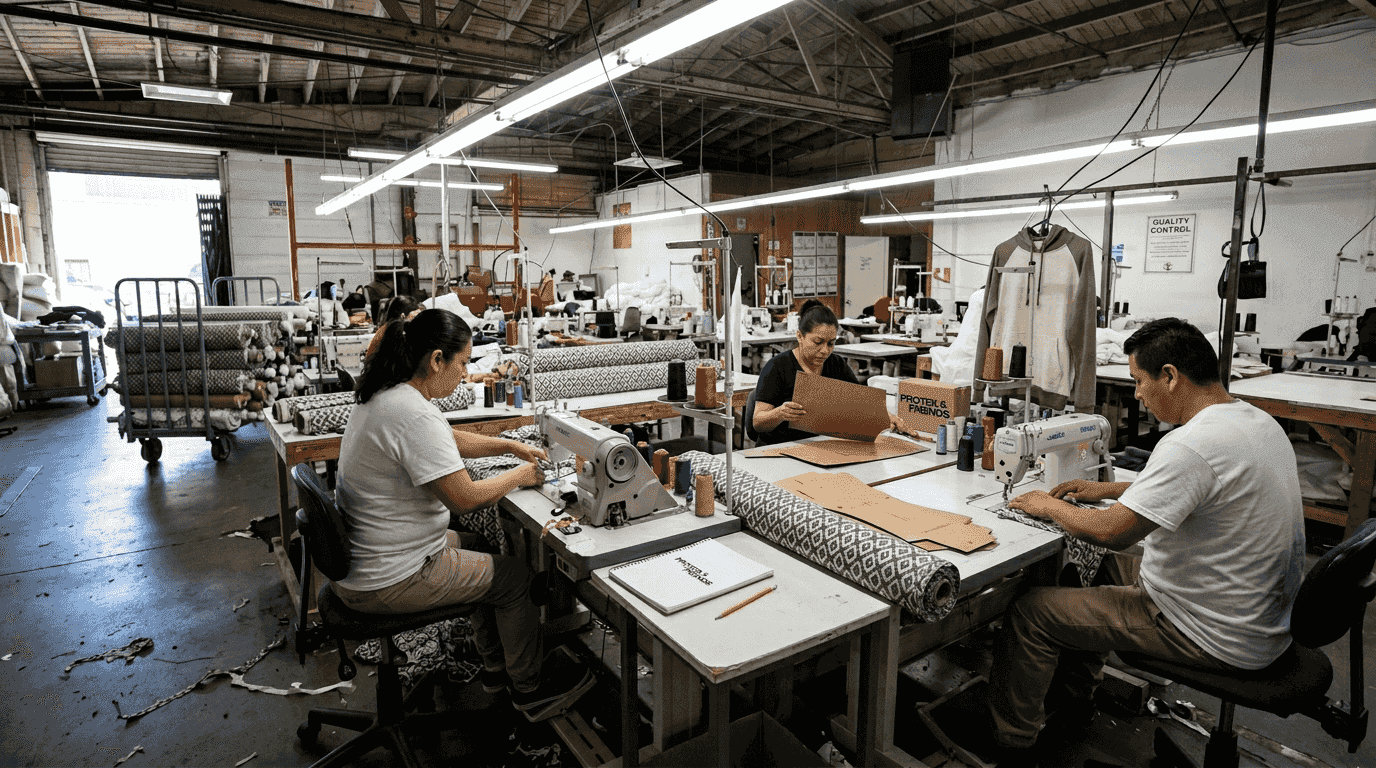
Most fashion brands assume Los Angeles clothing factories operate the same way, but the reality is far more nuanced. LA's garment production landscape spans everything from basic cut-and-sew shops to sophisticated full-package manufacturers, each with distinct capabilities, pricing structures, and quality standards. Without understanding these differences, brand owners risk costly mistakes, missed deadlines, and subpar products. This guide clarifies how to navigate LA clothing factories effectively, ensuring your brand achieves structured, quality-driven production with transparent communication and predictable outcomes.
Table of Contents
- Understanding the services offered by Los Angeles clothing factories
- Navigating pricing and lead times in LA clothing production
- Essential communication and documentation for smooth production
- Quality control and fabric selection for durable apparel
- Work with Protek & Friends for reliable LA clothing production
- Frequently asked questions
Key takeaways
| Point | Details |
|---|---|
| LA factories offer varied services | Options range from cut-and-sew to full-package manufacturing, each suited to different brand needs and production scales. |
| Pricing depends on multiple factors | Garment complexity, fabric type, order quantity, and required services all influence final costs and timelines. |
| Clear tech packs prevent mistakes | Detailed documentation including measurements, construction specs, and materials ensures accurate production and reduces errors. |
| Multi-stage quality control is essential | Fabric inspection, cutting checks, sewing audits, and final reviews catch defects early and protect brand reputation. |
| Lead times fluctuate with workload | Factory capacity, material availability, and order size impact timelines, requiring careful planning and early communication. |
Understanding the services offered by Los Angeles clothing factories
Los Angeles clothing factories offer a range of production services, from cut-and-sew to full-package manufacturing, catering to diverse brand needs. Understanding these service types is foundational to setting realistic expectations and selecting the right production partner.
Cut-and-sew services handle the core manufacturing tasks: fabric cutting, sewing, and garment assembly. You supply the materials, patterns, and trims, and the factory executes the construction. This model works well for brands with established supply chains or specific fabric sources. However, it requires you to manage material procurement, quality verification, and timing coordination independently.
Full-package manufacturing takes a comprehensive approach. The factory manages everything: sourcing materials, creating or refining patterns, cutting, sewing, finishing, quality control, and packaging. This model reduces your operational burden and consolidates accountability under one roof. For brands scaling beyond their first collection, full-package services provide structure and eliminate the chaos of coordinating multiple vendors.
Key service distinctions include:
- Cut-and-sew requires you to supply all materials and manage upstream logistics
- Full-package manufacturers handle sourcing, reducing your vendor management workload
- Some factories specialize in specific categories like denim, knitwear, or activewear
- Service scope directly impacts pricing, lead times, and communication requirements
Knowing which service model aligns with your brand's stage and resources helps you ask the right questions during factory vetting. If you lack fabric sourcing expertise or prefer consolidated accountability, reliable Los Angeles clothing manufacturing through full-package partners delivers better outcomes than juggling multiple suppliers.
Navigating pricing and lead times in LA clothing production
Pricing in LA factories varies based on factors like garment complexity, fabric type, order quantity, and required services. Understanding these variables prevents budget surprises and helps you plan realistic production schedules.
Garment complexity drives labor costs. A basic tee with minimal seams costs less per unit than a jacket with multiple panels, zippers, and specialty stitching. Fabric type matters too: working with delicate silks or technical performance fabrics requires specialized handling, increasing labor time and risk. Order quantity affects per-unit pricing through economies of scale. A 100-piece run costs more per garment than a 500-piece run because setup costs spread across fewer units.

Typical pricing ranges for common garments:
| Garment Type | Estimated Cost Per Unit (100-500 units) | Key Pricing Factors |
|---|---|---|
| Basic tee | $8-$15 | Fabric weight, print complexity, trim quality |
| Hoodie | $20-$40 | Panel count, zipper type, lining, embellishments |
| Denim jeans | $25-$50 | Wash processes, hardware, stitching detail, fabric weight |
| Activewear leggings | $15-$30 | Fabric performance specs, seam construction, waistband style |
Lead times in LA factories can fluctuate, influenced by order size, factory workload, and material availability. A small 200-piece order might complete in 4-6 weeks during slow periods but stretch to 8-10 weeks during peak seasons. Material delays compound timelines. If your chosen fabric is backordered or requires custom dyeing, add 2-4 weeks before cutting even begins.
Factory workload creates variability. Established factories often book 6-8 weeks out during busy periods. Asking about current capacity during initial conversations reveals whether your timeline is realistic. Brands that communicate early and lock in production slots avoid last-minute scrambles.
Pro Tip: Request itemized quotes breaking down fabric, labor, trims, packaging, and shipping costs separately. This transparency helps you identify cost-saving opportunities and compare quotes accurately across factories. When discussing lead times, ask for best-case and worst-case scenarios to plan buffer time into your launch calendar.
Planning with scaling with Los Angeles clothing factories in mind means building relationships that accommodate growth, not just one-off orders.
Essential communication and documentation for smooth production
Early communication is a preview of what production will feel like. If a factory responds slowly, provides vague answers, or avoids written commitments during initial conversations, expect similar issues during production. Clear, structured communication from the start signals a professional operation.
A production-ready tech pack is crucial for translating design into measurable requirements, including construction, measurements, materials, artwork placement, labeling, and packaging. Your tech pack serves as the single source of truth throughout production, eliminating ambiguity and reducing costly errors.
Essential tech pack components:
- Precise measurements for all sizes, including grade rules for scaling
- Construction callouts specifying seam types, stitch counts, and finishing techniques
- Fabric specifications including content, weight, stretch percentage, and color codes
- Artwork placement with exact dimensions and print methods
- Labeling requirements covering care labels, size labels, and branding tags
- Packaging instructions detailing folding, bagging, and shipping carton specs
Vague or verbal-only agreements create risk. A factory might interpret "fitted" differently than you intended, or assume standard trims when you expected premium hardware. Written specifications including timelines, payment terms, and revision policies protect both parties. If a factory resists documentation, that's a red flag.
Common communication mistakes new brands make:
- Assuming factories will "figure it out" without detailed specs
- Changing design elements mid-production without formal change orders
- Skipping sample approval stages to save time, then discovering issues in bulk
- Failing to document verbal agreements, leading to disputes over scope
Treating your tech pack as engineering documentation rather than a suggestion reduces misinterpretation. When factories ask clarifying questions, answer promptly and update the tech pack to reflect decisions. This creates a living document that evolves with your product.
Pro Tip: Schedule a kickoff call after submitting your tech pack to walk through complex construction details. Visual alignment prevents mistakes that written specs alone might miss. Record decisions made during the call and send a follow-up email summarizing agreements.
For brands new to managing clothing production, investing time in documentation upfront saves exponentially more time fixing problems later.
Quality control and fabric selection for durable apparel
Fabric selection should prioritize performance over hand feel, with issues like poor recovery, opacity, pilling, color shift, and shrinkage arising from improper fabric choices. Many brands select fabrics based on how they feel in the showroom, ignoring how they perform after washing, stretching, or daily wear.
Critical fabric performance criteria:
- Stretch recovery: fabric must return to original shape after stretching, especially for activewear and fitted garments
- Opacity: adequate coverage prevents see-through issues, particularly in lighter colors or when stretched
- Pilling resistance: surface fibers should resist balling up after friction and washing
- Colorfastness: dyes must withstand washing, sunlight, and perspiration without fading or bleeding
- Shrinkage: fabric should be pre-shrunk or have predictable shrinkage rates to maintain fit after laundering
Fabric selection factors vary by apparel category:
| Category | Priority Performance Factors | Common Fabric Issues |
|---|---|---|
| Activewear | Moisture wicking, stretch recovery, opacity, durability | Poor recovery causing bagging, transparency when stretched |
| Loungewear | Softness, pilling resistance, shrinkage control, breathability | Excessive pilling after washing, size changes after first wash |
| Uniforms | Colorfastness, durability, stain resistance, easy care | Color fading, seam failure under stress, difficult maintenance |
| Denim | Tear strength, color retention, comfort stretch, wash stability | Excessive fading, stretch-out, hardware failure |
Quality control should be implemented at multiple stages of production, including fabric inspection, cutting, sewing, and finishing, to catch and correct issues early. Each stage serves a distinct purpose in protecting final product quality.
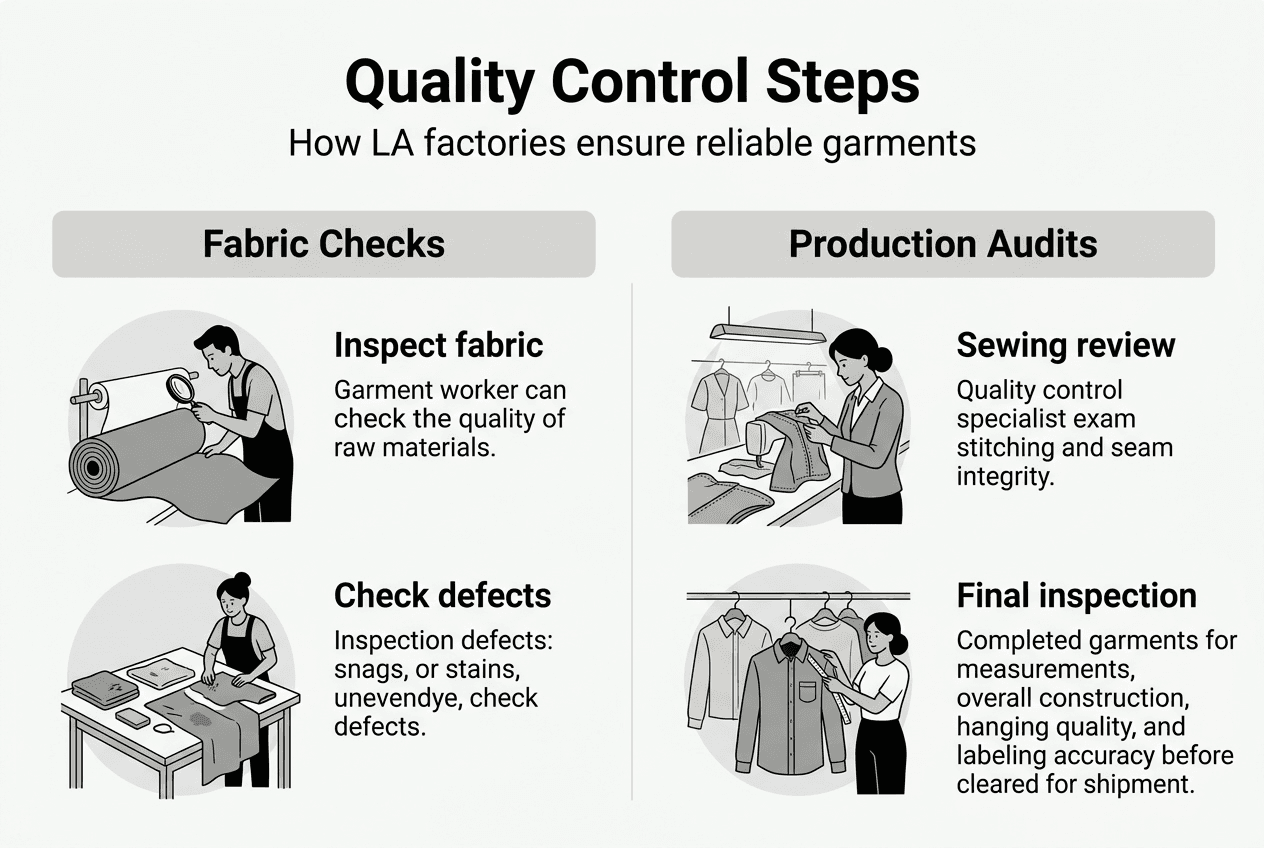
Fabric inspection happens before cutting. Inspectors check for defects like holes, dye inconsistencies, or weaving flaws. Rejecting faulty fabric at this stage prevents defects from reaching finished garments. Cutting checks verify pattern accuracy and fabric alignment, ensuring pieces match specifications before sewing begins.
Sewing audits monitor construction quality during production. Random garment pulls check stitch consistency, seam strength, and construction accuracy against tech pack specs. Catching issues mid-production allows corrections before completing the entire run. Final finishing reviews inspect completed garments for loose threads, staining, pressing quality, and packaging accuracy.
Multi-stage quality control prevents defects and costly returns by identifying problems when they're easiest and cheapest to fix. A fabric defect caught before cutting costs pennies. The same defect discovered in finished inventory costs dollars in replacements, shipping, and brand damage.
For brands focused on quality control in fashion production and smart fabric sourcing explained brands, partnering with factories that implement systematic QC processes protects your investment and reputation.
Work with Protek & Friends for reliable LA clothing production
Navigating Los Angeles clothing factories requires expertise, clear systems, and a partner who treats production as engineering, not guesswork. Protek & Friends specializes in full-package garment manufacturing in Los Angeles and China, delivering structured production for fashion brands ready to scale with confidence.
We eliminate production anxiety through transparent communication, detailed documentation, and multi-stage quality control. Our hybrid manufacturing model gives you flexibility to produce domestically or overseas based on your budget, timeline, and product requirements. From technical design review and fabric sourcing to sampling, bulk production, and delivery coordination, we manage every step with precision.
Explore our comprehensive clothing production services to see how we support brands from concept to finished product. Compare Protek manufacturer capabilities with other options to understand our structured approach. Learn about our sampling guidelines before bulk production to plan your development timeline effectively.
Frequently asked questions
What services do Los Angeles clothing factories offer?
LA factories provide cut-and-sew services where you supply materials and they handle construction, or full-package manufacturing where they manage sourcing, pattern making, cutting, sewing, finishing, and packaging. Full-package services consolidate accountability and reduce your vendor management burden. Service scope directly impacts pricing, lead times, and the level of support you receive throughout production.
How can I prepare a tech pack for LA clothing factories?
Include precise measurements for all sizes, construction details specifying seam types and stitching, fabric specifications with content and weight, artwork placement with exact dimensions, and packaging instructions. Your tech pack serves as the single source of truth, eliminating ambiguity and reducing errors. Update it whenever design decisions change and treat it as engineering documentation. For guidance on managing clothing production, comprehensive tech packs are non-negotiable.
What are common pricing pitfalls when working with LA factories?
A low quote can be legitimate, but it deserves extra scrutiny. Verify whether shipping, duties, packaging, testing, trims, and labels are included or quoted separately. Confirm fabric grade matches your specifications, as substituting lower-quality materials is a common cost-cutting tactic. Request itemized breakdowns showing labor, materials, and services separately to compare quotes accurately and identify hidden costs before committing.
How can sampling improve production outcomes?
Sampling should be treated as product engineering to identify and resolve problems early, as changes are cheaper at this stage. Sampling catches design flaws, fit issues, and manufacturing challenges before bulk production begins. Early changes through sampling reduce expensive mistakes later, protecting your budget and timeline. Treat each sample round as an opportunity to refine construction, materials, and fit rather than just seeking approval. Learn more about sampling in apparel production to optimize your development process.
What quality control measures should I expect from LA factories?
Expect fabric inspection before cutting to catch defects, cutting checks to verify pattern accuracy, sewing audits during production to monitor construction quality, and final finishing reviews to inspect completed garments. Multi-stage quality control catches issues when they're easiest to fix, preventing defects from reaching finished inventory. Factories that skip or rush QC stages create risk for your brand through returns, replacements, and reputation damage.