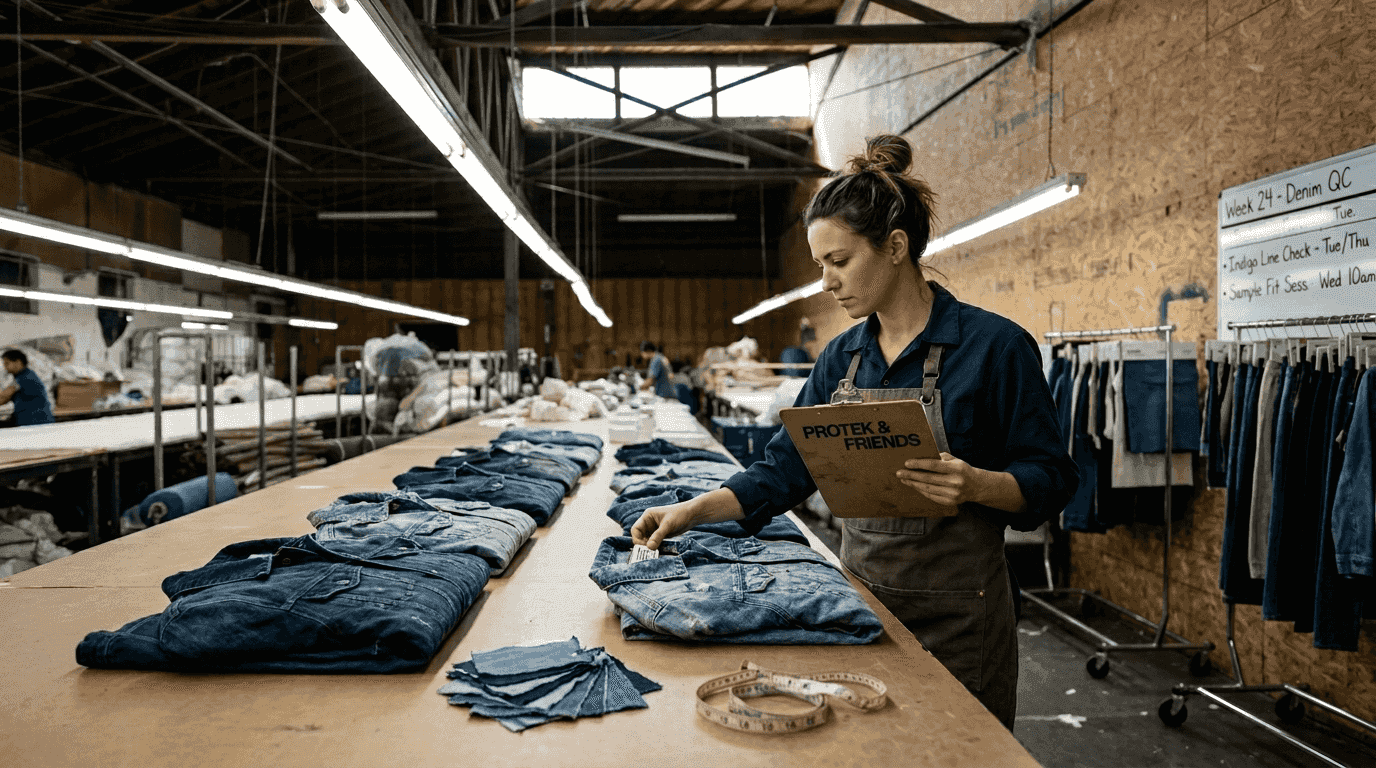
Poor quality control can cost fashion brands up to 25% of total sales, yet many scaling brands still rely on manual inspections and paper checklists that fail under complexity. As you expand production across multiple suppliers and product lines, fragmented quality systems create inconsistencies, defects, and margin erosion. This guide reveals how modern, data-driven quality control methods replace chaos with structure, protecting your brand reputation and profitability. You will learn proven methodologies, technology solutions, and actionable steps to implement quality systems that scale with your business.
Table of Contents
- Understanding quality control in fashion production
- Modern methodologies and technologies enhancing quality control
- Challenges with traditional inspections and the shift to holistic quality management
- Applying structured quality control to protect your brand and margins
- Explore professional clothing production services to elevate your quality control
- Frequently asked questions
Key takeaways
| Point | Details |
|---|---|
| Data-driven quality control improves consistency | Continuous production data capture leads to higher product consistency, lower defect rates, and faster issue resolution across suppliers. |
| Poor quality costs up to 25% of sales | Defects and inconsistencies directly impact revenue, returns, and brand reputation for scaling fashion brands. |
| Traceability enhances quality monitoring | Tracking fabric from raw material to finished product enables accountability and faster resolution of quality issues. |
| Traditional inspections fail at scale | Manual, paper-based checks struggle with varied fabrics, complex lines, and the speed required in modern fashion production. |
| Holistic quality management protects margins | Integrated systems from raw materials to delivery prevent defects, reduce costs, and build consumer trust. |
Understanding quality control in fashion production
Quality control in fashion is a systematic process ensuring every product meets defined standards for materials, construction, fit, and finish before reaching customers. For scaling brands managing multiple suppliers and expanding product lines, quality control becomes essential infrastructure, not an optional checklist. Without structured systems, defects multiply, rework costs escalate, and customer trust erodes.
The financial impact is severe. Poor quality can cost up to 25% of total sales in the apparel industry, draining margins through returns, replacements, and damaged reputation. Common quality issues include fabric defects like pilling or color inconsistency, construction failures such as weak seams or misaligned patterns, fit problems from pattern errors, and finishing defects like loose threads or improper pressing. Each issue compounds when production scales without proper process systems in fashion production.
Scaling brands face unique quality challenges. Managing multiple suppliers introduces variability in materials and workmanship. Expanding product categories requires different quality benchmarks for denim, knitwear, and cut and sew items. Increasing production volumes make manual inspection impractical. Geographic distance from factories limits direct oversight. These factors create quality gaps that traditional methods cannot address.
Pro Tip: Establish clear quality benchmarks and tolerance levels during the sampling phase to prevent costly reworks in bulk production. Document acceptable standards with photos and measurements that factories can reference throughout manufacturing.
Modern methodologies and technologies enhancing quality control
Data-driven quality control transforms fashion production by capturing continuous production data that identifies issues early and enables faster corrections. This approach delivers higher product consistency, lower defect rates, improved supplier performance, and stronger compliance compared to reactive inspection methods. Digital systems replace manual logs with real-time dashboards tracking defect patterns, production metrics, and supplier performance across all manufacturing partners.
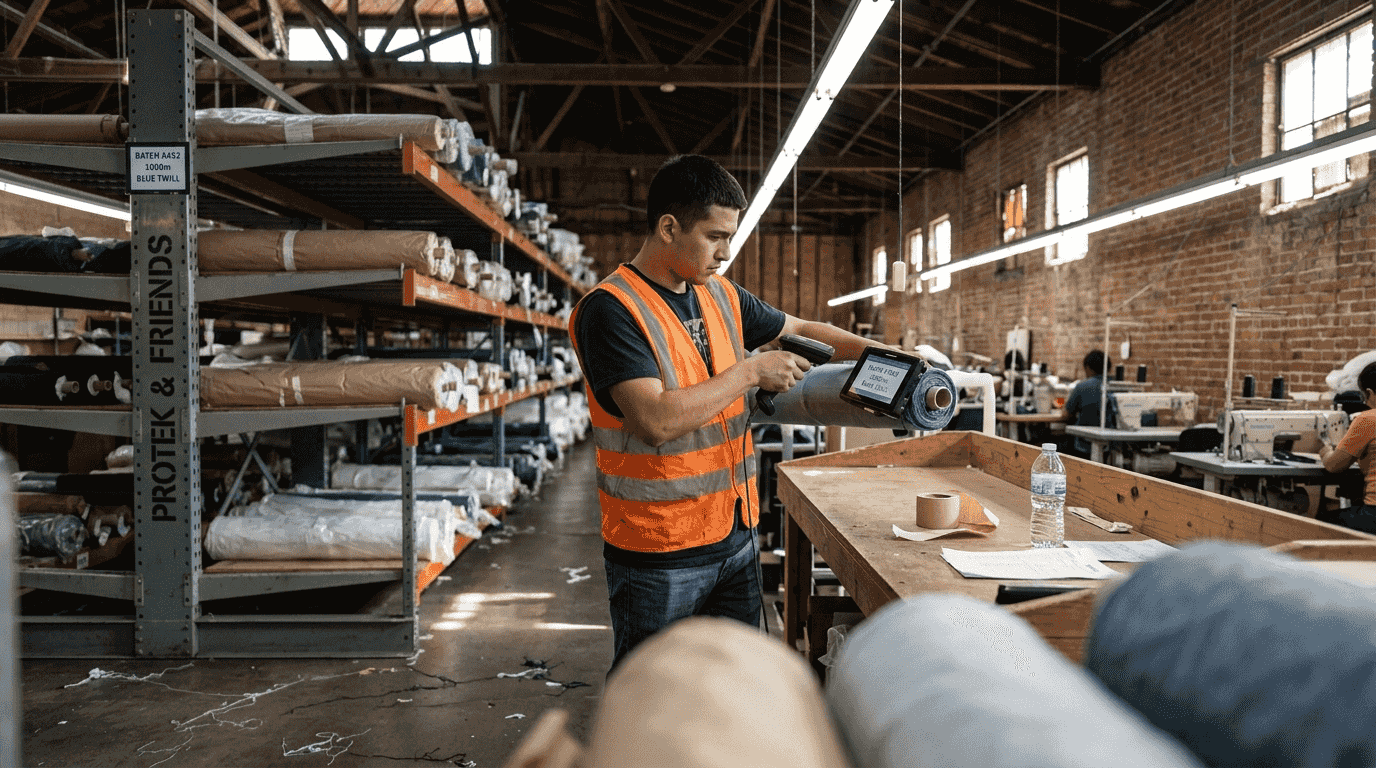
Traceability systems provide end-to-end visibility by tracking fabric from raw material sourcing through spinning, weaving, dyeing, cutting, sewing, and finishing. Implementing database management traceability significantly enhances quality control by creating accountability at every production stage. When defects appear, traceability pinpoints exactly where issues originated, whether in fabric milling, pattern cutting, or assembly, enabling targeted corrections rather than guessing.
Statistical Quality Control (SQC) applies mathematical analysis to production data, identifying defect trends before they become systemic problems. Failure Mode and Effect Analysis (FMEA) systematically evaluates potential failure points in production processes, ranking them by severity and likelihood to prioritize preventive actions. These methods shift quality control from reactive firefighting to proactive risk management.
Research on fabric defects reveals patterns that inform inspection priorities:
| Defect Type | Prevalence | Impact |
|---|---|---|
| Double weft | 28% | Creates thick lines, fabric irregularity |
| Loose weft | 22% | Causes puckering, weak structure |
| Broken warp | 18% | Results in holes, structural failure |
| Thick weft | 15% | Produces visible lines, texture issues |
| Other defects | 17% | Various quality inconsistencies |
Technology replaces fragmented, paper-based systems with integrated platforms connecting inline inspections, laboratory testing, and final audits. Mobile apps enable factory floor workers to photograph defects, log measurements, and trigger alerts instantly. Cloud platforms aggregate data across suppliers, revealing which factories consistently meet standards and which require intervention. This visibility transforms supplier relationships from transactional to collaborative, as shared data drives mutual improvement.
Pro Tip: Integrate inspection data directly into supplier scorecards and performance reviews to create accountability and incentivize quality improvements across your manufacturing network.
Challenges with traditional inspections and the shift to holistic quality management
Traditional inspection methods struggle in modern fashion production due to varied fabrics, complex product lines, and paper-based documentation that cannot keep pace with production speed. Manual inspections depend on individual inspector skill and attention, creating inconsistency. Paper checklists get lost, damaged, or filled out incorrectly. Sampling plans miss defects in uninspected batches. Communication delays between factories and brands allow problems to compound before detection.
Scaling brands face specific challenges without structured quality systems:
- Inconsistent quality standards across different factories and product categories
- Delayed defect detection that turns small issues into large batch failures
- Inability to track root causes or identify systemic supplier problems
- Poor documentation making it impossible to prove quality claims or resolve disputes
- Reactive problem solving that costs more than prevention
- Limited visibility into production status until final inspection reveals failures
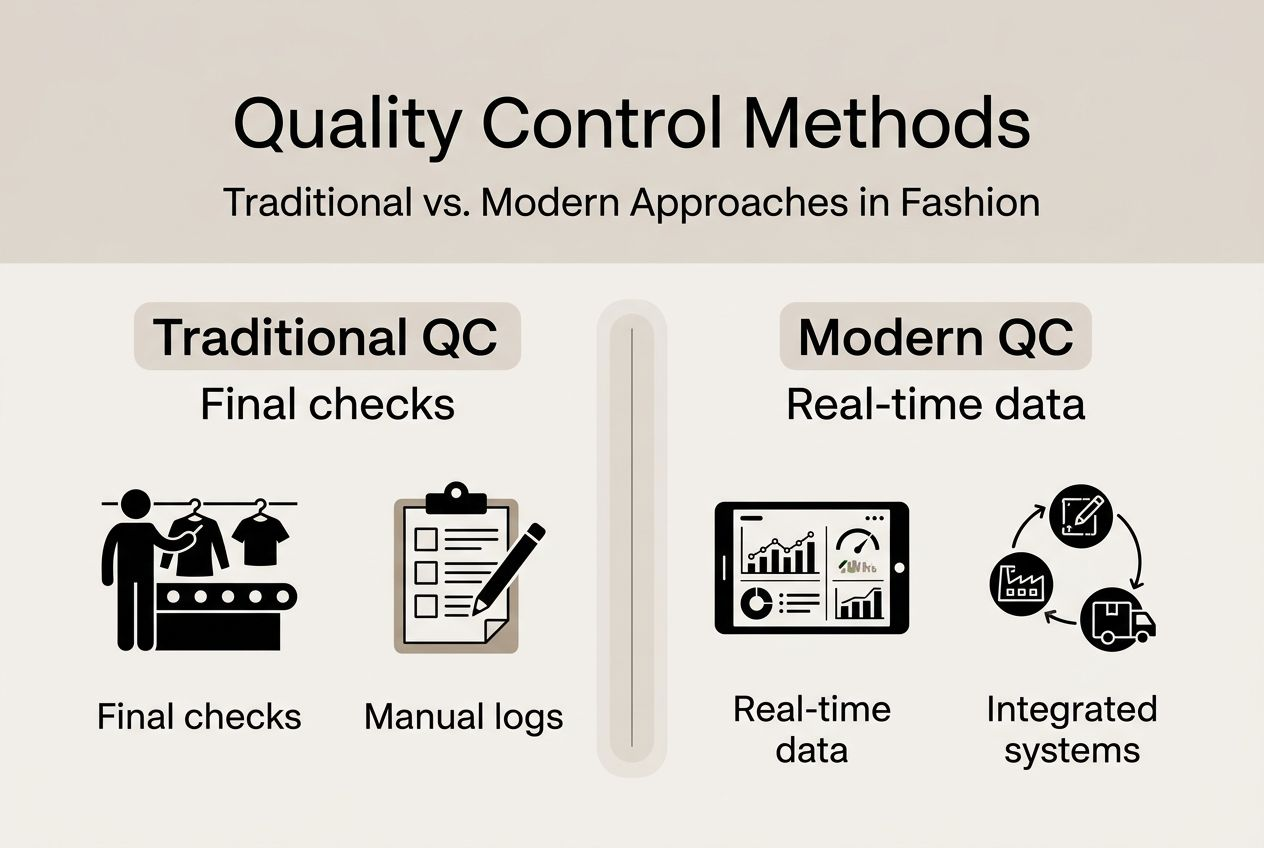
The comparison between approaches reveals fundamental differences:
| Traditional Inspection | Holistic Quality Management |
|---|---|
| Final product checks only | Quality control from raw materials through delivery |
| Paper-based documentation | Digital, real-time data capture and analysis |
| Single inspector judgment | Multiple checkpoints with statistical validation |
| Reactive defect detection | Proactive risk identification and prevention |
| Isolated factory processes | Integrated supplier collaboration platforms |
Holistic quality management embeds quality control throughout production rather than treating it as a final gate. This approach starts with raw material testing to verify fabric specifications before cutting. Inline inspections during sewing catch construction errors immediately. Pre-shipment audits validate finished goods before they leave the factory. Audit trails document every quality checkpoint, creating accountability and enabling rapid issue resolution.
Integrated systems connect managing clothing production activities across design, sampling, bulk manufacturing, and delivery. Quality data flows between stages, so fit corrections from sampling automatically update production specifications. Defect patterns from one production run inform preventive measures for the next. Supplier performance metrics guide sourcing decisions. This integration eliminates the information silos that allow quality problems to hide.
Full package production fashion models benefit most from holistic quality management because they coordinate multiple production stages under one system. When fabric sourcing, pattern making, sampling, and bulk production operate within integrated quality frameworks, defects decrease and consistency improves. Brands gain confidence in production outcomes rather than anxiety about what might go wrong.
Applying structured quality control to protect your brand and margins
Implementing effective quality control requires systematic steps that build capability over time:
- Define quality standards with specific, measurable criteria for each product category, documenting acceptable tolerances for measurements, construction details, and finishing requirements with reference photos.
- Select appropriate quality control methods matching your production model, whether inline inspections during manufacturing, pre-shipment audits before delivery, or laboratory testing for technical specifications.
- Train factory teams and quality inspectors on your standards, providing clear documentation, hands-on examples, and ongoing feedback to ensure consistent interpretation across all manufacturing partners.
- Establish sampling protocols determining how many units to inspect at each production stage, using statistical methods to balance thoroughness with efficiency.
- Implement digital quality management tools that capture inspection data, generate reports, and enable real-time communication between factories and your team.
- Create feedback loops connecting quality data to supplier performance reviews, design improvements, and production process refinements.
- Monitor quality metrics continuously to identify trends, measure improvement, and react proactively before small issues become large problems.
Sampling and prototype checks during clothing sample development prevent quality problems from reaching bulk production. First samples reveal pattern issues, fit problems, and construction challenges when corrections cost least. Fit samples validate sizing across the full range before committing to production. Pre-production samples confirm factories understand specifications before bulk cutting begins. Streamlined apparel production sampling processes reduce development time while improving quality outcomes.
Regular supplier audits maintain quality standards over time. Schedule factory visits to observe production conditions, review quality systems, and verify compliance with your requirements. Conduct fabric testing at independent laboratories to validate material specifications. Review inspection reports systematically to identify which suppliers consistently meet standards and which require additional support or replacement. Share performance data transparently so suppliers understand expectations and see improvement opportunities.
Building a culture of quality requires commitment from design through delivery. Designers must specify realistic, achievable quality standards. Product development teams must validate specifications during sampling. Production managers must enforce quality checkpoints. Customer service must feed quality issues back into the system for correction. Companies need to focus on product quality to compete and survive in the market, making quality everyone's responsibility, not just the inspection team's job.
Pro Tip: Track defect rates, customer return reasons, and quality-related costs monthly to identify trends and measure the ROI of quality control investments. Use this data to justify continued quality improvements and demonstrate value to stakeholders.
Explore professional clothing production services to elevate your quality control
Scaling fashion brands need production partners who integrate quality control into every manufacturing stage, not factories that simply take orders and hope for the best. Protek & Friends operates as a structured production partner for serious brand owners ready to protect their margins through professional systems. Our clothing production services span design review, fabric sourcing, sampling, bulk production, and final inspection with clear documentation at every step.
We eliminate production anxiety by replacing chaos with systems. Clear updates, early problem solving, and zero surprises. Our hybrid manufacturing model offers USA or overseas production with the same structured approach. When you compare Protek to other manufacturers, the difference is transparency, documentation, and quality control built into the process. Contact Protek & Friends to implement scalable, reliable production systems that protect your brand reputation.
Frequently asked questions
What is the difference between quality control and quality assurance in fashion?
Quality control focuses on detecting and fixing defects in finished products through inspection and testing. Quality assurance involves designing production processes to prevent defects from occurring in the first place. Both work together, with quality assurance setting standards and quality control verifying compliance.
How can data-driven quality control reduce defects in apparel production?
Continuous data capture identifies defect patterns early, enabling immediate corrections before problems spread across entire production runs. Analytics reveal which suppliers, materials, or processes cause most issues, guiding targeted improvements. Real-time dashboards give visibility into production status, replacing delayed paper reports with actionable insights.
Why is traceability important for quality control in fashion?
Tracking materials from raw fabric through finished garment creates accountability at every production stage. When defects appear, traceability pinpoints exactly where issues originated, enabling faster resolution. It also verifies supplier claims about material sources and production methods, supporting compliance and sustainability requirements.
What are common defects identified by quality control in fabric production?
Research shows double weft defects account for 28% of fabric issues, creating thick lines and irregularity. Loose weft represents 22%, causing puckering and weak structure. Broken warp at 18% results in holes and structural failure. Thick weft at 15% produces visible lines. Recognizing these patterns helps factories target improvements where they matter most.
How often should fashion brands conduct supplier quality audits?
Conduct initial audits before awarding production contracts to verify factory capabilities and quality systems. Schedule follow-up audits quarterly for new suppliers or those with quality issues, semi-annually for established partners meeting standards consistently. Always audit after significant quality problems or when expanding production volume with existing suppliers.