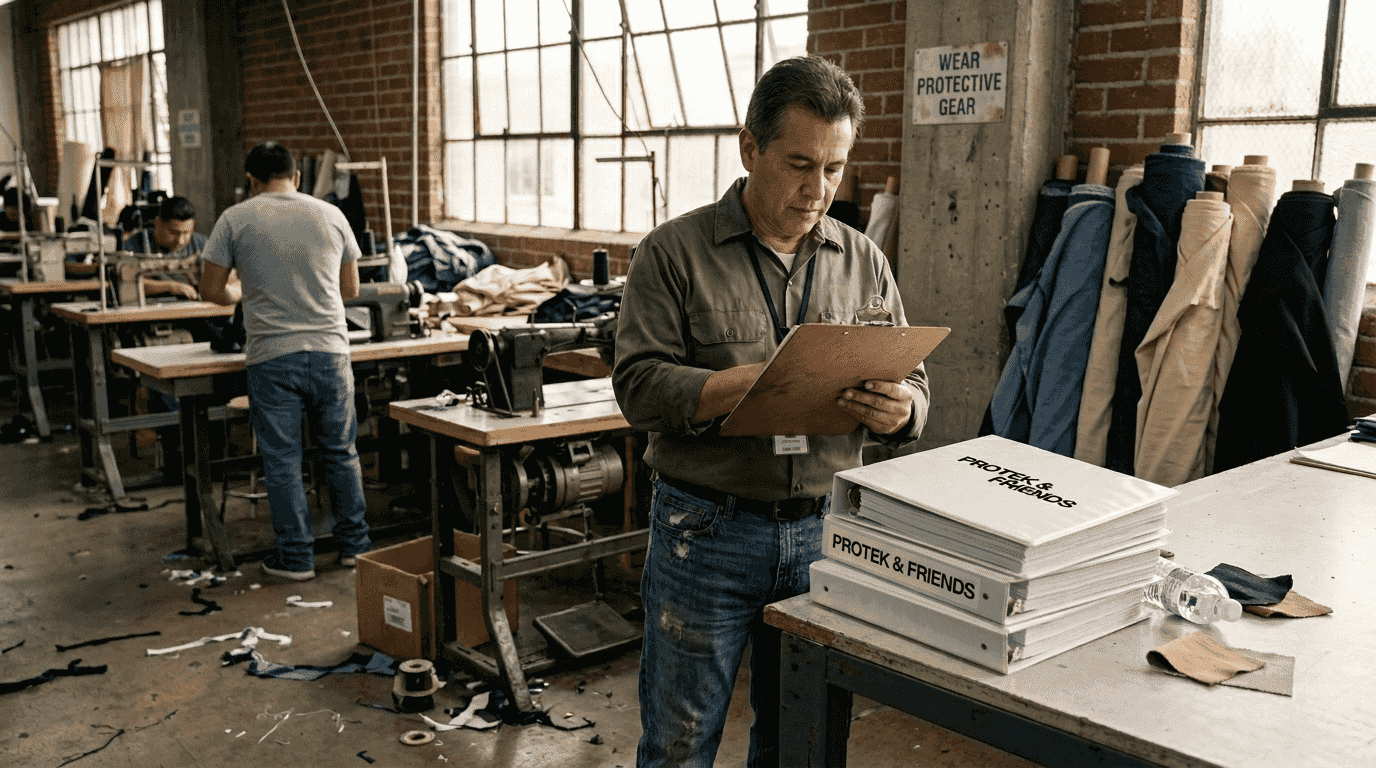
Finding dependable clothing manufacturers in Los Angeles feels impossible when quality varies wildly and production promises collapse mid-season. Fashion founders waste months chasing factories that overpromise, underdeliver, and disappear when problems emerge. This guide reveals how to identify reliable LA manufacturing partners, structure production workflows that protect margins, and scale collections without the chaos that sinks most brands.
Table of Contents
- Understanding The Los Angeles Clothing Manufacturing Landscape
- Preparing Your Brand For Clothing Production In Los Angeles
- Executing Production With Los Angeles Manufacturers
- Verifying Quality And Scaling Your LA Clothing Production
- Why Choose Protek & Friends For Your LA Clothing Production
- FAQ
Key takeaways
| Point | Details |
|---|---|
| LA manufacturing quality varies significantly | Wholesale rates and quality standards fluctuate widely across LA factories, making partner selection critical. |
| Regulatory challenges impact stability | ICE raids and environmental disruptions in 2023 created production uncertainty and compliance pressures. |
| Structured workflows enable scaling | Detailed tech packs, quality checkpoints, and documentation systems reduce defects and enable predictable growth. |
| Reshoring momentum grows | Tariff regulations drive brands toward domestic production for faster turnaround and reduced exposure. |
| Luxury brands model LA success | Chrome Hearts, Amiri, and Dôen manufacture subsets locally, demonstrating viable high-quality LA production. |
Understanding the Los Angeles clothing manufacturing landscape
The Los Angeles fashion industry is experiencing growth due to improved clothing standards, yet the landscape remains fragmented. Founder experiences range from exceptional craftsmanship to nightmare delays depending on which factory they choose.
Selecting clothing manufacturers in Los Angeles can be challenging because pricing structures lack transparency and quality control systems vary dramatically. One factory might deliver perfect samples then ship defective bulk orders. Another quotes reasonable rates but adds hidden fees mid-production.
The LA manufacturing industry faced significant challenges including ICE raids targeting garment facilities, devastating wildfires, and volatile tariff regulations. These disruptions forced brands to reassess supply chain reliability and compliance standards. Founders learned that cheap labor often masks serious legal and quality risks.
Current factors reshaping LA manufacturing include:
- Labor enforcement creating compliance pressure across facilities
- Environmental disasters interrupting production schedules unexpectedly
- Tariff volatility making cost predictions nearly impossible
- Skilled worker shortages limiting factory capacity
- Supply chain fragility exposing quality control gaps
Understanding these dynamics protects your brand from selecting partners built on unstable foundations. The launch clothing line guide details how regulatory landscapes affect production decisions. Smart founders audit factory compliance records before signing contracts, not after defects appear.
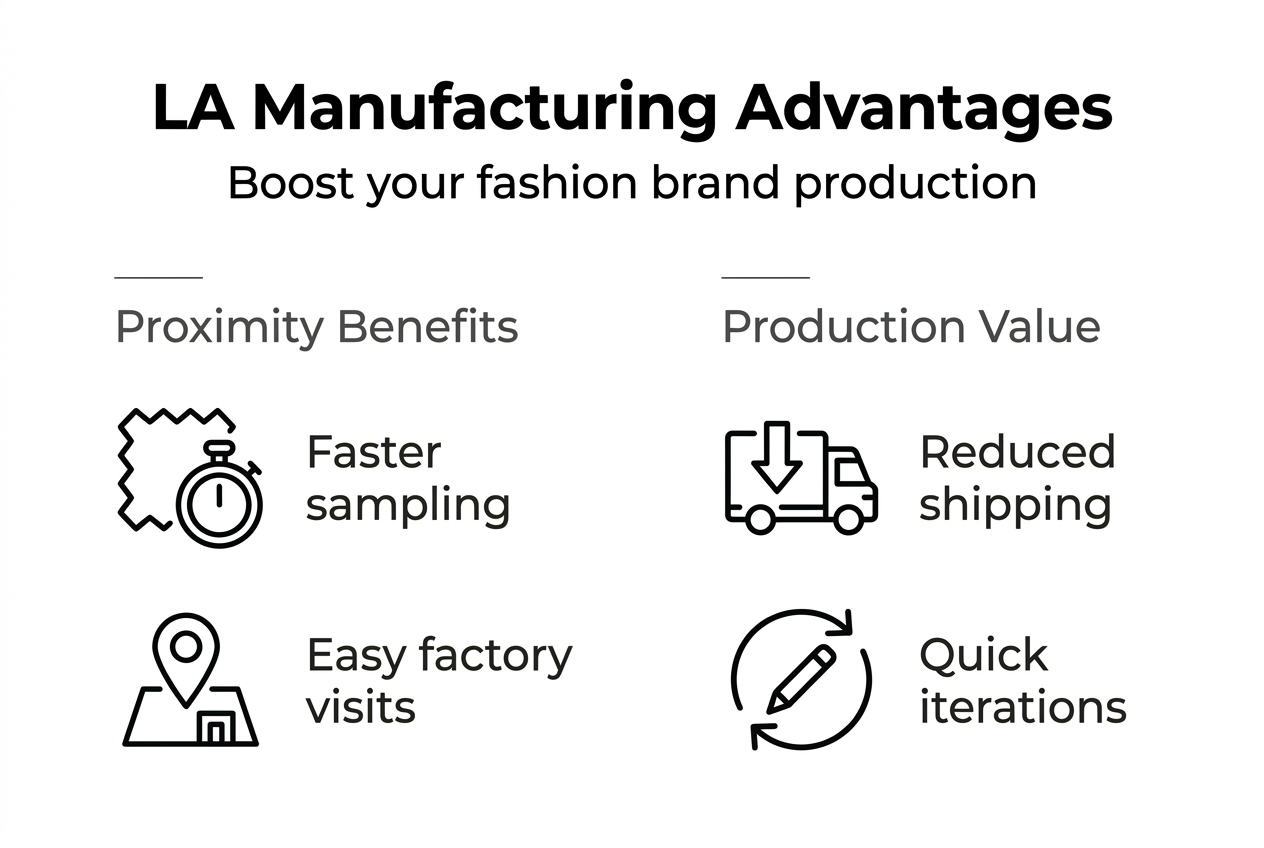
LA manufacturing offers proximity advantages: faster sampling, easier factory visits, and reduced shipping complexity. But these benefits evaporate if your manufacturer lacks systems to deliver consistent quality. The key is separating factories with professional operations from those running chaotic shops where every order becomes a gamble.
Preparing your brand for clothing production in Los Angeles
Production preparation determines whether scaling succeeds or collapses under its own weight. Most founders rush into manufacturer relationships without defining clear quality standards or documentation requirements.

Start by assessing whether LA manufacturing aligns with your brand positioning and margin structure. The Made in LA movement was gaining momentum as tariff regulations pushed brands toward reshoring. Calculate total landed costs including labor premiums, faster turnaround savings, and tariff mitigation before committing to local production.
Follow these preparation steps:
- Define exact quality specifications for each garment category including acceptable defect rates and inspection criteria.
- Develop comprehensive tech packs with construction details, measurement tolerances, and material specifications that leave zero room for interpretation.
- Map production timelines accounting for sampling rounds, revision cycles, and realistic bulk manufacturing lead times.
- Establish quality control checkpoints at pattern approval, pre-production sample, and inline inspection stages.
- Document communication protocols including update frequency, problem escalation procedures, and approval workflows.
Pro Tip: Request factory references from brands with similar product complexity and production volumes. A factory excelling at basic t-shirts might struggle with technical outerwear requiring specialized equipment.
The structured apparel production workflow prevents costly mistakes by catching issues before bulk orders ship. Founders who skip sampling rounds or approve patterns without fit sessions pay for corrections through returns and reputation damage.
Reshoring benefits extend beyond tariffs. Local production enables rapid design iterations, easier quality oversight, and faster response to market trends. Calculate whether premium labor costs offset savings in shipping, inventory holding, and defect management. Many brands discover LA manufacturing protects margins better than cheap overseas factories shipping garbage.
Align your production calendar with realistic lead times. LA factories operate at capacity during peak seasons, making last-minute orders impossible. Book production slots months ahead and build buffer time for inevitable delays. Brands treating manufacturers like Amazon Prime warehouses learn expensive lessons about capacity planning.
Executing production with Los Angeles manufacturers
Execution separates brands that scale smoothly from those drowning in production disasters. Selecting the right manufacturing partner requires evaluating capabilities beyond impressive showroom samples.
Follow this manufacturer evaluation process:
- Audit factory compliance records including labor certifications, safety inspections, and environmental permits to avoid legal exposure.
- Visit production floors during active manufacturing to observe workflow organization, equipment condition, and quality control practices.
- Request detailed cost breakdowns showing material costs, labor rates, and markup percentages before committing to development.
- Verify minimum order quantities align with your inventory strategy and cash flow capabilities.
- Test communication responsiveness by asking technical questions and measuring reply quality and speed.
Several LA-founded luxury brands including Chrome Hearts, Amiri, and Dôen manufacture products locally, proving LA production works at premium price points. These brands prioritize quality control and brand story over pure cost minimization.
Sample development determines bulk production success. Rush through sampling and you'll approve patterns that produce unwearable garments at scale. Insist on multiple sample rounds with detailed fit sessions before authorizing bulk orders. The fashion sampling best practices scaling brands 2026 guide explains iteration strategies.
Implement these quality control measures:
- Pre-production samples approved with written sign-off documenting exact specifications
- Inline inspections at 20%, 50%, and 80% production completion catching defects early
- Final random inspection of finished goods before shipment authorization
- Clear defect classification system defining major vs minor issues and acceptance criteria
| Production Model | Control Level | Cost Structure | Best For |
|---|---|---|---|
| In-house manufacturing | Maximum oversight and flexibility | Highest labor and equipment investment | Luxury brands prioritizing quality over margins |
| Full-package partner | Balanced control with turnkey service | Moderate premium for comprehensive management | Growing brands needing reliable scaling |
| Joint production | Shared responsibility and risk | Variable based on partnership terms | Established brands with production expertise |
Pro Tip: Never approve bulk production based solely on photos. Physical sample approval with detailed measurements prevents costly miscommunication. Compare Protek approaches against typical factory practices to understand service level differences.
Manufacturer relationships thrive on clear expectations and consistent communication. Establish weekly update calls during active production and document all specification changes in writing. Verbal agreements evaporate when problems emerge and blame-shifting begins.
Verifying quality and scaling your LA clothing production
Quality verification protects brand reputation and margin integrity. Founders who skip systematic inspection discover defects after customers start returning products and posting negative reviews.
Implement these audit techniques:
- Random sampling from bulk shipments using statistically valid sample sizes based on order quantities
- Detailed measurement verification against approved tech pack specifications with zero tolerance for critical dimensions
- Fabric and trim inspection for color consistency, defects, and durability standards
- Construction quality assessment examining seam strength, stitch consistency, and finish details
- Functional testing for closures, zippers, and performance features under actual use conditions
Common LA manufacturing challenges include labor compliance violations, unexpected shipment delays, and inconsistent quality between production runs. The industry is currently navigating how to balance domestic manufacturing demand with worker protection and community responsibility.
| Inspection Approach | Accuracy | Cost | Scalability |
|---|---|---|---|
| Manual visual inspection | 60-75% defect detection | Low per-unit cost | Limited by inspector availability |
| Systematic quality protocols | 90-95% defect detection | Moderate investment in systems | Highly scalable with documentation |
| Third-party audit services | 85-90% defect detection | High per-inspection cost | Flexible but expensive at scale |
The fashion production oversight reduces defects analysis shows systematic quality management cuts defect rates dramatically compared to reactive inspection approaches.
Scaling production requires building repeatable process systems:
- Standardized tech pack templates ensuring consistent specification communication
- Quality checkpoint checklists eliminating subjective judgment from inspections
- Production timeline templates accounting for category-specific lead times
- Vendor scorecards tracking delivery performance, defect rates, and communication quality
- Problem escalation procedures defining response protocols for common issues
Pro Tip: Document every production run including samples, measurements, and issue resolutions. This knowledge base prevents repeating mistakes and speeds future production cycles. Process systems fashion production scale quality explores implementation strategies.
Protecting workers while maintaining production efficiency requires selecting manufacturers with verified compliance records. Audit factory labor practices including wage documentation, working hours, and safety protocols before partnering. Your brand reputation suffers when manufacturing partners exploit workers, regardless of your ignorance.
Building scalable production systems feels boring compared to design and marketing excitement. But brands scaling past initial success survive because they replaced chaos with predictable, documented processes that deliver consistent quality regardless of order volume.
Why choose Protek & Friends for your LA clothing production
Most fashion founders waste months bouncing between factories that promise everything and deliver chaos. Production timelines shift without warning. Costs balloon mid-order. Quality collapses between sample and bulk. Communication disappears when problems emerge.
Protek & Friends eliminates that anxiety by replacing factory gambling with structured production systems. Our clothing production services combine Los Angeles expertise with proven workflows that protect margins and prevent defects. We operate as your production partner, not just another factory taking orders.
Our hybrid manufacturing model offers USA or overseas production matched to your quality requirements and budget constraints. Clear documentation before payment. Transparent communication throughout development. Quality control checks that catch issues before they become expensive disasters. Compare Protek against typical manufacturers to see how systems eliminate surprises.
We built Protek & Friends for brands ready to scale with professional production management. If you've already launched collections and understand production basics, our full package clothing manufacturer services provide the structure serious brand owners need to grow without stress.
FAQ
Is clothing manufacturing in Los Angeles more expensive than overseas?
LA manufacturing typically carries higher labor costs but delivers savings in reduced tariffs, faster turnaround enabling better inventory management, and superior quality control preventing costly defects. Many brands discover total landed costs favor domestic production when accounting for defect rates and shipping complexity. Calculate full costs including returns, holding inventory, and opportunity costs from slow overseas production before assuming overseas saves money.
How can small brands ensure quality when manufacturing in Los Angeles?
Use detailed tech packs leaving zero room for interpretation, insist on multiple sample rounds with physical fit sessions, and establish clear quality checkpoints at pattern, pre-production, and inline stages. Working with experienced fashion sampling best practices scaling brands 2026 providers simplifies quality management through proven systems. Document every specification decision in writing and require written approval before advancing production stages.
What impact did ICE raids and tariff changes have on LA clothing manufacturing?
ICE raids created fear and uncertainty within the LA garment industry in 2023, causing arrests and disrupting factory operations industry-wide. Tariff volatility simultaneously encouraged brands to reconsider reshoring advantages including faster turnaround and reduced international shipping exposure. These combined events forced the industry toward greater compliance transparency and operational stability. Smart brands now audit manufacturer compliance before partnering, as outlined in the launch clothing line guide.
How long does clothing production typically take in Los Angeles?
Production timelines vary by garment complexity and factory capacity, but expect 8 to 12 weeks from approved samples to delivered bulk orders during normal seasons. This includes fabric sourcing, cutting, sewing, finishing, and quality inspection stages. Peak production periods extend timelines as factories reach capacity limits. Build buffer time into launch schedules accounting for inevitable delays and revision rounds.
What minimum order quantities do LA clothing manufacturers require?
Minimums range from 50 to 500 units per style depending on garment complexity and factory specialization. Basic styles like t-shirts often require higher minimums to justify setup costs, while technical pieces may accept lower quantities due to specialized equipment and expertise. Negotiate minimums during initial discussions and verify whether color or size variations affect total order requirements.