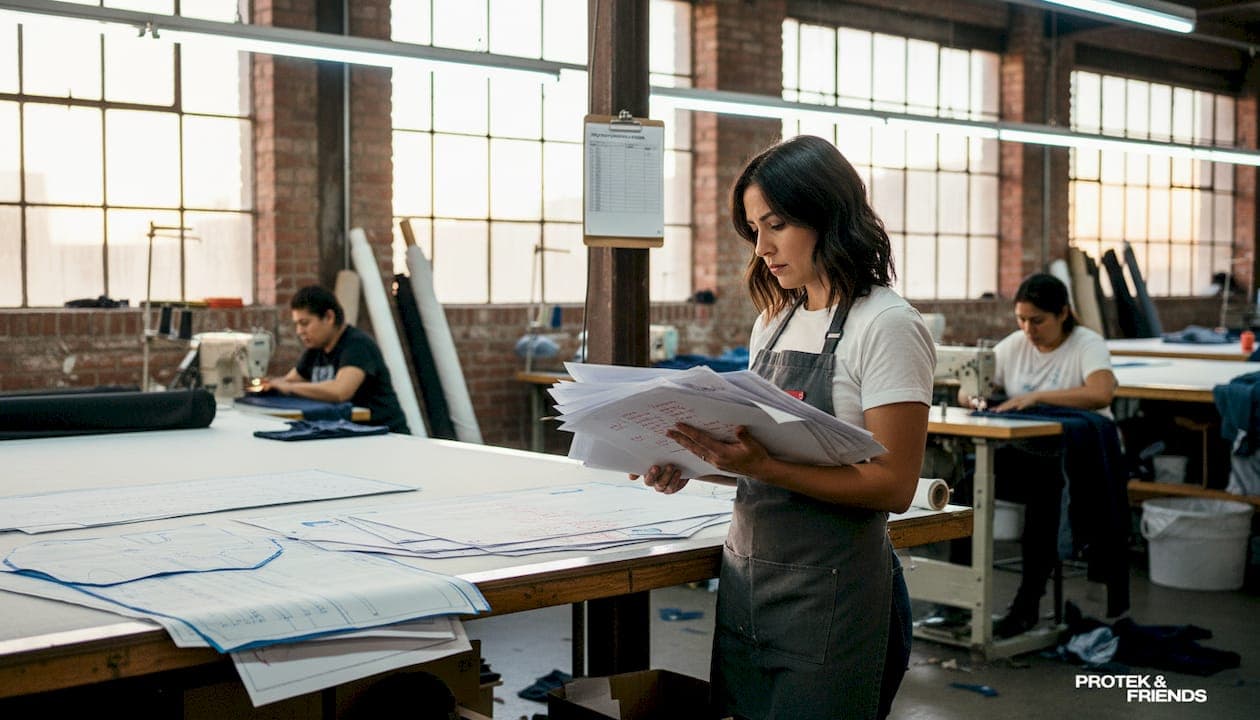
Scaling a fashion brand in the U.S. comes with a predictable challenge: finding a manufacturing partner who delivers on quality, communicates clearly, and grows with you. Too many brand owners assume cheaper overseas factories or vague local vendors are the only options, leading to missed deadlines, inconsistent quality, and costly rework. The reality is that choosing a reliable clothing manufacturer in LA can transform your production experience by offering proximity, transparency, and systems that eliminate surprises. This guide walks you through the types of manufacturing services available, how to evaluate potential partners, and practical steps to manage production relationships that actually work.
Table of Contents
- Key Takeaways
- Why choosing the right clothing manufacturer in LA matters
- Understanding manufacturing options in Los Angeles
- Key factors to evaluate when selecting your LA clothing manufacturer
- Tips for managing your production partnership successfully
- Explore Protek & Friends' full-package clothing production services in Los Angeles
- What is the typical turnaround time for clothing production in LA?
- Can small fashion brands benefit from LA manufacturing?
- How does full-package manufacturing simplify scaling?
- What quality control measures should I expect from a manufacturer?
Key Takeaways
| Point | Details |
|---|---|
| Local LA benefits | Proximity enables in person visits, faster turnarounds, easier quality control, and lower shipping costs and fewer delays. |
| Total landed cost | When comparing production options, calculate total landed cost including shipping, duties, storage, quality issues, and revenue lost from delays. |
| Understand service types | Knowing cut and sew and full package options helps you pick a partner that fits your brand stage and production complexity. |
| Vetting full package | Full package can simplify production but requires thorough vetting of materials sourcing and quality control processes before committing. |
| Clear communication systems | LA manufacturers with professional systems provide regular updates, proper documentation, and proactive problem solving to avoid chaos. |
Why choosing the right clothing manufacturer in LA matters
Proximity changes everything when you're scaling a fashion brand. Working with LA clothing manufacturers means you can visit production facilities without booking international flights, inspect samples in person, and resolve issues before they become expensive mistakes. Overseas production often sounds cheaper on paper, but hidden costs pile up quickly: shipping delays, communication breakdowns across time zones, and quality problems discovered only after bulk orders arrive.
Local production in Los Angeles offers tangible advantages that directly impact your bottom line and brand reputation:
- Faster turnaround times mean you can respond to market trends and restock popular items without waiting months for overseas shipments
- Cultural and language alignment reduces miscommunication that leads to incorrect specifications or missed deadlines
- Easier quality control through in-person inspections at critical production stages
- Reduced shipping costs and customs complications for domestic distribution
- Better intellectual property protection compared to some international manufacturing regions
The cost conversation often stops brand owners from exploring LA manufacturing, but this narrow focus ignores time-to-market value. Getting your collection to customers three months earlier can mean capturing seasonal demand, building momentum, and generating revenue that offsets any per-unit cost difference. Quality control becomes exponentially easier when you can drive to the factory, see the production line, and address concerns immediately rather than discovering problems after a container ship arrives.
Pro Tip: Calculate total landed cost, not just per-unit manufacturing price. Include shipping, duties, storage, quality issues, and the revenue lost from delayed launches when comparing local versus overseas production.
Communication clarity matters more than most brand owners realize until they've experienced production chaos. LA manufacturers operating with professional systems provide regular updates, document changes properly, and solve problems proactively instead of letting issues compound. This structured approach transforms production from a source of anxiety into a predictable business process.
Understanding manufacturing options in Los Angeles
LA offers three primary manufacturing models, each serving different brand needs and operational styles. Understanding these options helps you match your current stage and resources with the right production partner.
Cut-and-sew services require you to supply fabrics, trims, and detailed technical specifications. The manufacturer handles pattern making, grading, cutting, and sewing based on your materials. This model works well for brands with established supply chains and specific fabric preferences, but it demands more coordination on your end. You're responsible for sourcing quality materials, ensuring correct quantities arrive on time, and managing multiple vendor relationships.
Full-package manufacturers handle everything from design consultation and fabric sourcing through production, finishing, and quality control. This end-to-end approach simplifies your workload dramatically by consolidating multiple steps under one partner. You work with a single point of contact who manages the entire production timeline, reducing coordination headaches and communication gaps. Top LA full-package manufacturers typically serve brands ready to scale with professional systems rather than those just testing initial samples.
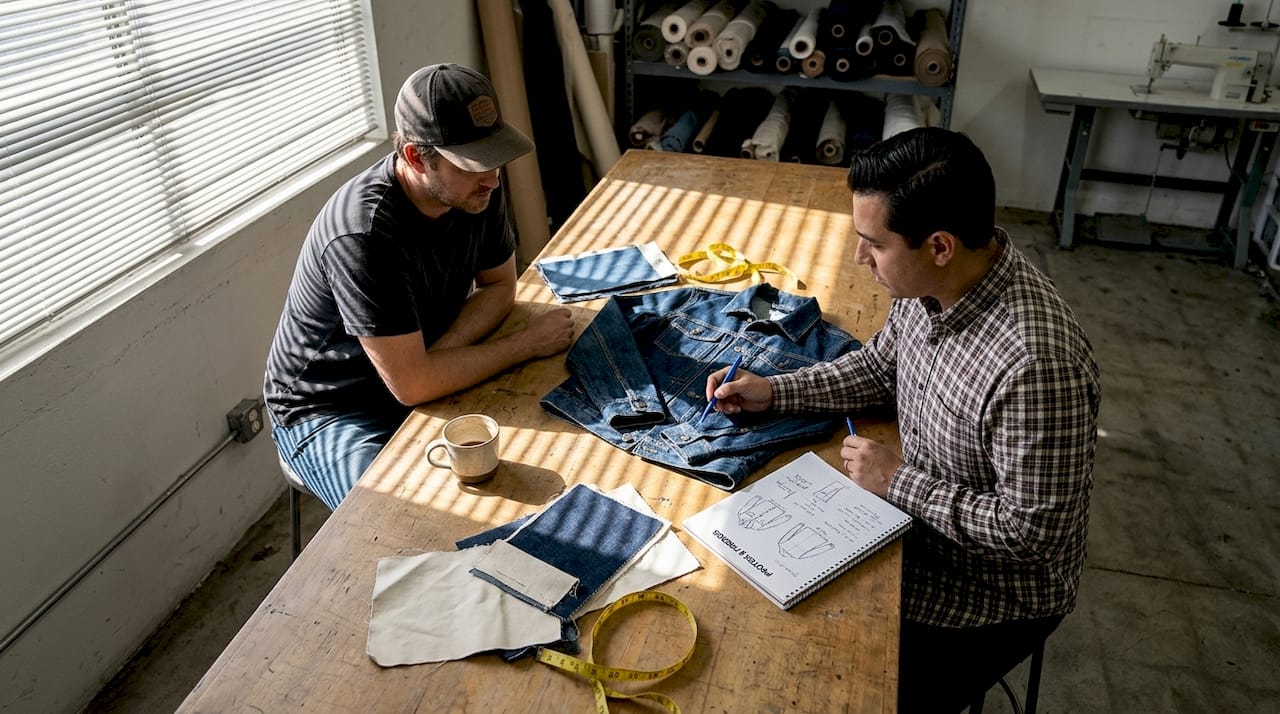
Private label manufacturing offers pre-designed garments that you can brand with your labels and packaging. This fastest-to-market option works for brands prioritizing speed over unique design elements. You select from existing styles, customize details like colors or minor design tweaks, and apply your branding. The trade-off is less design differentiation, but launch timelines compress significantly.
| Manufacturing type | Best for | Typical cost range | Timeline |
|---|---|---|---|
| Cut-and-sew | Brands with established fabric sources and technical expertise | $15-$35 per unit | 6-10 weeks |
| Full-package | Growing brands wanting streamlined production and professional systems | $25-$60 per unit | 8-14 weeks |
| Private label | Brands prioritizing speed and lower minimums over unique design | $10-$25 per unit | 4-8 weeks |
Your choice depends on several factors:
- Current brand stage and production experience level
- Available capital and cash flow timing
- Desired level of design control and uniqueness
- Internal team capacity for managing multiple vendors
- Timeline pressure for getting products to market
Pro Tip: Most successful scaling brands eventually move toward full-package manufacturing as they grow. Starting there can save you the transition costs and learning curve if you're already past the initial testing phase.
Many brand owners underestimate the coordination burden of managing separate fabric suppliers, trim vendors, and cut-and-sew factories. Full-package models eliminate this complexity by placing accountability with one partner who has incentive to solve problems quickly rather than pointing fingers across multiple vendors.
Key factors to evaluate when selecting your LA clothing manufacturer
Vetting potential manufacturing partners requires moving beyond website promises to evidence-based evaluation. Choosing an apparel factory in Los Angeles demands attention to specific criteria that predict partnership success.
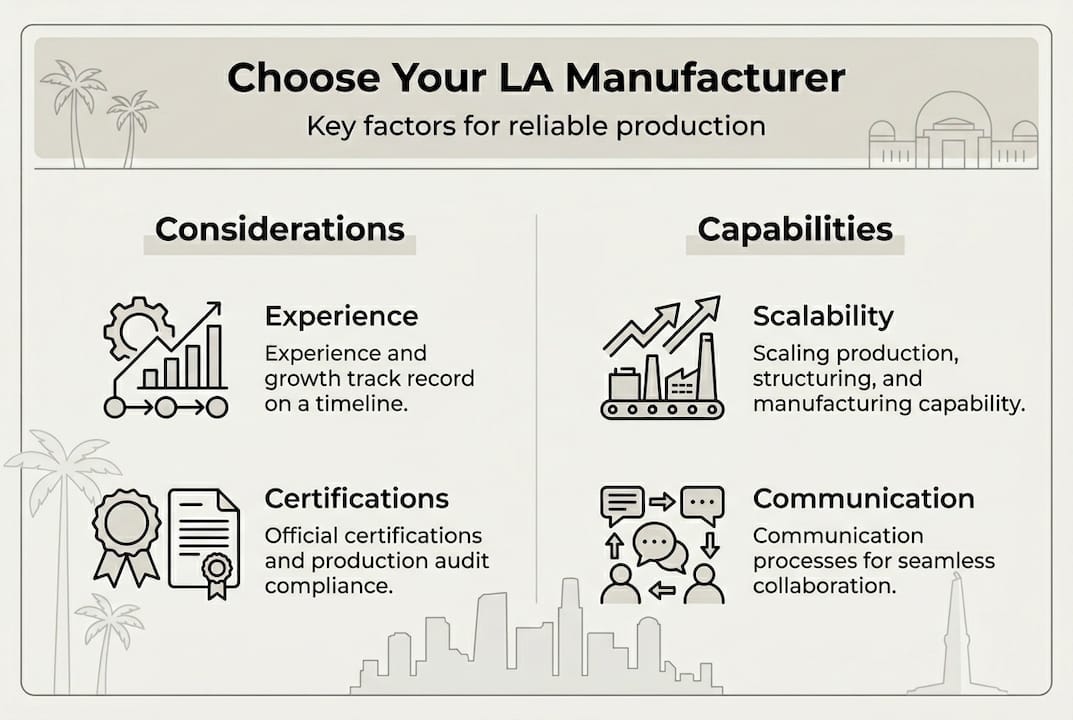
Start by examining past production quality through physical samples and client references. Request samples that match your product category and complexity level. A manufacturer excelling at basic t-shirts may struggle with technical outerwear or intricate knitwear. Ask for references from brands at similar production volumes to yours, then actually call those references and ask specific questions about communication, timeline accuracy, and problem resolution.
Communication protocols reveal how the partnership will actually function:
- Request a detailed timeline showing each production phase with specific milestones and approval points
- Ask who your primary contact will be and what their response time commitment is
- Understand their revision process and how changes get documented and priced
- Clarify how they handle problems or delays and what notification system they use
- Determine their quality control checkpoints and how you receive updates at each stage
Scalability matters even if you're starting with small runs. Your manufacturer should handle growth without forcing you to switch partners later. Ask about their capacity range, minimum order quantities, and how they manage production scheduling for growing accounts. A factory maxed out on capacity will struggle to accommodate your expansion or rush orders when opportunities arise.
Transparency on costs and processes separates professional operations from problematic ones. Detailed quotes should break down material costs, labor, finishing, and any additional fees clearly. Vague estimates or reluctance to explain pricing components signals potential problems. Quality manufacturers provide itemized breakdowns because they have nothing to hide and want you to understand value.
Red flags that should stop you from moving forward:
- Unwillingness to provide samples or references from similar brands
- Vague timelines without specific milestone dates
- Pressure to commit before receiving detailed quotes and specifications
- No clear quality control process or inspection protocols
- Communication delays or difficulty reaching decision makers
- Resistance to site visits or factory tours
Pro Tip: Visit the factory in person before committing to bulk production. Observe how organized the operation is, how workers are treated, and whether systems are actually in place or just promised.
Certifications and compliance demonstrate commitment to professional standards. Look for manufacturers following labor laws, maintaining safe working conditions, and ideally holding relevant industry certifications. This protects your brand reputation and ensures sustainable partnership potential.
Tips for managing your production partnership successfully
Selecting the right manufacturer is only the beginning. Managing the ongoing relationship determines whether production becomes a smooth growth engine or a constant source of problems.
Establish regular communication rhythms from day one:
- Schedule weekly check-ins during active production runs to review progress and address questions early
- Designate specific points of contact on both sides to avoid information getting lost across multiple people
- Use shared project management tools or production tracking systems to maintain visibility
- Document all specification changes in writing with confirmation from both parties before implementation
- Create approval protocols for samples at each stage with clear timelines for feedback
Technology streamlines sample approvals and production tracking significantly. Digital tools for photo sharing, measurement verification, and timeline updates keep everyone aligned without endless email chains. Scaling with reliable LA manufacturing becomes manageable when systems replace chaos.
Quality control checkpoints prevent expensive mistakes:
- Pre-production sample approval before bulk cutting begins
- First article inspection after initial units complete to catch issues early
- In-line inspection during production to verify consistency
- Final inspection before shipping to ensure specifications are met
Each checkpoint should have clear criteria and documentation. Don't assume quality will maintain itself. Active oversight and clear standards prevent problems from compounding.
Document everything thoroughly. Maintain organized records of:
- Technical specification sheets with measurements, materials, and construction details
- Approved samples with photos and notes on any variations
- All change requests with dates, reasons, and cost impacts
- Quality issues and how they were resolved
- Timeline adjustments and causes
This documentation protects both parties and provides reference for future production runs. It also makes onboarding new team members or transitioning to larger volumes much smoother.
Pro Tip: Build contingency time into your launch plans. Even with excellent manufacturers, unexpected delays happen. Planning buffer time prevents panic and rushed decisions that compromise quality.
Prepare contingency plans for common scenarios. Know your backup options if materials are delayed, if quality issues require rework, or if production timelines slip. Having predetermined responses reduces stress and helps you make better decisions under pressure. Strong manufacturing partnerships involve proactive problem solving, not just reacting to crises.
Maintain realistic expectations about the partnership. Even excellent manufacturers can't perform miracles with impossible timelines or constantly changing specifications. Treat the relationship professionally by respecting their processes, paying on agreed terms, and communicating changes promptly. The best partnerships are collaborative, not adversarial.
Explore Protek & Friends' full-package clothing production services in Los Angeles
Finding a manufacturing partner who actually operates with systems instead of chaos changes everything about scaling your fashion brand. Protek & Friends offers comprehensive clothing production services in Los Angeles and China, specializing in small to mid-size production runs with professional documentation and transparent communication.
Our full-package clothing manufacturing approach handles design review, fabric sourcing, sampling, fit corrections, bulk production, quality control, and delivery coordination under one structured process. This eliminates the coordination burden of managing multiple vendors while giving you clear visibility into every production stage.
We work with serious brand owners ready to produce correctly, protect their margins, and avoid costly mistakes that come from unclear processes. Good production should feel boring: clear updates, early problem solving, and zero surprises. If you're ready to scale with structure instead of stress, explore how our hybrid manufacturing model and documented systems can support your brand's growth.
What is the typical turnaround time for clothing production in LA?
Production timelines in Los Angeles typically range from 4 to 12 weeks depending on order complexity, size, and the type of manufacturing service you choose. Full-package manufacturers often provide more accurate timelines because they control the entire process from sourcing through finishing. Simple cut-and-sew projects with readily available materials can complete faster, while complex designs requiring custom fabric development or specialty finishes need longer lead times.
Can small fashion brands benefit from LA manufacturing?
Many LA manufacturers specifically serve small batch and startup brand needs with lower minimums than large-scale factories require. Starting local gives you proximity benefits for quality oversight and faster iteration as you refine your designs and find product-market fit. Clothing factory options for startups in LA offer flexibility that supports smart scaling without forcing you into order quantities beyond your current capacity.
How does full-package manufacturing simplify scaling?
Full-package services consolidate design consultation, material sourcing, production, finishing, and logistics under one partner who manages the entire timeline. This reduces coordination complexity dramatically compared to juggling multiple vendors for fabrics, trims, and assembly. You work with a single point of contact who has accountability for the complete process, speeding market entry and reducing communication gaps. The full-package approach transforms production from a coordination nightmare into a manageable business process.
What quality control measures should I expect from a manufacturer?
Professional manufacturers implement regular inspections at critical production phases including pre-production sample approval, first article inspection, in-line checks during bulk production, and final inspection before shipping. Transparent reporting of any issues discovered should happen promptly with clear communication about corrective actions and timeline impacts. Choosing the right apparel factory means partnering with manufacturers who document quality standards clearly and provide evidence of their inspection processes rather than just promising quality without systems to back it up.