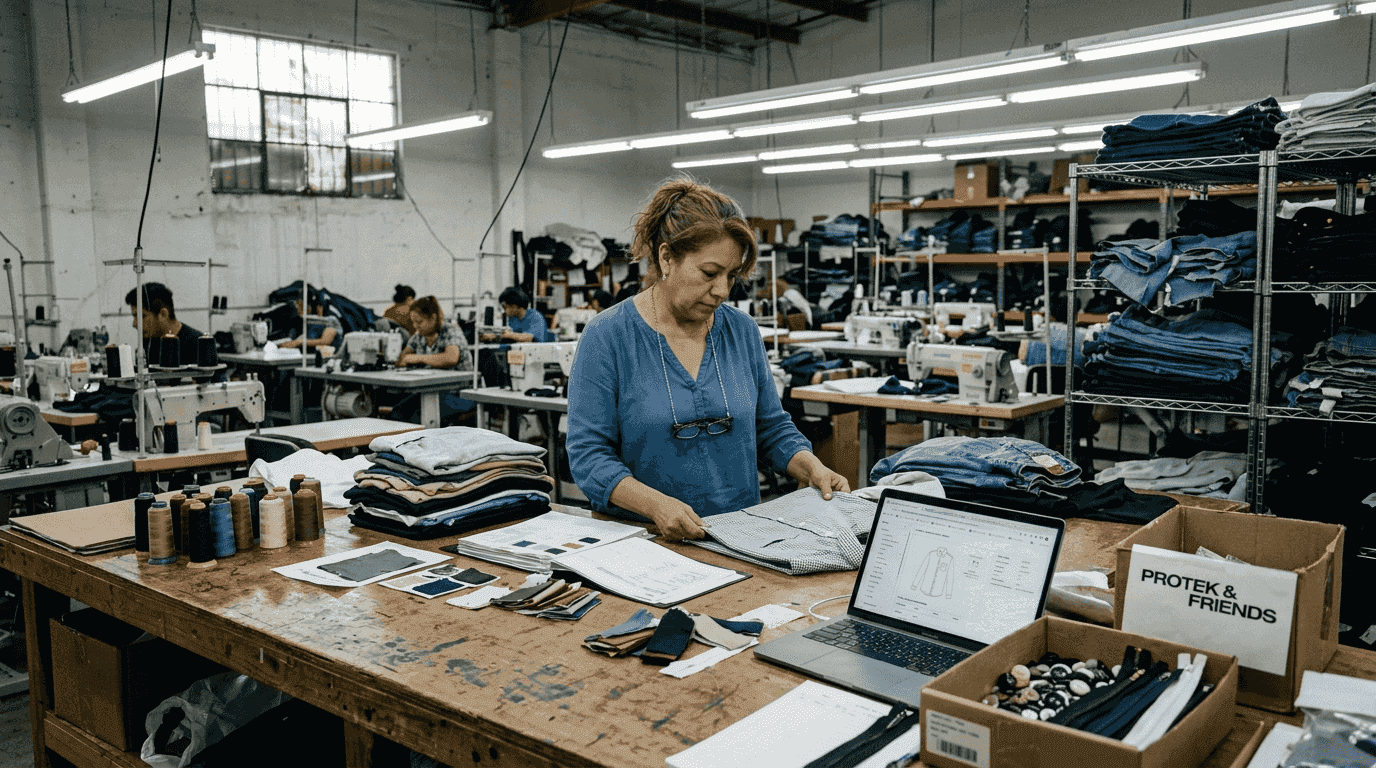
Los Angeles is home to a rapidly growing number of clothing manufacturers, creating both opportunity and confusion for fashion brand owners ready to scale. Many brands struggle to balance quality control, clear documentation, and reliable communication when choosing production partners in this crowded market. This guide cuts through the noise to help you select LA manufacturers who support structured, scalable systems. You'll learn how to evaluate partners, implement quality frameworks, and navigate local industry dynamics to protect your margins and grow confidently.
Table of Contents
- Why Los Angeles is a strategic hub for clothing manufacturing
- Challenges and criteria for selecting clothing manufacturers in LA
- Implementing quality control and documentation systems in LA manufacturing
- Navigating flexible production runs and industry dynamics in LA fashion manufacturing
- Partnering with Protek & Friends for reliable clothing production in Los Angeles
- FAQ
Key takeaways
| Point | Details |
|---|---|
| Growing manufacturer landscape | LA's expanding production ecosystem offers variety but requires careful selection to match your brand's quality and communication standards. |
| Quality control is non-negotiable | Structured systems reduce defects by 20-30%, protecting margins and customer satisfaction as you scale. |
| Documentation drives consistency | Detailed tech packs and clear workflows minimize costly errors and production delays. |
| Flexible MOQs support testing | Small to medium runs enable product validation but require balancing unit costs with quality standards. |
| Local advantages accelerate growth | Proximity enables faster turnaround, easier collaboration, and trend responsiveness compared to overseas production. |
Why Los Angeles is a strategic hub for clothing manufacturing
The Los Angeles fashion industry is experiencing growth, with an increasing number of clothing manufacturers emerging in the area. This expansion creates a dense ecosystem of skilled labor, high-end equipment, and close access to trend-driven design inputs that few other U.S. cities can match. LA's manufacturing heritage supports rigorous quality and accountability standards, making it an optimal location for brands prioritizing control and communication.
Los Angeles offers a dense ecosystem of talent, equipment, and proximity to trend-driven design. This concentration supports both startups testing initial collections and established brands scaling production capacity. The local ecosystem includes specialized contractors for cutting, sewing, finishing, and quality inspection, enabling brands to build custom production workflows.
Key advantages of LA manufacturing include:
- Faster turnaround times compared to overseas production, often reducing lead times by 40-50%
- Easier in-person collaboration for fit sessions, fabric approvals, and quality reviews
- Immediate trend responsiveness, allowing brands to adapt designs based on market feedback
- Reduced shipping complexity and import tariff exposure
- Access to specialized expertise in categories like denim, knitwear, and technical outerwear
The city's manufacturing infrastructure supports both small startups and established brands with varied production capacities. This flexibility enables you to test new products with limited risk, then scale efficiently when demand validates your designs. Reliable Los Angeles clothing manufacturing becomes a competitive advantage when you select partners who match your quality standards and communication expectations.
"LA's proximity to design talent and trend-driven markets creates a unique advantage for brands that need to move fast without sacrificing quality control."
Understanding why LA is a prime manufacturing hub leads naturally to addressing the challenges of selecting the right manufacturer in this crowded market.
Challenges and criteria for selecting clothing manufacturers in LA
Selecting a clothing manufacturer in Los Angeles can be challenging due to the variety of options available. The abundance creates complexity in decision-making, especially when evaluating quality control standards, production capacity, communication clarity, and ethical transparency. Many brand owners waste months testing manufacturers who promise flexibility but deliver inconsistent results.
Important evaluation factors include:
- Quality control standards with documented inspection processes and defect tracking
- Production capacity that matches your current volume and future growth plans
- Communication systems using digital platforms for real-time updates and feedback
- Ethical transparency in labor practices, wage compliance, and working conditions
- Technical expertise in your specific product categories and construction methods
- Financial stability to support consistent material sourcing and on-time delivery
Low minimum order quantities benefit startups but may increase unit cost, requiring balance with production efficiency. A manufacturer offering 50-piece minimums typically charges 30-40% more per unit than one requiring 500-piece runs. This trade-off makes sense when testing new designs, but becomes unsustainable as you scale. Prioritize manufacturers with documented quality assurance and a track record of meeting deadlines.
Pro Tip: Request sample production runs before committing to bulk orders. This reveals how manufacturers handle spec interpretation, fabric substitutions, and quality issues under real production conditions.
Ensure your manufacturer can scale with your brand without sacrificing standards. Ask specific questions about their capacity expansion plans, backup contractor networks, and quality control processes at higher volumes. Brands that outgrow their initial manufacturer often face 6-12 month delays finding new partners, disrupting sales momentum and customer relationships.
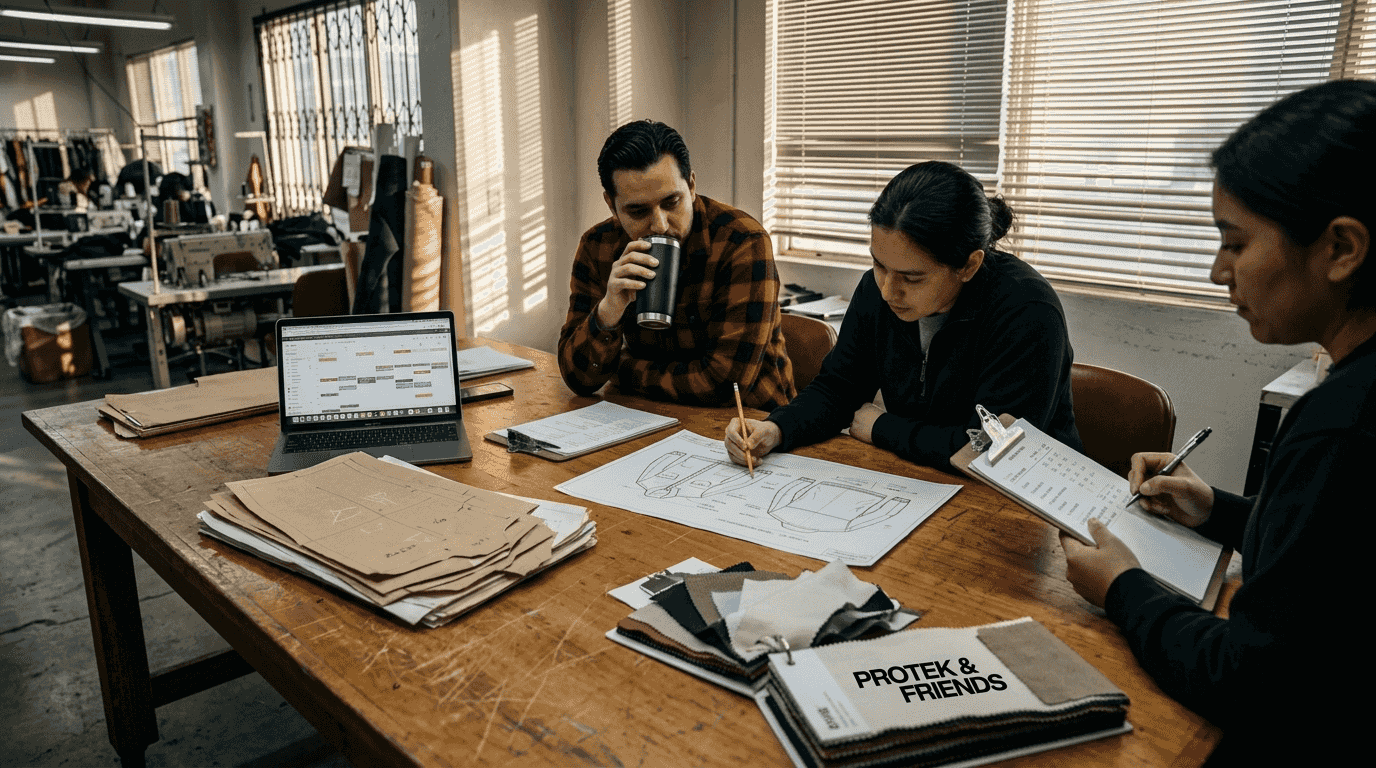
Scaling with reliable LA manufacturing requires evaluating both current capabilities and long-term partnership potential. The manufacturers who invest in structured systems, clear documentation, and transparent communication will support your growth without creating bottlenecks. Managing clothing production reliably becomes easier when you select partners who treat production as a strategic process, not just order fulfillment.
Having established how to choose manufacturers wisely, next we will focus on the essential operational systems to maintain quality and communication during scaling.
Implementing quality control and documentation systems in LA manufacturing
Quality control systems reduce defects by 20-30%, increasing customer satisfaction and lowering returns. This improvement directly impacts your bottom line by reducing replacement costs, preserving brand reputation, and enabling premium pricing. Brands without structured quality frameworks typically experience 15-20% defect rates, forcing them to absorb costs or damage customer relationships.
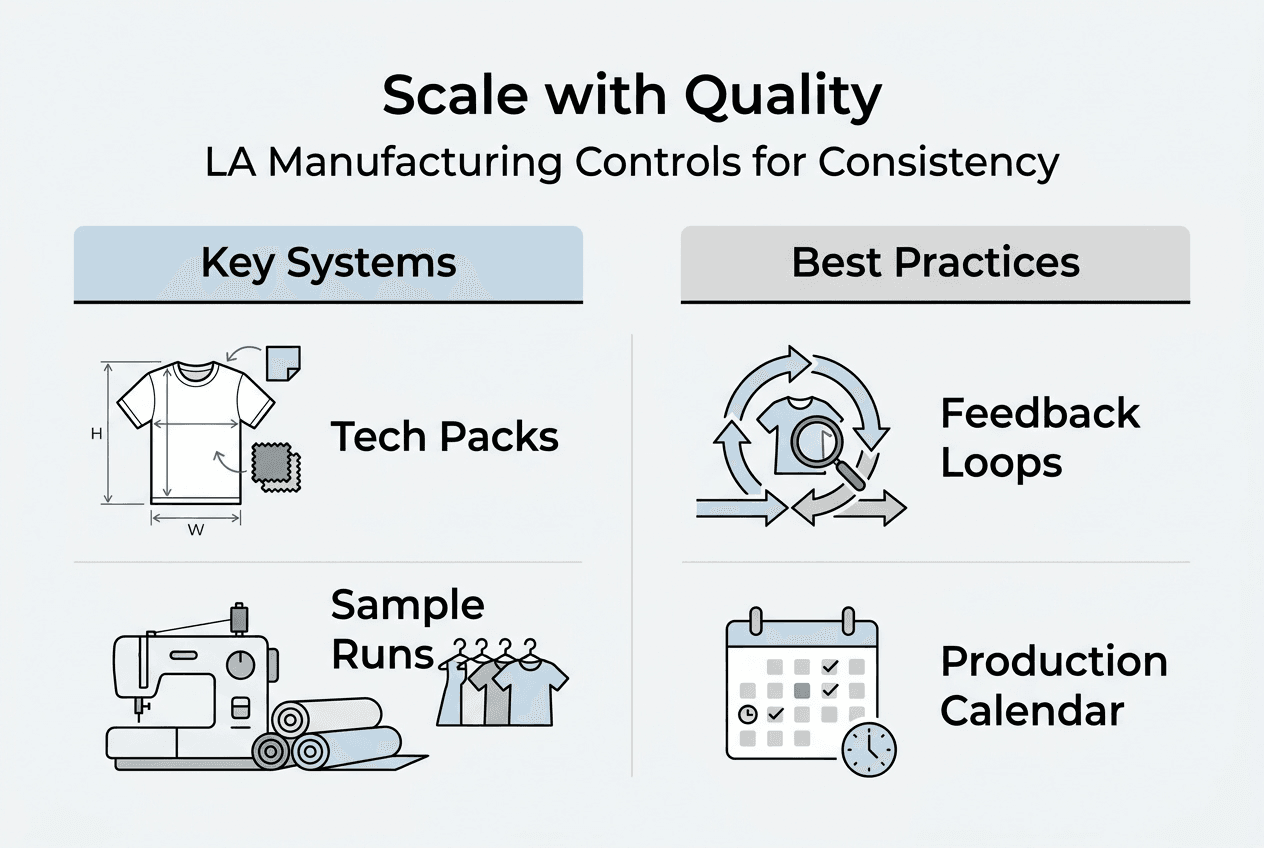
Tech packs must include precise measurements, fabric specifications, construction details, and finishing instructions to minimize errors. A complete tech pack documents every production variable:
- Technical sketches with front, back, and detail views showing all design elements
- Measurement specifications for each size with tolerance ranges
- Fabric and trim details including fiber content, weight, color codes, and supplier information
- Construction notes specifying stitch types, seam allowances, and assembly sequence
- Finishing requirements for washing, pressing, labeling, and packaging
- Quality standards defining acceptable defect thresholds and inspection criteria
Effective communication protocols improve production timelines by 15-20%. Digital platforms enable real-time updates on material arrivals, production progress, and quality issues. This visibility allows you to address problems before they cascade into costly delays or defective inventory.
Pro Tip: Create a production calendar that maps material lead times, sampling windows, and bulk production schedules. This prevents rushed decisions that compromise quality when deadlines approach.
Documented workflows and clear feedback loops are vital to scaling efficiently. Establish standard operating procedures for sample approvals, fit corrections, color matching, and final inspections. These systems ensure consistency even as you increase order frequency and complexity.
| Quality Control Stage | Key Actions | Impact on Defect Reduction |
|---|---|---|
| Pre-production sampling | Fabric testing, fit validation, construction review | 40% reduction in material-related defects |
| In-line inspection | Random checks during cutting and sewing | 30% reduction in assembly errors |
| Final inspection | Complete garment review before packing | 25% reduction in finishing defects |
| Post-production audit | Statistical sampling of packed goods | 15% improvement in customer satisfaction |
Balancing low MOQs with production efficiency requires strategic quality control integration. Smaller runs need the same documentation rigor as large orders, but inspection costs represent a higher percentage of total production expense. Focus quality resources on critical failure points like fit, fabric performance, and construction durability rather than cosmetic details.
Quality control in fashion scaling becomes more important as your brand grows. Early-stage brands can personally inspect every garment, but this approach fails at 500+ units per month. Implementing structured apparel production workflow systems now prevents quality crises later when stakes are higher and margins tighter.
With quality and documentation frameworks outlined, we now explore how flexible production runs and local industry dynamics impact brand decisions in LA.
Navigating flexible production runs and industry dynamics in LA fashion manufacturing
The LA ecosystem includes small-to-medium production runs suitable for startups and limited editions. Flexible MOQs support new product testing but can increase per-unit costs compared to large overseas runs. A 100-piece run in LA might cost $45 per unit for a style that would cost $28 per unit in a 1,000-piece overseas production. This premium buys speed, control, and reduced inventory risk.
The Made in LA movement is shaped by tariff regulations and reshoring trends, influencing brand decisions. Brands marketing domestic production appeal to consumers prioritizing ethical labor and environmental responsibility, often commanding 20-30% price premiums. However, the LA manufacturing industry faces challenges from tariff regulations, ICE raids, and environmental disruptions that create uncertainty.
Local industry challenges include:
- Labor enforcement actions disrupting contractor networks and increasing compliance costs
- Wildfires and environmental events impacting transportation and material availability
- Coordination complexity for products like jeans requiring multiple specialized contractors
- Rising real estate costs forcing manufacturers to relocate or consolidate operations
- Competition for skilled labor as experienced sewers retire without replacement
Comparing in-house cutting versus contractor coordination is important for complex apparel items. Jeans production typically involves separate contractors for cutting, sewing, washing, and finishing. This fragmentation increases communication overhead and quality control complexity compared to vertically integrated factories.
| Production Model | Advantages | Challenges | Best For |
|---|---|---|---|
| Vertically integrated factory | Single point of contact, faster communication, consistent quality | Higher MOQs, less flexibility, limited category expertise | Established brands with predictable volume |
| Contractor network | Lower MOQs, specialized expertise, cost flexibility | Coordination complexity, quality variability, longer lead times | Startups testing products or limited editions |
| Hybrid approach | Balanced flexibility and control, scalable capacity | Requires experienced production management | Growing brands transitioning from startup to scale |
Brand owners should balance cost, quality, and ethical factors to remain competitive and sustainable. Choosing the cheapest option often creates hidden costs in defects, delays, and customer dissatisfaction. Investing in manufacturers with structured systems pays dividends through consistent quality, reliable timelines, and reduced stress.
Clothing sample development guide helps you navigate the sampling process efficiently, reducing iterations and accelerating time to market. Understanding local industry dynamics enables smarter decisions about when to produce locally versus overseas, and how to structure relationships with multiple contractors.
With a strong understanding of the operational and industry context, the next section will connect these insights to practical production scaling solutions available today.
Partnering with Protek & Friends for reliable clothing production in Los Angeles
Scaling production without sacrificing quality requires a manufacturing partner who understands structured systems, not just sewing. Protek & Friends offers clothing production services in LA and China, specializing in helping brands implement the documentation, quality control, and communication frameworks outlined in this guide. We work with fashion brand owners who value clarity over chaos and want production to feel predictable, not stressful.
Our full-package clothing production process includes design review, fabric sourcing, fit correction, cost breakdown, bulk production management, quality control checks, and delivery coordination. This end-to-end approach eliminates the coordination complexity of managing multiple contractors while maintaining the flexibility to scale from 100-piece test runs to 5,000-piece reorders. We specialize in small to mid-size production runs with professional systems in place, supporting brands ready to produce correctly and protect their margins.
To wrap up, we'll answer common questions fashion brand owners have as they start or improve their LA manufacturing partnerships.
FAQ
What is the typical minimum order quantity (MOQ) in Los Angeles clothing manufacturing?
MOQs vary widely, often allowing small to medium runs ideal for startups. Many LA manufacturers accept 50-200 piece minimums per style, enabling brands to test new products without excessive inventory risk. Lower MOQs increase per-unit costs but offer flexibility for validating designs before committing to larger production runs.
How can I ensure consistent quality when scaling production in Los Angeles?
Use detailed tech packs outlining all specifications and measurements to eliminate interpretation errors. Implement regular factory audits and sampling rounds at each production stage to catch issues early. Digital communication platforms enable real-time feedback and updates, improving quality control in fashion scaling by maintaining visibility throughout production.
What challenges should I anticipate when producing apparel locally in LA?
Expect coordination complexity with multiple suppliers, especially for items like jeans requiring specialized contractors for cutting, sewing, washing, and finishing. Tariffs, labor enforcement actions, and environmental factors impact lead times and costs unpredictably. Proactive planning with backup contractors and buffer timelines mitigates disruption risks.
How does effective communication improve manufacturing outcomes?
Digital platforms enable real-time updates and feedback loops between brands and manufacturers. This visibility improves production timelines by 15-20% and reduces misunderstandings that cause defects or delays. Clear communication is critical for maintaining quality during scale, especially when managing clothing production across multiple product categories or seasonal collections.