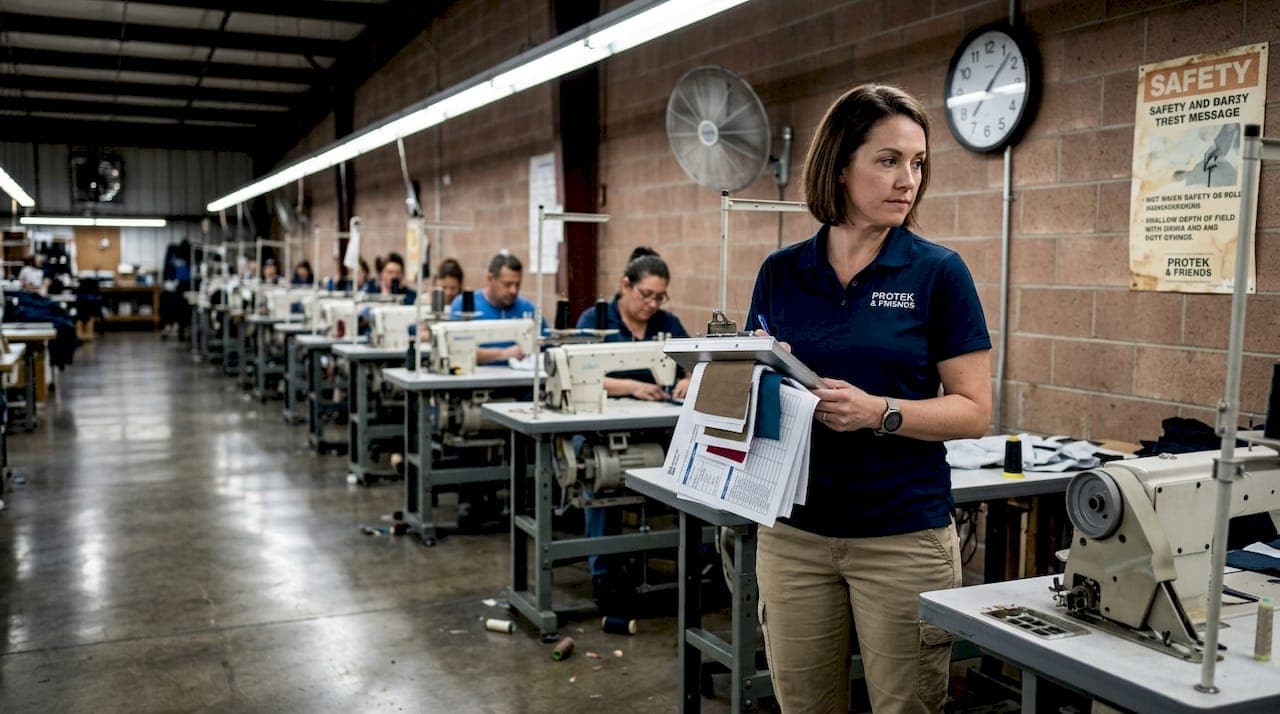
Scaling clothing production in the USA comes with unique challenges that many fashion brand owners underestimate. While domestic manufacturing offers faster turnaround times and greater flexibility, US factories typically maintain MOQs of 50-200 units compared to overseas minimums of 300-1000+. This lower barrier seems attractive, but without structured production processes and robust quality control systems, brands risk inconsistent output, communication breakdowns, and margin erosion. This guide clarifies the methodologies, quality assurance practices, and scaling strategies that enable fashion brands to grow production efficiently while maintaining standards and clear communication with US manufacturers.
Table of Contents
- Understanding USA clothing production methods and systems
- Implementing quality control for scalable US apparel manufacturing
- Overcoming scaling challenges in the US clothing manufacturing landscape
- Practical strategies for efficient communication and process standardization
- How Protek & Friends supports your USA clothing production growth
Key takeaways
| Point | Details |
|---|---|
| Structured production processes | Choosing the right production model (CMT, FPP, or hybrid) optimizes scalability and quality for your brand's specific needs. |
| Multi-stage quality control | Implementing pre-production, in-process, and post-production inspections with AQL 2.5 standards minimizes defects and rework. |
| Hybrid sourcing models | Combining domestic flexibility with strategic offshore partnerships balances cost efficiency and production control. |
| Small batch pilots | Testing new styles in low-volume runs reduces risk and generates data before committing to full-scale production. |
| Clear documentation | Detailed tech packs, SOPs, and version control eliminate miscommunication and ensure consistent output across production runs. |
Understanding USA clothing production methods and systems
Choosing the right production methodology forms the foundation for scalable, quality-focused manufacturing. Key production methodologies include CMT, FPP, UPS, Modular Cells, and PBS, each serving different brand needs and production volumes. Understanding these systems helps you align your growth strategy with the right manufacturing approach.
CMT (Cut, Make, Trim) gives brands maximum control by supplying their own materials to manufacturers who handle only construction. This model works well when you have established fabric suppliers and want tight oversight of material quality. Full Package Production (FPP) shifts more responsibility to the manufacturer, who sources materials, manages production, and delivers finished goods. FPP reduces your operational workload but requires trusting your manufacturer's sourcing capabilities.
Production systems vary significantly in complexity and throughput. The Unit Production System moves individual garments through specialized workstations, enabling faster completion of complex styles with detailed construction. Progressive Bundle System groups garments in batches, moving them through sequential operations, which suits simpler styles and higher volumes. Modular manufacturing organizes small teams handling complete garments from start to finish, improving quality accountability and reducing handling time.
Small pilot runs demand different systems than high-volume production. For initial batches of 50-100 units, flexible modular systems or skilled individual operators handle variations efficiently without extensive line setup. Scaling to 500+ units benefits from progressive bundle systems that optimize repetitive operations. Many successful brands adopt hybrid approaches, using domestic manufacturers for complex or time-sensitive styles while leveraging offshore partners for basic, high-volume pieces.
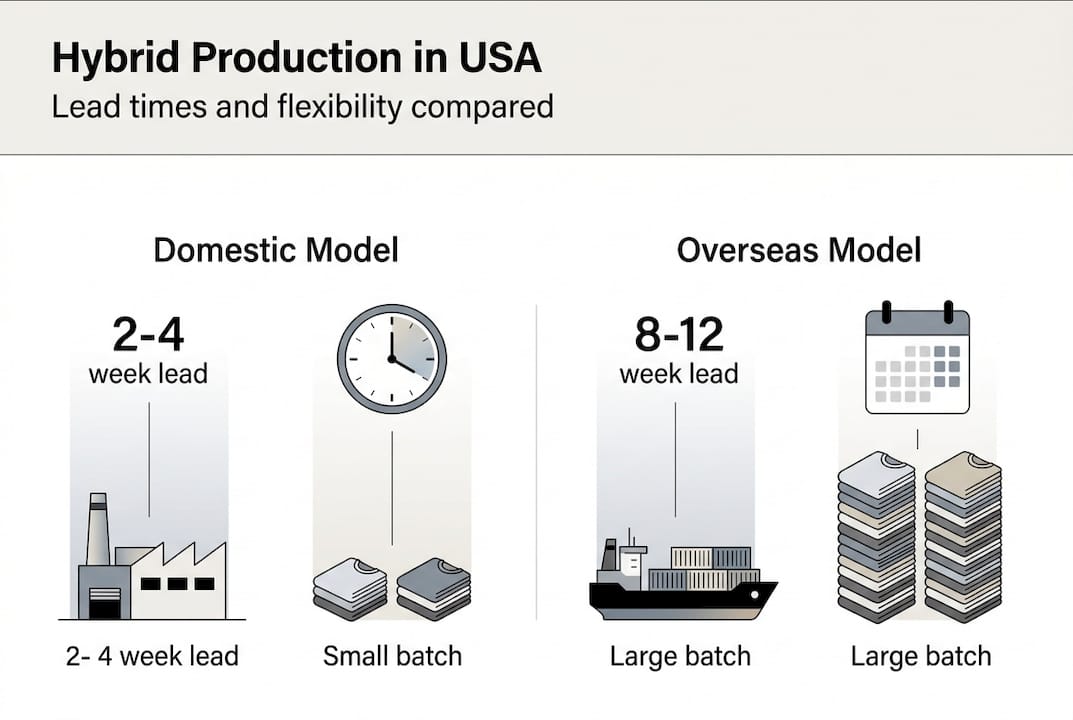
The trend toward hybrid models reflects practical economics. Domestic production offers 2-4 week lead times versus 8-12 weeks overseas, but labor costs run 3-5x higher. Smart brands balance these factors by producing trend-sensitive items domestically where speed matters, while manufacturing core basics offshore where volume justifies longer timelines. Understanding clothing production terms helps you communicate effectively with manufacturers across both models.
Pro Tip: Document your production requirements in a decision matrix comparing lead time, MOQ, cost per unit, and quality control capabilities across potential manufacturing partners. This data-driven approach prevents emotional decisions and identifies the optimal production model for each style category in your collection.
Implementing quality control for scalable US apparel manufacturing
Quality control determines whether scaling strengthens or destroys your brand reputation. Quality control uses multi-stage inspections and AQL 2.5 standards, supported by SOPs and digital tools that catch defects before they reach customers. Without systematic quality assurance, increased production volume amplifies defect rates exponentially.
Three inspection stages create a quality safety net. Pre-production inspections verify fabric quality, color accuracy, and sample approval before cutting begins. Catching material defects at this stage prevents waste and rework costs. In-process inspections occur during production, with line supervisors checking garments at critical construction points like collar attachment, zipper installation, and hem finishing. Apparel quality inspections involve pre-, in-, and post-production checks that collectively reduce defect rates by 60-80% compared to final-only inspection.
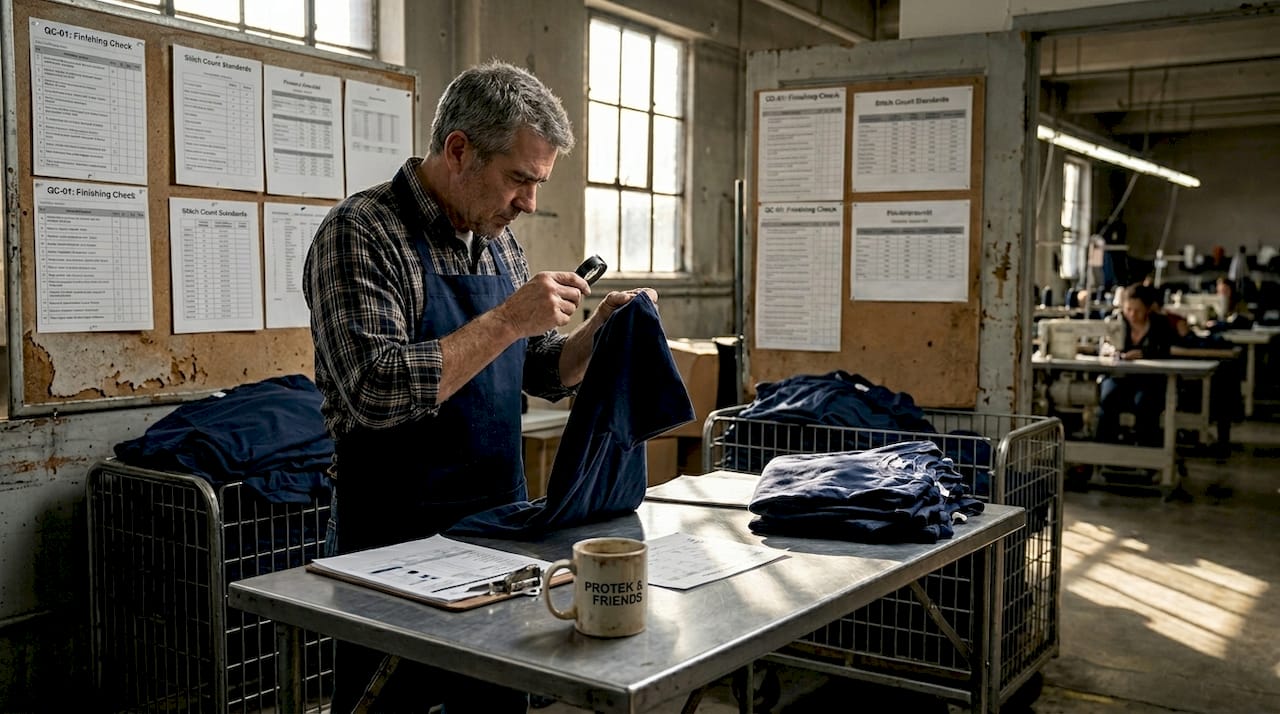
Post-production final audits use statistical sampling based on AQL (Acceptable Quality Level) standards. AQL 2.5 means accepting shipments with 2.5% or fewer defects, balancing perfectionism against commercial reality. Inspectors examine random samples following standardized checklists covering measurements, stitching quality, fabric flaws, and finishing details. This systematic approach provides objective quality data rather than subjective opinions.
Standard Operating Procedures (SOPs) document exact specifications for every production step. When your sewing operators follow written SOPs with visual references, output consistency improves dramatically. Training programs reinforce these procedures, ensuring new team members maintain quality standards without lengthy trial periods. Digital quality control tools, including tablet-based inspection apps and photo documentation systems, create audit trails and identify recurring issues faster than paper-based tracking.
Common quality pitfalls during scaling include inconsistent material sourcing, inadequate operator training, and skipping inspection stages to meet deadlines. Multi-stage QC mitigates these risks by catching problems early when corrections cost less. A collar defect caught during pre-production inspection costs pennies in prevention, but the same defect discovered in finished goods costs dollars in rework or scrap.
"Poka Yoke error-proofing techniques, like color-coded thread for different garment sizes or fixtures preventing incorrect seam placement, eliminate human error at the source. Some advanced US factories now deploy AI vision systems that photograph every garment and flag defects in real time, achieving inspection speeds 10x faster than manual checking."
Pro Tip: Implement a defect tracking database that categorizes issues by type, production stage, and root cause. This data reveals patterns invisible in individual inspections, enabling targeted process improvements that prevent recurring problems rather than just catching defects after they occur.
Understanding quality control in fashion transforms QC from a cost center into a competitive advantage that protects margins through reduced rework and returns.
Overcoming scaling challenges in the US clothing manufacturing landscape
Scaling production in the USA presents distinct obstacles that require strategic planning and structured workflows. Understanding these barriers and implementing proven mitigation strategies separates successful scaling from costly failures.
| Production Factor | USA Domestic | Overseas |
|---|---|---|
| Typical MOQ | 50-200 units | 300-1000+ units |
| Lead Time | 2-4 weeks | 8-12 weeks |
| Sample Turnaround | 3-7 days | 2-4 weeks |
| Communication | Real-time, same time zone | Delayed, time zone gaps |
US factories typically have low MOQs of 50-200 versus overseas 300-1000+, with lead times reflecting these scales. This flexibility enables faster testing and iteration but comes with higher per-unit costs that compress margins on small runs.
Core scaling challenges include skilled labor shortages, inconsistent fabric dye lots, and tariffs on imported materials. The US apparel workforce has contracted significantly, making experienced pattern makers, sample sewers, and production managers scarce and expensive. Fabric sourcing presents another hurdle since most textile mills operate overseas, requiring brands to import materials that face duties and shipping delays. Dye lot consistency becomes critical when reordering fabrics for subsequent production runs, as color variations between lots create quality issues.
Scaling quality loss often stems from inconsistent sourcing and skilled labor shortages, with rework rates reducible through standardized work procedures. Five practical steps address these scaling barriers:
-
Pilot small batches of 50-100 units before committing to larger production runs, generating real-world data on construction challenges, material performance, and time requirements specific to each style.
-
Implement ERP systems and automation for integrated planning that tracks materials, production status, and quality metrics in real time, eliminating information gaps that cause delays and errors.
-
Cross-train production teams on multiple operations, creating workforce flexibility that prevents bottlenecks when specific skills are unavailable or demand spikes unexpectedly.
-
Partner strategically for materials by establishing relationships with fabric suppliers who maintain consistent dye lots and can provide smaller minimums suitable for US production volumes.
-
Standardize workflows with documented procedures, quality checkpoints, and approval gates that maintain consistency as production volume increases and new team members join.
Risks of quality loss multiply without proper process controls. A brand scaling from 200 to 2,000 units per style without structured workflows typically sees defect rates double or triple as operators rush to meet deadlines, communication breaks down across shifts, and material tracking becomes chaotic. Process controls prevent this deterioration by maintaining the same systematic approach regardless of volume.
Pro Tip: Document every tech pack version with date stamps and revision notes, creating a clear history of approved changes. This version control prevents operators from working with outdated specifications and provides evidence when disputes arise about whether production matches approved samples. Store these documents in cloud-based systems accessible to all stakeholders, eliminating the "I never saw that revision" excuse.
Exploring options through a comprehensive clothing factory guide for startups helps brands navigate these scaling decisions with greater confidence.
Practical strategies for efficient communication and process standardization
Communication failures and inconsistent processes cause more production disasters than technical skill gaps. Implementing structured documentation and collaboration frameworks eliminates the ambiguity that leads to costly mistakes and missed deadlines.
Tech pack essentials form the foundation of clear communication. A complete tech pack includes a Bill of Materials (BOM) listing every component with supplier details and costs, a detailed measurement spec sheet with tolerance ranges, construction details showing stitch types and seam allowances, and visual references with annotated photos or technical drawings. This documentation leaves no room for interpretation or guessing.
Standard Operating Procedures (SOPs) document the exact sequence and specifications for every production task. When your cutting room, sewing floor, and finishing department all follow written SOPs with visual aids, quality becomes predictable rather than variable. Version control tracks changes to these procedures, ensuring everyone works from current specifications rather than outdated information that causes rework.
Enterprise Resource Planning (ERP) systems and automation integrate planning, inventory, production tracking, and quality data into unified platforms. Real-time visibility into material availability, production status, and quality metrics enables proactive problem solving rather than reactive firefighting. Automated alerts notify stakeholders when materials run low, production falls behind schedule, or quality metrics exceed acceptable thresholds.
Best practices for team training and cross-functional collaboration include:
- Weekly production meetings with design, production, and quality teams reviewing current projects, discussing challenges, and aligning on priorities
- Standardized handoff procedures that define exactly what information transfers between departments and in what format
- Visual management boards displaying production schedules, quality metrics, and problem-solving initiatives where all team members can see progress
- Skill certification programs ensuring operators demonstrate competency before working independently on customer orders
- Regular feedback loops where production teams can suggest improvements to designs or processes based on manufacturing realities
Clear tech packs, SOPs, and data-driven pilot runs improve communication and minimize defects by establishing objective standards that replace subjective interpretations. When everyone works from the same detailed specifications, disagreements about whether production meets standards become rare.
Pro Tip: Run pilot productions of 25-50 units for every new style before committing to full production volumes. These pilots reveal construction challenges, identify time-consuming operations that affect costing, and generate actual samples for fit and quality evaluation. The data collected during pilots, including actual labor minutes per operation and material yield rates, enables accurate costing and realistic timeline commitments for scaled production.
Learning how to improve communication in scalable apparel manufacturing and implementing a structured apparel production workflow transforms production from chaotic to predictable, protecting margins while enabling confident scaling.
How Protek & Friends supports your USA clothing production growth
Scaling your clothing brand requires more than just finding a factory that can sew. You need a production partner who understands the systems, quality controls, and communication frameworks that make scaling work without sacrificing standards or burning cash on mistakes.
Protek & Friends operates as a Los Angeles-based full-package manufacturer specializing in structured production processes for brands ready to scale intelligently. Our hybrid model balances USA domestic production for speed and flexibility with strategic offshore manufacturing for cost efficiency on appropriate styles. We handle everything from design review and fabric sourcing through sampling, production management, quality control, and delivery coordination.
What sets us apart is our systematic approach to documentation and communication. Before you pay for production, you receive clear cost breakdowns, realistic timelines, and detailed specifications that eliminate surprises. Our multi-stage quality control process catches issues early, and our structured workflows maintain consistency whether you are producing 50 units or 500. We work with brands who value process over promises and understand that good production should feel boring: clear updates, early problem solving, zero surprises.
Explore our comprehensive clothing production services or visit Protek & Friends to learn how we help fashion brands scale production efficiently with quality control systems that protect your reputation and margins.
FAQ
What are the best production methods for scaling USA apparel brands?
CMT (Cut, Make, Trim) and Full Package Production are the most common methods, with choice depending on your control preferences and scale requirements. CMT suits brands wanting material control, while FPP reduces operational workload by having manufacturers source fabrics. The Unit Production System enables faster throughput for complex styles with detailed construction, making it ideal for brands scaling intricate designs.
How can I maintain quality when scaling my clothing line in the USA?
Use multi-stage inspections with AQL 2.5 standards covering pre-production material checks, in-process line inspections, and post-production final audits. Implement detailed SOPs for every production operation and train your team consistently on these procedures. Digital quality control tools and defect tracking databases help identify patterns and prevent recurring issues before they affect customers.
What are typical minimum order quantities for US clothing manufacturers?
US MOQs usually range from 50-200 units per style, supporting small batch pilots and faster testing of new designs. Overseas MOQs tend to be larger at 300-1000+ units, impacting lead time commitments and inventory risk. The lower US minimums offer flexibility for emerging brands but come with higher per-unit costs that require careful margin analysis.
How important is documentation and communication in US apparel production?
Precise tech packs with BOMs, measurements, and construction details, combined with standardized SOPs, reduce errors and miscommunication that cause costly rework. Regular production updates and version control keep all stakeholders aligned with current specifications rather than outdated information. Clear documentation transforms subjective quality debates into objective comparisons against agreed standards, preventing disputes and delays.