
Switching manufacturers is not the risk you think it is. Contrary to common belief, many fashion brands experience measurable efficiency gains and quality improvements when they move to new production partners. Supply chain transparency can improve efficiency by up to 15% and reduce lead times by 20%, making strategic manufacturer changes a powerful lever for growth. This guide breaks down the core drivers pushing brands to switch, the resilience benefits of supplier diversification, and the practical steps to make transitions smooth and profitable.
Table of Contents
- Understanding the core reasons why brands switch manufacturers
- The role of supplier diversification in manufacturing resilience and risk management
- Logistics challenges and cost pressures driving brand decisions to switch manufacturers
- Practical considerations: due diligence and managing the switch to a new manufacturer
Key takeaways
| Point | Details |
|---|---|
| Manufacturing partnerships determine brand quality | Poor communication and lack of transparency drive brands to seek new partners who deliver clarity and control. |
| Supplier diversification reduces operational risks | Diversified suppliers cut recovery time by 20% and enable faster pivots during disruptions. |
| Logistics costs heavily influence manufacturer choice | Rising shipping rates and transit delays can increase delivery costs by 20%, pushing brands to explore alternative regions. |
| Due diligence is essential for successful transitions | Factory audits and pilot runs minimize risks and ensure new manufacturers meet quality standards. |
Understanding the core reasons why brands switch manufacturers
Brands rarely switch manufacturers on a whim. The decision typically follows persistent operational pain points that directly impact margins and customer satisfaction. Poor communication tops the list: when factory updates arrive late or cost breakdowns shift mid-production, brand owners lose the ability to plan inventory or manage cash flow effectively. This chaos becomes unsustainable as brands scale.
Accessing specialized capabilities is another critical motivator. A denim brand might outgrow a basic cut and sew factory once they need laser finishing or sustainable washing techniques. Similarly, brands seeking eco-friendly materials often find their current partners lack the certifications or supplier networks needed to source organic cotton or recycled polyester at scale. Switching to a production partner with the right technical expertise becomes the only path forward.
Agility matters more than ever in fast-moving fashion markets. Brands that can adjust production volumes quickly or pivot to new styles mid-season protect their margins better than competitors locked into rigid MOQs or slow sampling cycles. Efficient manufacturers with digital tools and flexible processes enable this responsiveness, making them attractive alternatives to legacy factories stuck in outdated workflows.
Supplier diversification also plays a major role. Relying on a single manufacturer creates vulnerability: if that factory faces delays, quality issues, or capacity constraints, your entire production schedule collapses. Spreading orders across multiple partners reduces this risk and improves recovery speed when disruptions occur. Brands building resilient supply chains prioritize manufacturers in different regions with complementary strengths.
Key drivers pushing brands to switch include:
- Lack of transparency in costing, timelines, and material sourcing
- Need for advanced production technologies like digital printing or specialty finishes
- Desire for faster sampling cycles and flexible order quantities
- Risk mitigation through geographic and supplier diversification
- Access to sustainable materials and certified ethical production processes
The role of supplier diversification in manufacturing resilience and risk management
Supplier diversification is not just about spreading risk. It actively improves operational performance by enabling brands to respond faster to demand shifts and external shocks. When you rely on multiple manufacturers, sudden spikes in orders for one product line can be absorbed by ramping up with an alternative partner instead of exhausting a single factory's capacity. This flexibility reduces the need for high safety stock levels, freeing up working capital.
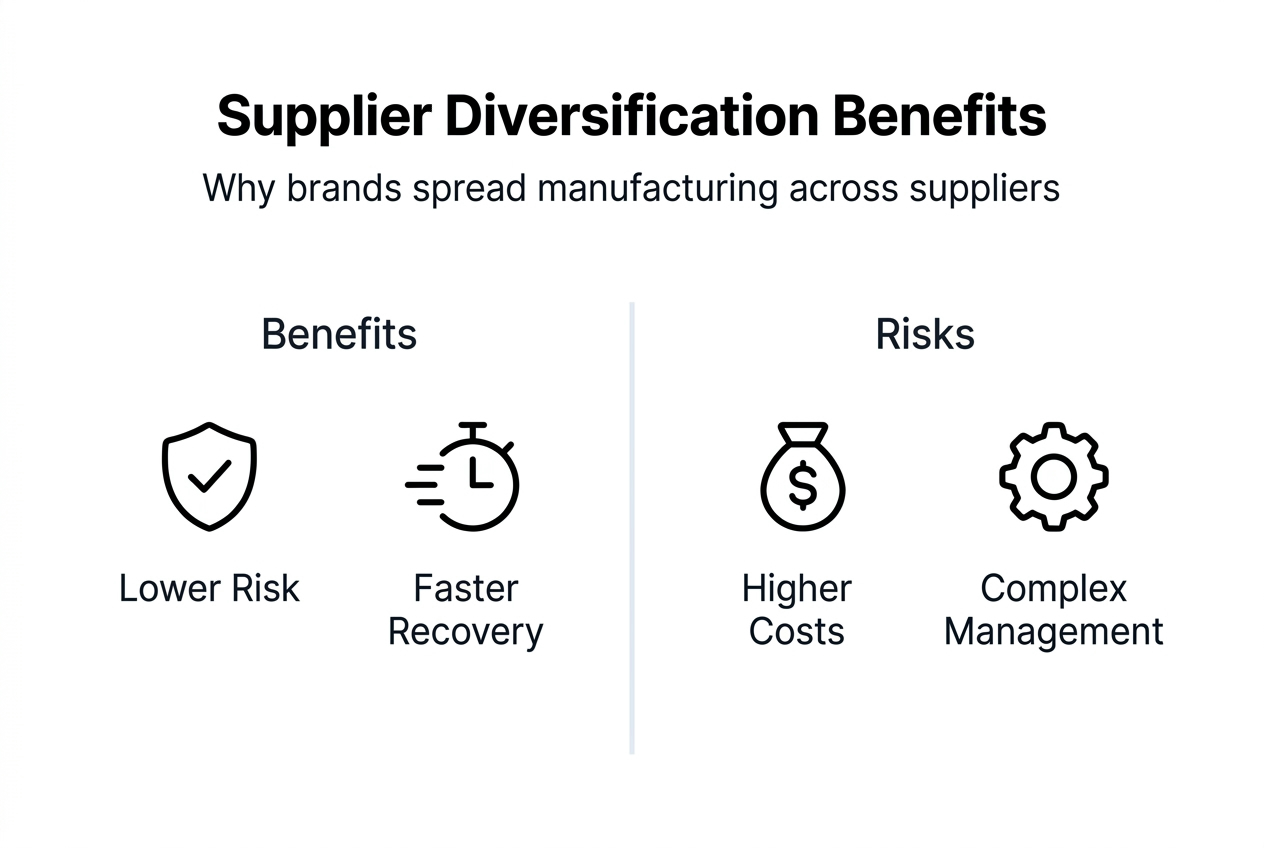
Digital tools amplify these benefits significantly. Technologies like digital twins (virtual replicas of physical supply chains) and control towers (real-time monitoring dashboards) allow brands to simulate scenarios and switch production flows quickly when disruptions hit. For example, if political instability affects a key export corridor, brands with visibility into alternative suppliers can reroute orders within days instead of weeks. Supplier diversification reduces Time-to-Recovery by 20% and shortens Time-to-Switch to just 7 days.
Balancing economic efficiency with resilience requires strategic thinking. Over-diversification can fragment your supply chain and dilute quality control efforts, while under-diversification leaves you exposed to concentrated risks. The sweet spot typically involves 2 to 4 core manufacturing partners, each with distinct strengths: one might excel at knitwear, another at woven garments, and a third at specialty finishes. Geographic spread matters too, mixing domestic and overseas options to hedge against regional disruptions.
| Diversification Benefit | Impact on Operations |
|---|---|
| Reduced Time-to-Recovery | 20% faster bounce-back from disruptions |
| Shortened Time-to-Switch | Switch production in 7 days vs weeks |
| Lower safety stock requirements | Improved cash flow and inventory efficiency |
| Enhanced demand flexibility | Absorb order spikes without capacity constraints |
Pro Tip: Prioritize suppliers with complementary strengths and geographic spread to maximize resilience without sacrificing quality control. Start by mapping your current production needs across product categories, then identify partners who can cover gaps in capabilities or regional access.
Building a structured apparel workflow across multiple manufacturers demands clear documentation and communication standards. When every partner follows the same tech pack format and reporting cadence, switching production between them becomes seamless rather than chaotic.
Logistics challenges and cost pressures driving brand decisions to switch manufacturers
Asia dominates global textile exports, which means most fashion brands depend heavily on shipping routes from China, India, Bangladesh, and Vietnam. This concentration creates vulnerability when key transit corridors face disruptions. Recent geopolitical tensions and port congestion have extended transit times by 3 to 4 weeks on some routes, forcing brands to choose between paying premium air freight rates or missing seasonal delivery windows entirely.
Cost spikes hit hard and fast. Spot rates on alternative routes from Shanghai increased over 100%, with some routes rising to USD 9,026 per TEU. These logistics expenses directly erode margins, especially for brands operating on tight budgets or competing in price-sensitive categories. A 20% increase in delivery costs can turn a profitable collection into a break-even proposition.
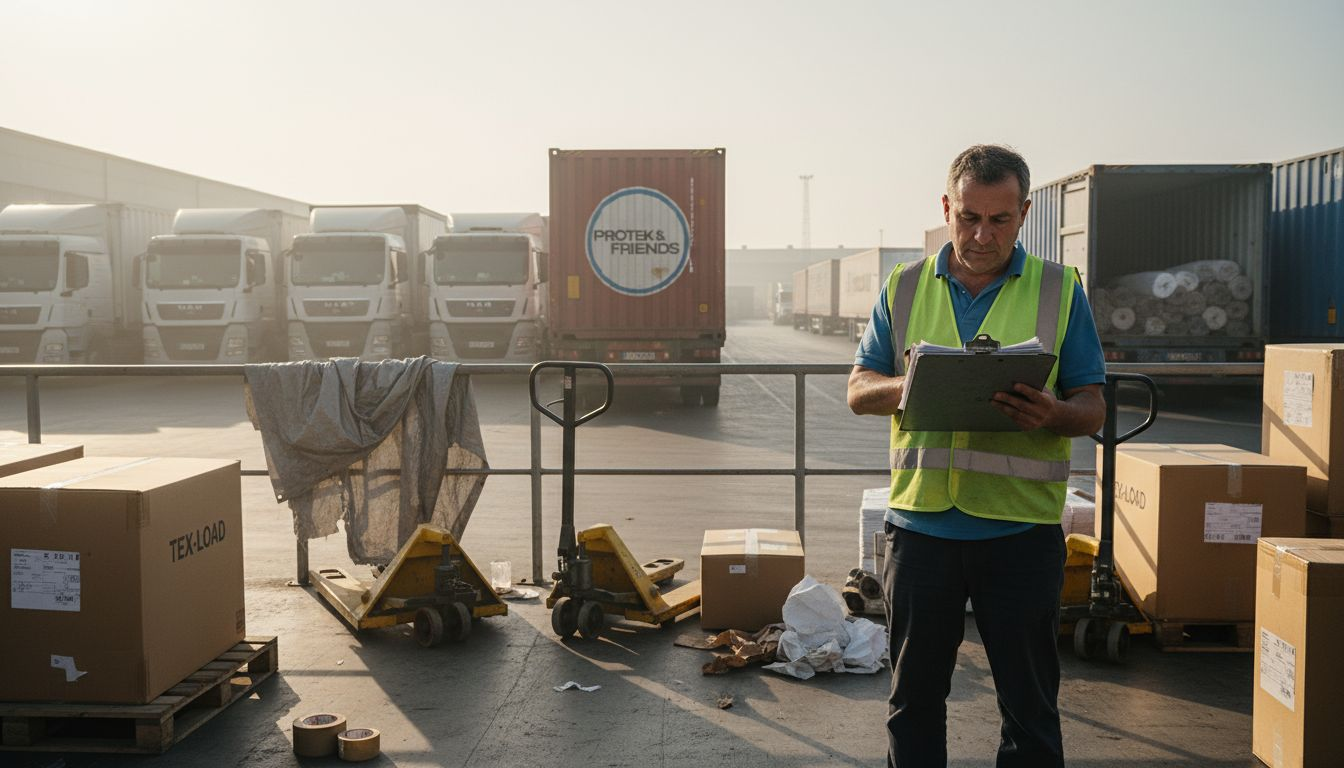
Brands respond by exploring manufacturers in regions with more stable or cost-effective shipping access. Nearshoring to Mexico or Central America reduces transit times to the US market and cuts freight expenses compared to trans-Pacific routes. Similarly, European brands increasingly source from Turkey or North Africa to avoid Asian corridor volatility. Geographic diversification becomes a logistics hedge as much as a production strategy.
| Shipping Route | Cost per TEU (USD) | Average Transit Time | Notes |
|---|---|---|---|
| Shanghai to LA (standard) | 3,000 - 4,500 | 18 - 22 days | Baseline route for most apparel brands |
| Shanghai to LA (alternative) | 9,000+ | 25 - 30 days | Premium rates during disruptions |
| Mexico to LA | 1,200 - 2,000 | 5 - 7 days | Nearshoring advantage for US brands |
| Bangladesh to EU | 4,000 - 6,000 | 20 - 28 days | Affected by Red Sea corridor issues |
Key cost drivers pushing manufacturer switching decisions include:
- Freight rate volatility on major trans-Pacific and Asia-Europe routes
- Extended transit times adding weeks to lead times and inventory cycles
- Port congestion increasing unpredictability in delivery schedules
- Tariff changes and trade policy shifts affecting landed costs
- Carbon footprint concerns driving demand for shorter shipping distances
Brands must weigh logistics costs against production quality and MOQ flexibility when evaluating new manufacturers. A factory offering 10% lower unit costs but located in a region with unstable shipping may not deliver real savings once freight premiums and delay risks are factored in. Smart switching decisions integrate total landed cost analysis, not just ex-factory pricing. Understanding fabric sourcing also helps brands evaluate whether new manufacturers can deliver materials efficiently without adding supply chain complexity.
Practical considerations: due diligence and managing the switch to a new manufacturer
Onboarding a new manufacturer is resource-intensive, and brands often underestimate the time and internal effort required to transition smoothly. Thorough audits and pilot runs are essential to validate production quality, communication responsiveness, and technological capabilities before committing to bulk orders. Skipping this due diligence leads to costly mistakes: defective samples, missed deadlines, and surprise cost increases that damage both margins and brand reputation.
Start by conducting a comprehensive factory audit. Visit the facility in person whenever possible to assess equipment condition, workforce skill levels, and quality control systems. Request certifications for any specialized processes you need, such as organic cotton handling or low-impact dyeing. Review their client roster to confirm experience with similar product categories and production volumes. A factory that excels at mass-market basics may struggle with the precision required for premium knitwear.
Pilot projects are non-negotiable. Place a small test order (50 to 200 units) to evaluate how the manufacturer handles tech packs, communicates during sampling, and delivers finished goods. Pay close attention to their responsiveness when issues arise: do they proactively flag problems or wait for you to discover them? This trial run reveals whether their systems align with your expectations before you scale up.
Key steps for successful manufacturer switching:
- Define clear evaluation criteria covering quality standards, communication protocols, and technological fit.
- Conduct factory audits to verify capabilities, certifications, and production infrastructure.
- Run pilot projects with small order quantities to test real-world performance.
- Establish KPIs and reporting cadences from day one to maintain visibility throughout production.
- Document all processes and agreements to create accountability and reduce miscommunication.
- Plan for gradual volume ramp-up rather than shifting all orders immediately.
Pro Tip: Establish clear communication channels and KPIs from day one to smooth the transition. Define exactly how often you expect updates (daily, weekly, at key milestones), what format those updates should take (photos, tech pack revisions, cost breakdowns), and who is responsible for each touchpoint. Ambiguity in communication expectations is the fastest way to recreate the chaos you switched manufacturers to escape.
Brands that invest in process systems during onboarding set themselves up for long-term success. Structured workflows, documented standards, and clear accountability prevent the reactive firefighting that drains resources and delays collections. The manufacturer switch becomes an opportunity to upgrade your entire production operation, not just change factory names on purchase orders.
Choose Protek & Friends for seamless clothing production partnership
If you are ready to switch manufacturers or simply want a production partner that eliminates chaos with systems, Protek & Friends delivers exactly that. We operate as a full-package clothing manufacturer specializing in small to mid-size production runs with professional workflows built for brands that value structure over stress. Our hybrid model offers both USA and overseas production options, giving you flexibility to balance cost, speed, and quality based on each collection's needs.
Our clothing production services include design review, fabric sourcing, fit correction, bulk production management, and quality control checks. We provide clear documentation before you pay and maintain transparent communication throughout every stage. Brands working with Protek experience the difference between a factory that takes orders and a production partner that protects margins and prevents costly mistakes. Compare Protek's full-package production to see how structured workflows improve efficiency and quality.
Frequently asked questions
What are the top reasons fashion brands switch manufacturers?
Brands typically switch due to poor communication, lack of specialized capabilities, rising costs, or supply chain risks. Improved quality, efficiency, and agility are the primary benefits driving these decisions.
How can brands reduce risks when switching to a new manufacturer?
Conduct thorough factory audits and run pilot projects with small order quantities before committing to bulk production. Establish clear KPIs and communication protocols from day one to ensure alignment.
Why is supplier diversification important for fashion brands?
Diversification reduces vulnerability to disruptions, shortens recovery times by 20%, and stabilizes supply during demand fluctuations. It enables agile production adjustments that protect margins and improve cash flow.
How do logistics costs influence manufacturer switching decisions?
Rising freight rates and extended transit times can increase delivery costs by 20%, eroding margins significantly. Brands often switch to manufacturers in regions with more stable or cost-effective shipping access to mitigate these pressures.