
Scaling fashion brands often stumble over confusing production jargon that seems designed to obscure rather than clarify. Misunderstanding terms like tech packs, MOQ, or CMT can trigger costly errors, delayed timelines, and quality failures that damage your margins and reputation. This comprehensive guide decodes essential clothing production terminology with practical insights tailored for brand founders ready to move from chaotic guessing to structured, efficient manufacturing. You'll gain clarity on the exact language and concepts needed to communicate effectively with factories, protect your investment, and scale with confidence.
Table of Contents
- Understanding essential clothing production terms
- The garment production process: stages and their impact on quality and cost
- CMT versus full package production: choosing the best model for your scaling brand
- Optimizing production efficiency: markers, lean tools, and quality safeguards
- Scale your fashion brand with expert clothing production services
Key takeaways
| Point | Details |
|---|---|
| Tech pack reduces errors | Comprehensive blueprint with specs, measurements, and construction details that minimizes sampling mistakes and miscommunication. |
| MOQ impacts flexibility | Minimum order quantity directly affects unit cost and inventory management, with lower MOQs benefiting brands testing market demand. |
| CMT vs FPP defines responsibility | Cut-make-trim gives you sourcing control while full package production simplifies supply chain management for scaling operations. |
| Efficient markers save fabric | Advanced marker layouts optimize fabric use, achieving efficiency rates above 85% and reducing material waste. |
| Pre-production locks quality | Early stages determine approximately 80% of final cost and quality outcomes, making sampling critical before bulk orders. |
Understanding essential clothing production terms
You need precise vocabulary to navigate clothing manufacturing effectively. A tech pack is a comprehensive document that serves as your garment blueprint, critically reducing sampling errors by specifying every detail from stitching techniques to button placement. This document includes technical sketches, measurement charts, fabric specifications, colorways, and construction notes that eliminate guesswork for your factory partner. Without a complete tech pack, you're essentially asking manufacturers to read your mind, which guarantees miscommunication and wasted samples.
MOQ, or minimum order quantity, represents the smallest production run a factory will accept for a specific style. This threshold directly impacts your unit cost because factories optimize efficiency at higher volumes, spreading setup costs across more pieces. Scaling brands benefit from understanding that lower MOQs provide flexibility for testing new designs but typically carry higher per-unit prices, while larger orders reduce costs but increase inventory risk. Your clothing factory guide should align MOQ strategy with your current growth stage and cash flow capacity.
CMT production, or cut-make-trim, means you source all materials and the factory handles cutting, sewing, and finishing. FPP, or full package production, transfers the entire supply chain to your manufacturer, who sources fabrics, trims, and handles all production stages. CMT gives you maximum control over material quality and costs but requires established supplier relationships and sourcing expertise. FPP simplifies operations for brands prioritizing speed and reduced complexity, though typically at higher total costs.
A marker refers to the layout pattern showing how pattern pieces fit onto fabric rolls to maximize material usage and minimize waste. Efficient markers can dramatically reduce fabric consumption, with skilled technicians and CAD software achieving optimization rates that directly impact your cost per garment. Understanding marker efficiency helps you evaluate factory capabilities and identify potential savings in your production budget.
Pro Tip: Request marker layouts during sampling to verify fabric efficiency before committing to bulk orders, as poor marker planning can inflate material costs by 15% or more.
The garment production process: stages and their impact on quality and cost
Garment manufacturing follows a structured sequence where each stage builds on previous decisions. The nine critical stages are design development, pattern making, sample production, material sourcing, fabric cutting, sewing and assembly, finishing and washing, quality control inspection, and final packing. Each phase carries specific cost implications and quality checkpoints that determine your final product success.
- Design development translates creative concepts into technical specifications, establishing the foundation for all subsequent work.
- Pattern making converts designs into precise templates that guide fabric cutting and construction.
- Sample production creates physical prototypes for fit testing, fabric performance evaluation, and construction refinement.
- Material sourcing secures fabrics, trims, and accessories meeting your quality standards and budget constraints.
- Fabric cutting transforms raw materials into garment components following marker layouts for optimal efficiency.
- Sewing and assembly joins cut pieces into finished garments through skilled machine operation and hand finishing.
- Finishing and washing applies treatments like stone washing, enzyme processing, or heat setting to achieve desired aesthetics.
- Quality control inspection verifies measurements, construction quality, and appearance standards before shipping.
- Final packing prepares garments with hangtags, polybags, and carton packing according to your specifications.
Pre-production locks approximately 80% of cost and quality outcomes, making early stages disproportionately important to your success. Decisions about fabric weight, construction methods, and finishing treatments made during sampling determine the majority of your unit cost and quality ceiling. Rushing through sampling to accelerate timelines often backfires when bulk production reveals fit issues, fabric performance problems, or construction defects that require expensive corrections.
Early investment in thorough sampling and pre-production planning prevents costly bulk production failures that can destroy margins and damage brand reputation.
Testing fabric shrinkage, color fastness, and recovery before bulk orders ensures your final garments maintain size consistency and appearance after customer washing. Many scaling brands skip these critical tests to save time, only to face returns and complaints when garments shrink excessively or colors bleed. Your production management strategy should build adequate time for comprehensive testing into your development calendar.
Pro Tip: Always wash and dry sample garments at least three times using consumer conditions to identify potential shrinkage, pilling, or color migration issues before committing to bulk production.
CMT versus full package production: choosing the best model for your scaling brand
Selecting between CMT and full package production fundamentally shapes your operational structure, cost profile, and control level. Each model serves different brand stages and strategic priorities, with significant implications for your scaling trajectory.
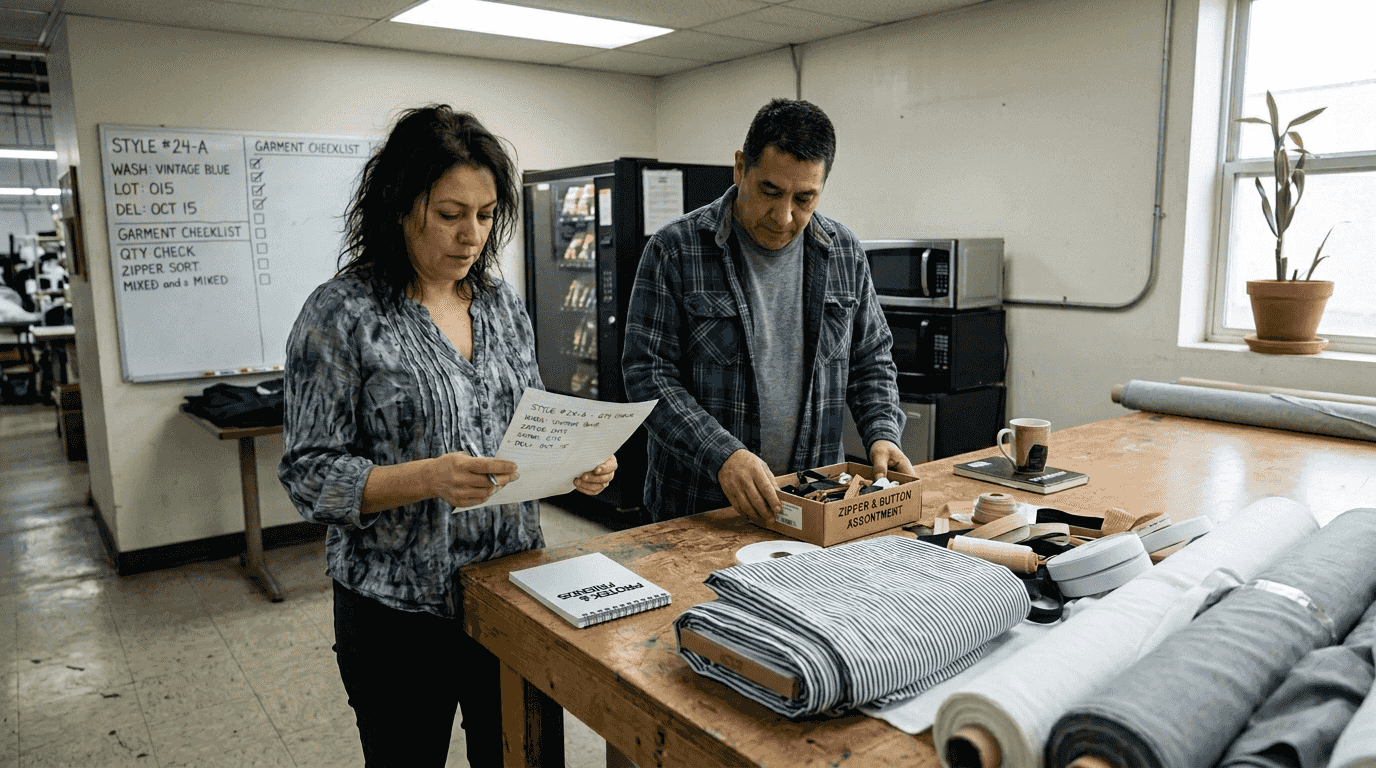
| Factor | CMT Production | Full Package Production | | --- | --- | | Scope | Factory cuts, sews, finishes your materials | Factory sources materials and handles all production | | Cost Structure | Lower production fees, you pay material costs separately | Higher all-in pricing, simplified budgeting | | Control Level | Maximum control over fabric and trim selection | Limited material input, factory manages sourcing | | Risk Profile | You bear sourcing delays and quality issues | Factory absorbs supply chain risks | | Best For | Established brands with sourcing expertise | Scaling brands prioritizing simplicity and speed |
Scaling brands prefer FPP for simplicity despite higher costs, while established operations with proven sourcing often favor CMT for tighter control. The choice depends on your current capabilities, available resources, and strategic priorities. If you already maintain strong fabric supplier relationships and employ technical staff who understand textile specifications, CMT lets you leverage those advantages for cost savings and quality control.
Full package production eliminates the complexity of coordinating multiple suppliers, managing material deliveries, and ensuring component compatibility. Your factory partner handles fabric sourcing, trim procurement, and quality verification, reducing your operational burden and allowing focus on design and marketing. This convenience carries a premium, as factories build margin into material costs and charge for supply chain management services.
CMT production requires you to source all fabrics, linings, interfacings, buttons, zippers, labels, and packaging materials independently. You coordinate delivery timing to ensure all components arrive at the factory simultaneously, manage quality inspection for incoming materials, and absorb financial risk if fabrics prove defective or arrive late. This model demands operational sophistication and working capital to purchase materials before production begins.
The hybrid approach combines elements of both models, with you sourcing critical materials like main fabrics while delegating trim and accessory procurement to your factory. This strategy works well for brands with specific fabric partnerships or unique material requirements who still want to simplify logistics for commodity items. Your factory selection process should clarify which model aligns with your current stage and capabilities.
Pro Tip: Evaluate your brand's current resources honestly, including staff expertise, supplier relationships, and working capital, before committing to CMT production, as underestimating the operational complexity often leads to costly delays and quality issues.
Optimizing production efficiency: markers, lean tools, and quality safeguards
Efficiency improvements in garment production translate directly to margin protection and competitive advantage. Marker optimization represents one of the most impactful yet overlooked opportunities for cost reduction. Advanced CAD marker systems achieve fabric efficiency greater than 85%, compared to 70-75% for manual layouts, saving substantial material costs across production runs. A 10% improvement in marker efficiency on a 1,000-unit order can reduce fabric consumption by hundreds of yards, directly impacting your bottom line.
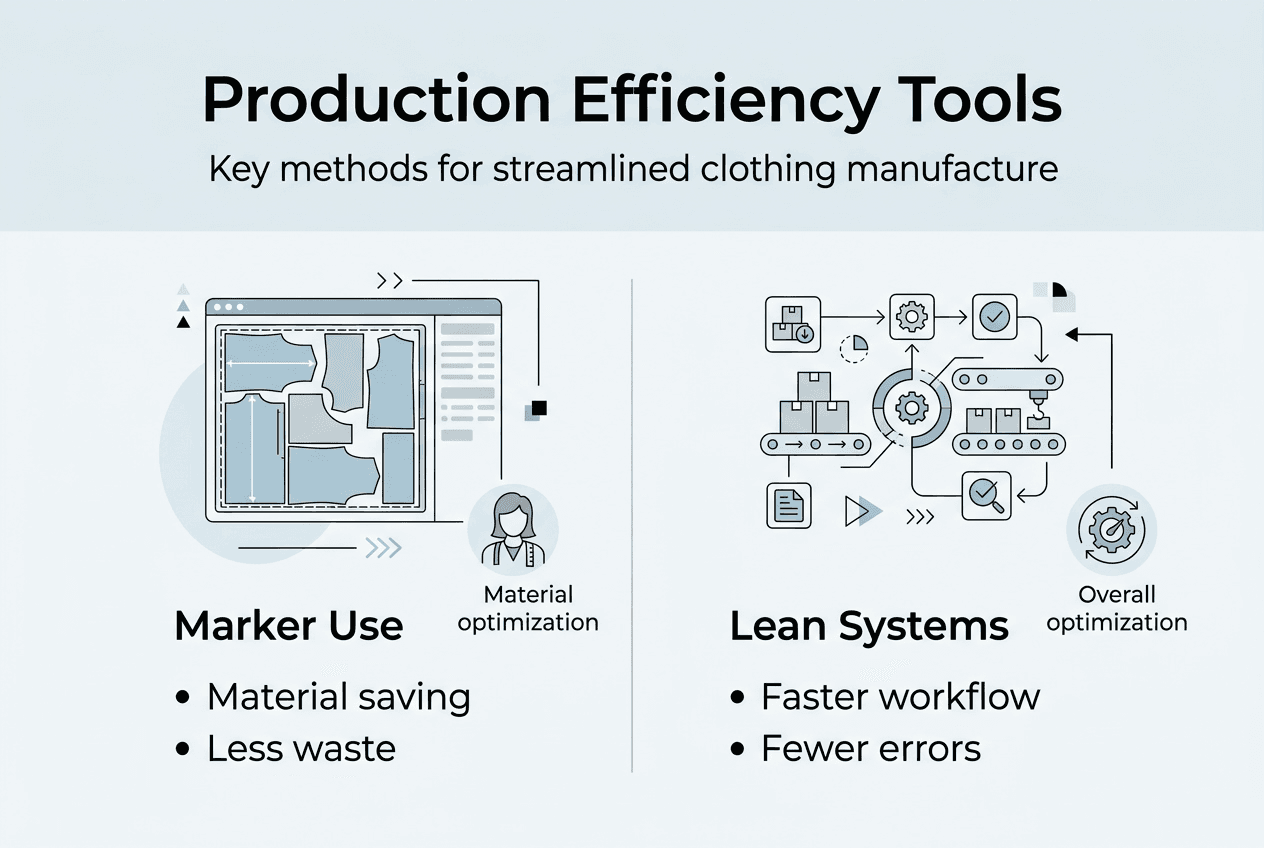
Lean manufacturing tools adapted from automotive and electronics industries now transform apparel production efficiency. Poka-Yoke devices reduce rework drastically by preventing defects through error-proofing mechanisms like automatic thread trimming, seam alignment guides, and measurement verification systems. These tools catch mistakes before they compound, eliminating the costly cycle of sewing, inspecting, unpicking, and re-sewing that plagues traditional operations.
| Metric | Before Lean Implementation | After Lean Implementation | Improvement |
|---|---|---|---|
| Rework Rate | 12-15% | 3-5% | 67-75% reduction |
| Cycle Time | 18-22 minutes per garment | 12-15 minutes per garment | 30-35% faster |
| First Pass Yield | 78-82% | 92-96% | 12-17% increase |
| Fabric Utilization | 72-76% | 85-88% | 15-18% improvement |
Implementing efficiency improvements requires systematic approach and factory partnership. Start by requesting current efficiency metrics from potential manufacturing partners, including marker efficiency rates, defect rates, and cycle times. Factories using modern CAD systems, modular production lines, and quality checkpoints demonstrate commitment to efficiency that protects your margins.
Practical steps for efficiency optimization include:
- Specify marker efficiency requirements in production contracts, targeting minimum 82% fabric utilization for woven goods
- Request pre-production marker layouts for approval before cutting begins
- Implement inline quality checks at critical construction points rather than relying solely on final inspection
- Use standardized measurement templates and tolerance specifications to reduce interpretation errors
- Schedule regular production reviews to identify bottlenecks and improvement opportunities
Integrating ERP and MIS systems connects design, sampling, production, and logistics in real time, reducing lead times and improving resource utilization. These systems track work-in-progress, flag delays immediately, and provide visibility that prevents small issues from becoming major problems. Your structured production workflow should incorporate technology that supports transparency and rapid problem resolution.
Pro Tip: Partner with factories that provide weekly production reports with photos, measurement data, and progress updates, as transparency indicates systematic operations that minimize surprises and protect your timeline.
Scale your fashion brand with expert clothing production services
Navigating clothing production terminology becomes significantly easier when you work with manufacturing partners who prioritize clarity and structure. Protek & Friends specializes in full-package and CMT production designed specifically for scaling fashion brands that demand quality, transparency, and cost control. Our hybrid manufacturing model provides flexibility between USA and overseas production, allowing you to balance speed, cost, and quality based on your specific collection needs.
We eliminate the anxiety of placing purchase orders by replacing factory chaos with documented systems. Our structured approach includes comprehensive tech pack review, transparent cost breakdowns, and clear timeline mapping before you commit a dollar. Compare our approach to traditional factories and you'll see why serious brand owners choose partners who value documentation over promises. Sample development support ensures you test fit, fabric performance, and construction quality thoroughly, understanding exactly how many samples you need before bulk production to minimize risk and protect margins.
Pro Tip: Engage experienced production partners early in your development process to leverage their expertise in fabric selection, construction methods, and efficiency optimization, turning manufacturing from a stress point into a competitive advantage.
FAQ
What is a tech pack and why is it critical in production?
A tech pack is a detailed document outlining specifications, measurements, materials, construction methods, and finishing details for each garment style. It functions as the complete blueprint that manufacturers follow to produce garments matching your exact vision and quality standards. Without a comprehensive tech pack, factories guess at your intentions, leading to sampling errors, miscommunication, and costly revisions that delay your timeline. Your factory partnership depends on clear documentation that eliminates ambiguity and establishes accountability.
How do MOQ requirements affect scaling fashion brands?
MOQ, or minimum order quantity, represents the smallest production run a factory accepts, directly influencing unit cost and inventory management strategy. Lower MOQs benefit early-stage scaling brands testing market demand and managing cash flow, though per-unit costs run higher due to setup expenses spread across fewer pieces. As your brand grows and sales velocity increases, meeting higher MOQs becomes feasible and unlocks better pricing that improves margins. Understanding factory MOQ policies helps you plan production timing and style mix strategically.
When should a brand choose CMT over full package production?
CMT production suits brands with established material sourcing relationships, technical staff who understand textile specifications, and desire for maximum control over fabric and trim quality. This model works best when you have reliable suppliers, adequate working capital to purchase materials upfront, and operational capacity to coordinate deliveries and manage quality inspection. Full package production simplifies processes for brands prioritizing speed and reduced operational complexity over absolute cost minimization, making it ideal for scaling operations without deep sourcing expertise. Your production model choice should align with current capabilities and strategic priorities.
Why is thorough sampling important before bulk production?
Skipping or rushing sample development increases risk of bulk defects, fit issues, and quality failures that trigger expensive corrections, delays, and potential customer returns. Sampling allows you to test fabric performance including shrinkage, color fastness, and recovery, verify construction methods, refine fit, and establish quality benchmarks before committing to large production runs. Testing fabric behavior through multiple wash cycles reveals potential problems that only appear after consumer use, protecting your brand reputation and margin. Following sampling best practices ensures bulk production delivers garments that meet your standards consistently.