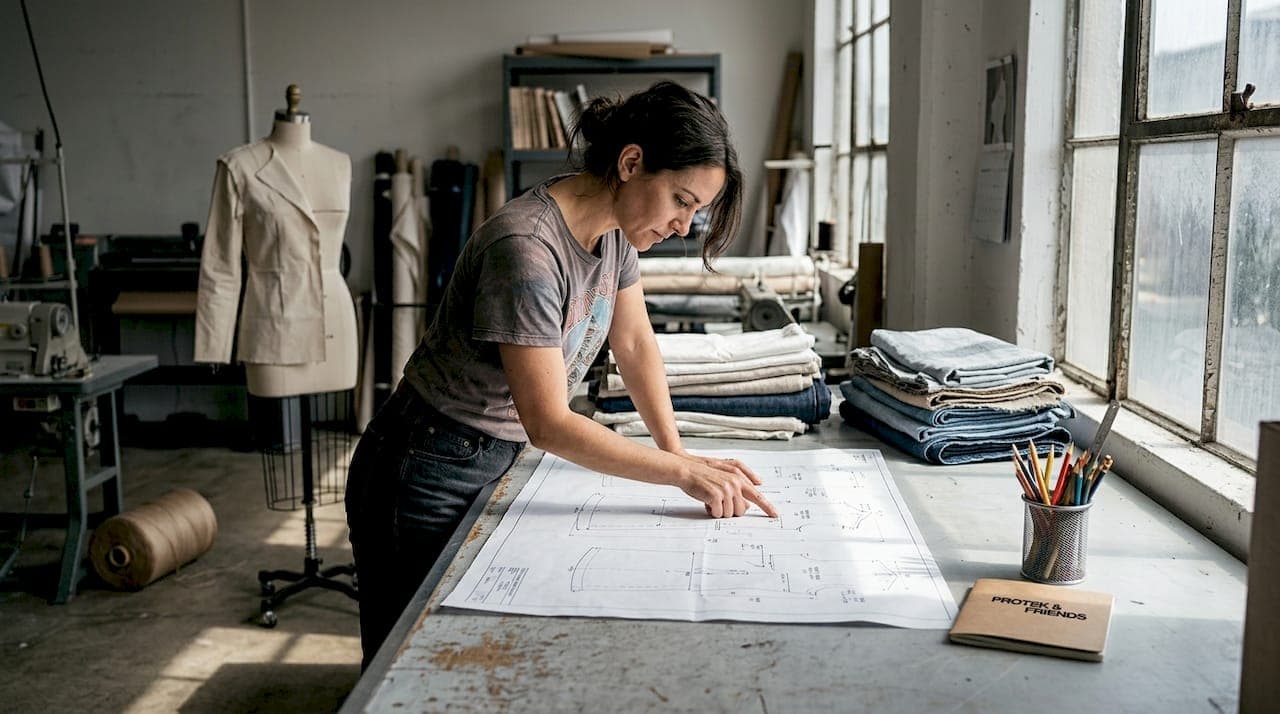
Most fashion brands fail their first production run not because of bad design, but because they lack structured systems. You send sketches, cross your fingers, and hope the factory understands your vision. Months later, you receive samples with wrong measurements, mismatched colors, and construction details that never appeared in your original brief. This chaos costs time, money, and credibility. Scaling apparel manufacturing successfully requires clear documentation, transparent quality control processes, and production partners who operate with structure rather than guesswork. This guide walks you through the essential systems that separate professional brands from perpetual startups.
Table of Contents
- Key Takeaways
- The role of tech packs in structured apparel manufacturing
- Implementing quality control: QA vs QC and industry standards
- Scaling apparel production: lean methodologies and staging quality checks
- Empirical benchmarks and productivity gains in modern apparel manufacturing
- Explore expert clothing production services for your brand scaling
- Frequently asked questions about apparel manufacturing companies
Key Takeaways
| Point | Details |
|---|---|
| Tech packs reduce errors | A complete tech pack serves as a production blueprint that clarifies specs upfront and minimizes sampling iterations. |
| Faster time to market | Detailed tech packs and precise BOMs accelerate quoting and shorten development cycles. |
| QA and QC roles | QA prevents defects through process design while QC detects issues during production to protect final quality. |
| 4 Point System | A standardized scoring method quantifies fabric defects so inspectors and suppliers agree on quality benchmarks. |
| Structured processes boost productivity | Clear documentation and disciplined workflows translate into large gains in efficiency and scale. |
The role of tech packs in structured apparel manufacturing
A tech pack functions as your production blueprint. Without one, you are asking factories to guess what you want. With one, you eliminate confusion before paying for samples. A complete tech pack includes technical flats showing every design detail, a bill of materials (BOM) listing fabrics and trims with exact specifications, and points of measurement (POMs) with tolerances typically ranging from 0.25 to 0.5 inches depending on garment type.
Construction details matter more than most founders realize. Your tech pack should specify stitches per inch (SPI), seam types like flat-felled or French seams, topstitch distances, and exact label placements. These specifications prevent factories from making judgment calls that do not align with your brand standards. When you define these elements upfront, you streamline sampling and avoid the painful cycle of sending corrections after each round.
Using detailed tech packs reduces sampling iterations by 5-6 rounds and cuts time to market by 50%. This acceleration matters when you are competing in fast-moving markets. Every week saved in development means earlier revenue and faster feedback from actual customers. Tech packs also improve communication across teams, especially when working with overseas partners where language barriers compound technical misunderstandings.
Key elements your tech pack must include:
- Technical flats with front, back, and detail views at scale
- Complete BOM with fabric weights, fiber content, color codes, and supplier information
- POMs with tolerance ranges for every measurement point
- Construction specifications including stitch types, seam allowances, and finishing details
- Grading rules showing how measurements change across size runs
- Artwork placement with exact coordinates and print methods
- Packaging and labeling requirements
Pro Tip: Review and update your tech packs after every production run. Document what worked and what caused issues. This living document approach prevents repeating mistakes and builds institutional knowledge as your brand scales. Treat your tech pack library as a strategic asset, not a one-time deliverable.
Most brands underestimate how much a well-structured tech pack reduces production anxiety. When factories receive complete documentation, they can quote accurately, plan efficiently, and deliver consistently. The upfront time investment pays dividends across every subsequent order.
Implementing quality control: QA vs QC and industry standards
Quality assurance (QA) and quality control (QC) serve different purposes in apparel manufacturing. QA focuses on preventing defects through process design, standard operating procedures, and training programs. QC detects defects through inspections at various production stages. You need both, but they operate at different points in your workflow.
The 4-Point System provides a standardized method for assessing fabric defects. Inspectors assign points based on defect size: 1 point for defects up to 3 inches, 2 points for 3-6 inches, 3 points for 6-9 inches, and 4 points for anything larger. First quality fabric typically allows a maximum of 20-28 points per 100 square yards. This objective scoring removes subjective judgment and creates clear acceptance criteria.
Acceptable Quality Levels (AQL) following ISO 2859-1 establish sampling plans that balance inspection costs against defect risk. Rather than checking every garment, AQL tables tell you how many pieces to inspect based on lot size and your chosen quality threshold. Most apparel brands use AQL 2.5 for critical defects and AQL 4.0 for major defects, meaning you accept a small statistical probability of defects in exchange for practical inspection efficiency.
Here is how AQL-based inspection sampling works:
- Determine your lot size and select the appropriate AQL level for your quality standards
- Reference AQL tables to find your sample size (typically 13-315 pieces depending on lot size)
- Randomly select garments from different cartons throughout the production run
- Inspect each sample against your specification checklist
- Count defects by category (critical, major, minor)
- Compare defect counts against acceptance/rejection numbers in AQL tables
- Accept, reject, or request rework based on statistical thresholds
AI-powered poka yoke vision systems represent the next evolution in quality control. These systems use computer vision to detect defects in real time during production, catching errors immediately rather than discovering them at final inspection. The technology dramatically reduces rework costs and prevents defective products from progressing through your production line.
AQL inspections save 5-20x cost versus returns with defect rates under 0.3% when combined with AI. This cost advantage comes from catching defects early when corrections cost pennies instead of dollars, and preventing customer returns that damage brand reputation while triggering refund and replacement expenses.
Implementing structured quality control transforms how you manage clothing production. Instead of discovering problems after shipping, you build quality into every production stage. This proactive approach protects your margins and builds customer trust through consistent product quality.
Scaling apparel production: lean methodologies and staging quality checks
Small-batch production offers flexibility that large minimum order quantities cannot match. Running 100-500 unit batches lets you test market response, adjust designs based on real feedback, and manage cash flow without tying up capital in excess inventory. You reduce the risk of being stuck with unsold stock while maintaining the ability to reorder quickly when styles perform well.
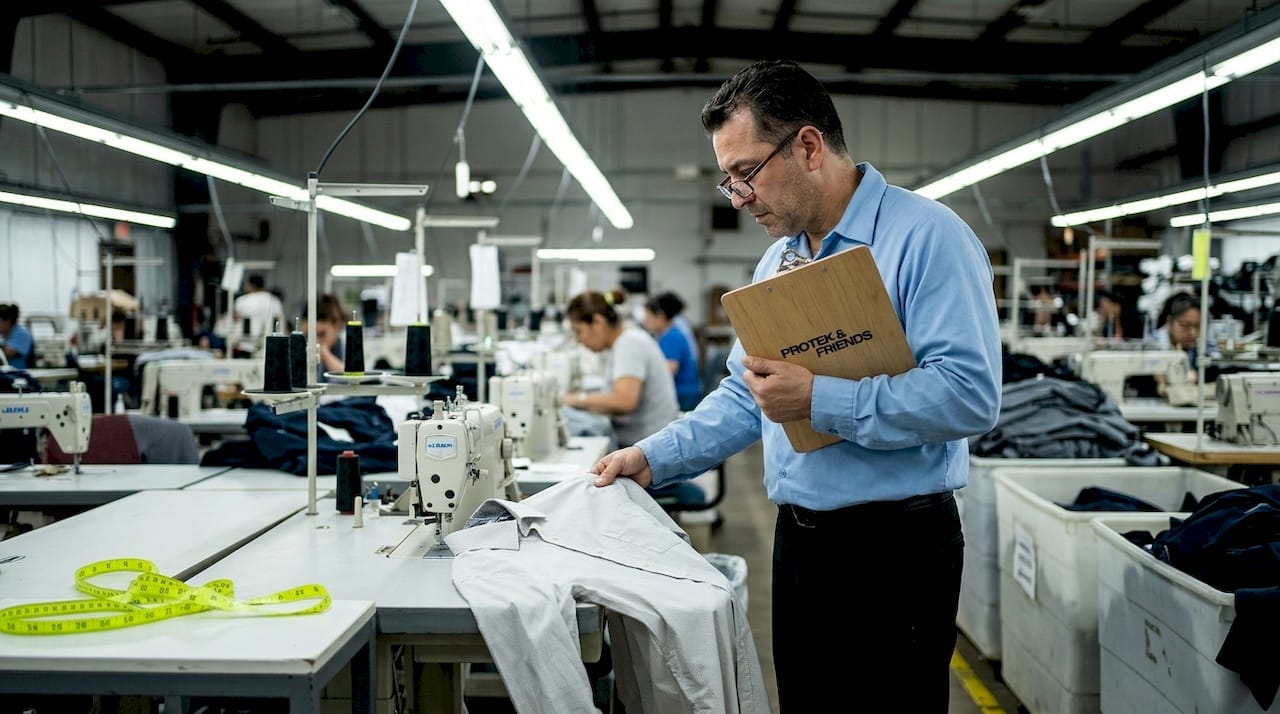
Just-In-Time (JIT) strategy minimizes waste by producing only what you need when you need it. This approach reduces inventory carrying costs, prevents obsolescence from trend shifts, and improves responsiveness to market demands. JIT requires strong supplier relationships and reliable production partners, but the inventory efficiency gains justify the coordination effort.
Vertical integration and modular production enhance control over quality and timelines. When you work with factories that handle multiple production stages in-house, you eliminate handoff delays and communication breakdowns between specialized contractors. Modular production breaks complex garments into standardized components that can be manufactured in parallel, then assembled efficiently.
| Approach | Inventory Cost | Speed to Market | Design Flexibility | Capital Risk |
|---|---|---|---|---|
| Traditional large batch (1000+ units) | High (60-90 days stock) | Slow (4-6 months) | Low (committed early) | High (unsold inventory) |
| JIT/Small batch (100-500 units) | Low (15-30 days stock) | Fast (6-10 weeks) | High (test and iterate) | Low (minimal commitment) |
Stage-gated quality control embeds inspections throughout production rather than waiting until the end. Pre-production inspections verify that fabrics, trims, and materials match your specifications before cutting begins. Catching material defects at this stage prevents wasting labor on garments that will fail final inspection.
In-line quality audits sample 15-20% of garments during active production. Inspectors check workmanship, measurements, and construction details while operators can still make corrections. This real-time feedback loop prevents systematic errors from affecting entire production runs. When you identify a problem affecting 50 pieces, you can fix it before it impacts 500.
Final product inspections (PSI) occur after production completes but before shipping. This comprehensive check verifies that finished garments meet all specifications and pass AQL standards. PSI serves as your last defense against shipping defective products, but it should catch minimal issues if your pre-production and in-line controls work effectively.
Pro Tip: Integrate your QC team with production planning from the start. When quality inspectors understand your timeline pressures and production constraints, they can prioritize critical checkpoints and provide actionable feedback that operators can implement immediately. This collaboration prevents the adversarial dynamic where QC discovers problems too late to fix efficiently.
Working with a clothing factory that uses structured production workflows means these quality gates happen automatically. You receive updates at each checkpoint rather than waiting weeks in silence, then discovering problems after shipping.
Empirical benchmarks and productivity gains in modern apparel manufacturing
Lead times vary significantly by manufacturing region and production complexity. Turkey and Portugal typically deliver in 22-38 days for straightforward styles, while China ranges from 30-60 days depending on fabric sourcing and finishing requirements. Domestic US production runs 14-28 days but commands premium pricing. Understanding these benchmarks helps you plan launch dates realistically and manage customer expectations.
Minimum order quantities (MOQs) have decreased as factories adapt to smaller brand needs. Many manufacturers now accept 100-500 unit runs for basic styles, though complex constructions or specialty fabrics may require higher minimums to justify setup costs. This shift toward smaller batches enables emerging brands to test markets without excessive capital commitment.
| Metric | Traditional Manual Process | AI-Enhanced Standardized Work |
|---|---|---|
| Cycle time per garment | 35.2 minutes | 20.45 minutes |
| Productivity improvement | Baseline | +173% |
| Defect rate | 2.1-3.8% | <0.3% |
| Rework percentage | 12-18% | 2-4% |
These productivity increases of 173% with standardized work and poka yoke AI vision demonstrate the efficiency gap between traditional and modern manufacturing approaches. Reducing cycle time from 35 to 20 minutes per garment means the same factory can produce 72% more units in the same timeframe, or deliver your order much faster.
Poka yoke systems in apparel manufacturing deliver multiple benefits:
- Real-time error detection catches defects immediately during production
- Automated vision inspection eliminates human fatigue and inconsistency
- Digital documentation creates traceable quality records for every garment
- Reduced rework costs from catching errors before they multiply
- Lower training requirements as systems guide operators through correct procedures
- Consistent quality across shifts and operator skill levels
Manual inspection relies on human attention that degrades over long shifts. Inspectors miss defects when fatigued, apply subjective standards inconsistently, and cannot check every garment in high-volume production. AI-driven systems maintain perfect attention, apply objective criteria uniformly, and scale inspection coverage without proportional cost increases.
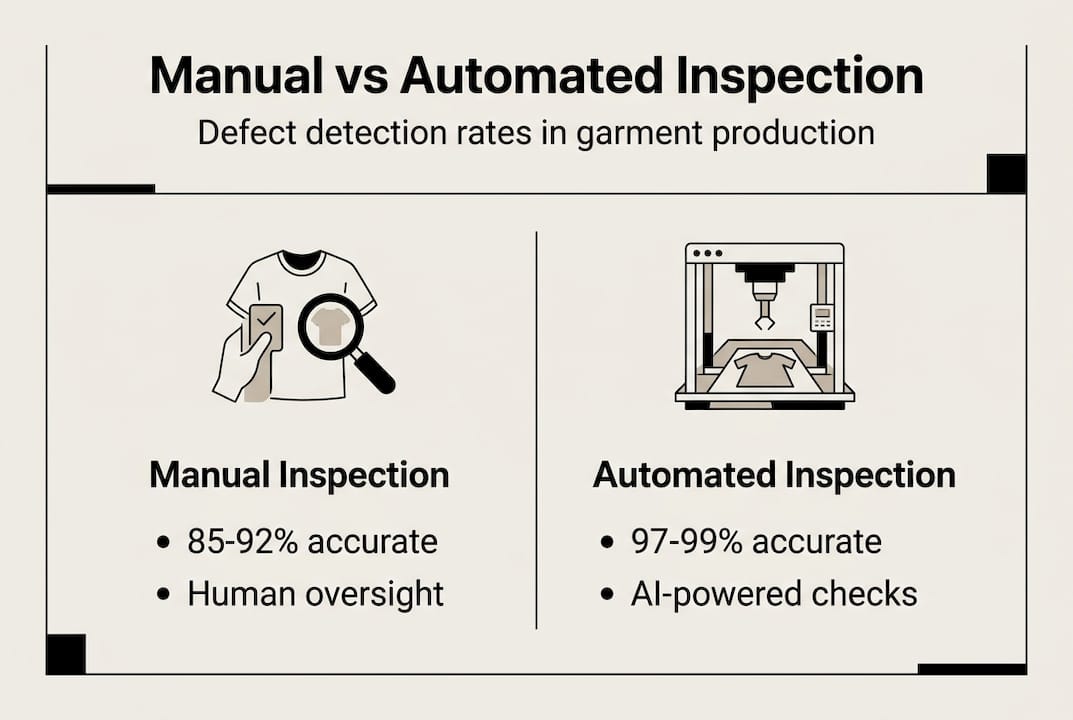
The cost and quality impacts become clear when comparing approaches. Manual inspection typically catches 85-92% of defects at 3-5% of production cost. AI-enhanced inspection catches 97-99% of defects at 2-3% of production cost after initial system investment. The improved catch rate prevents customer returns that cost 10-20x more than in-process corrections.
These benchmarks inform realistic planning for LA clothing manufacturers and overseas partners alike. When evaluating production partners, ask about their quality systems, inspection protocols, and technology adoption. Factories investing in modern systems deliver better outcomes at competitive prices.
Explore expert clothing production services for your brand scaling
Scaling your fashion brand requires production partners who operate with structure, not chaos. Protek & Friends provides clothing production services built around clear documentation, stage-gated quality control, and transparent communication. We eliminate the anxiety that comes with placing new purchase orders by replacing uncertainty with systems.
Our hybrid manufacturing model gives you options between USA and overseas production based on your timeline, budget, and quality requirements. As a full package clothing manufacturer, we handle everything from design review and fabric sourcing through sampling, bulk production, quality inspections, and delivery coordination. You work with one partner instead of juggling multiple contractors.
We specialize in small to mid-size production runs with professional systems in place. Our clients are brand owners ready to produce correctly, protect their margins, and avoid costly mistakes. If you have already launched at least one collection and understand production basics, we can help you scale with better systems. Connect with us to discuss how structured workflows and embedded quality control can transform your manufacturing process.
Frequently asked questions about apparel manufacturing companies
What is a tech pack and why is it important?
A tech pack is a comprehensive technical document that specifies every detail of a garment including measurements, materials, construction methods, and finishing requirements. It eliminates guesswork by providing factories with exact specifications, reducing sampling rounds by 5-6 iterations and cutting time to market by 50%. Without a tech pack, you rely on verbal descriptions that lead to miscommunication and costly errors.
How does quality control prevent defective garments?
Quality control uses systematic inspections at multiple production stages to catch defects before they reach customers. Pre-production checks verify materials, in-line audits sample 15-20% of garments during manufacturing, and final inspections use AQL standards to ensure finished products meet specifications. This layered approach catches errors when corrections cost pennies instead of dollars, preventing expensive returns and protecting brand reputation.
What production scale is right for a growing apparel brand?
Most growing brands benefit from small-batch production runs of 100-500 units. This scale provides flexibility to test market response, adjust designs based on feedback, and manage cash flow without excessive inventory risk. As you validate styles and build predictable demand, you can increase batch sizes to capture volume efficiencies while maintaining the ability to introduce new designs regularly.
How do AI and automation improve apparel manufacturing?
AI-powered vision systems detect defects in real time during production with 97-99% accuracy compared to 85-92% for manual inspection. This technology increases productivity by 173% and reduces cycle time from 35 to 20 minutes per garment. Automation also eliminates human fatigue factors, applies consistent quality standards, and creates digital documentation for every inspection, dramatically reducing rework costs and customer returns.
What lead times should brands expect when working with offshore factories?
Typical lead times range from 22-38 days for Turkey and Portugal production to 30-60 days for China depending on fabric sourcing and finishing complexity. These timelines include sampling, approval cycles, bulk production, and quality inspections. Domestic US production runs 14-28 days but costs more. Plan your launch dates around these benchmarks and build buffer time for potential delays or revision rounds during sampling.