
Most fashion brand owners think the cheapest manufacturer wins. But investing in strong supplier relationships actually drives better garment quality, faster approvals, and fewer costly production errors. The difference between brands that scale smoothly and those stuck in constant firefighting often comes down to how they manage manufacturer partnerships. You'll learn exactly how to build these relationships, integrate suppliers strategically, and use transparency to protect your margins while improving quality control.
Table of Contents
- Key Takeaways
- Why strong relationships matter in fashion manufacturing
- Building and nurturing manufacturer relationships for scalability
- The impact of supplier integration and diversification on performance and risk
- Navigating relationship nuances: informal governance, transparency, and traceability challenges
- Applying relationship insights to streamline manufacturing and ensure quality
- How Protek & Friends supports your manufacturing partnerships
- FAQ
Key Takeaways
| Point | Details |
|---|---|
| Strategic supplier partnerships | Treat manufacturers as strategic partners to reduce misunderstandings, speed approvals, and improve quality control. |
| Clear communication reduces errors | Clear communication reduces production errors by ensuring both sides understand expectations from the start. |
| Pilot runs test reliability | Starting with small pilot orders reveals how a manufacturer handles revisions, timelines, and quality control before a bulk commitment. |
| Document standards upfront | Document every production detail in a shared reference guide to guide scaling and maintain consistency. |
Why strong relationships matter in fashion manufacturing
When you treat your manufacturer as a strategic partner rather than just a vendor taking orders, everything changes. Clear communication reduces production errors because both sides understand expectations from the start. You get faster approvals on samples, quicker responses to fit corrections, and manufacturers who flag potential problems before they become expensive mistakes.
Trust enables proactive problem solving. A manufacturer who knows your brand standards will catch quality issues during production instead of shipping defective goods. They'll suggest fabric alternatives when your first choice is delayed. They'll work with you on timeline adjustments instead of going silent when problems emerge.
Aligned expectations streamline the entire manufacturing planning process. When your production partner understands your quality standards, delivery requirements, and communication preferences, you spend less time explaining and more time executing. This alignment becomes especially valuable when scaling from small runs to larger production volumes.
Starting with small pilot runs helps you test trust and set standards before committing to bulk orders. You learn how the manufacturer handles revisions, communicates updates, and manages quality control. These early interactions reveal whether they'll be reliable at scale.
Pro Tip: Document every production detail in your first few orders with a new manufacturer. Create a shared reference guide covering your quality standards, preferred communication methods, and approval processes. This documentation becomes your foundation for scaling the relationship efficiently.
Transparent dealings foster long-term collaboration. When you share realistic timelines, honest feedback, and clear budget constraints, manufacturers can plan better and offer more accurate quotes. This transparency builds mutual respect and often leads to preferential treatment during busy production seasons.
The brands that succeed with fabric sourcing and production aren't necessarily those with the biggest budgets. They're the ones who invest time in building relationships that reduce friction and improve outcomes.
Building and nurturing manufacturer relationships for scalability
Building manufacturer relationships requires intentional strategies that prove your brand is worth the partnership. Here's how to establish and scale these critical connections:
-
Start with small orders to test reliability and production quality before committing to larger volumes. A 100-piece trial run reveals how the manufacturer handles technical specifications, meets deadlines, and responds to feedback.
-
Communicate expectations and changes transparently from day one. Share your tech packs completely, explain your quality standards clearly, and update manufacturers immediately when requirements shift.
-
Treat manufacturers as strategic partners who contribute expertise, not just vendors executing orders. Ask for their input on fabric choices, construction methods, and realistic timelines.
-
Use scaling to deepen collaboration and access better resources. As order volumes grow, you gain priority scheduling, access to premium materials, and more flexible payment terms.
-
Align on sustainability and customization goals early in the relationship. Discuss certifications, ethical labor practices, and specialty techniques upfront to avoid mismatches later.
Pro Tip: Schedule regular check-ins beyond just order updates. A monthly call to discuss upcoming collections, industry trends, or production challenges keeps the relationship warm and positions you as a serious long-term client rather than a transactional buyer.
The most successful brands view their production partner as an extension of their team. They involve manufacturers in planning conversations, share forecasts early, and provide feedback that helps improve future production runs.
When you scale collaboration thoughtfully, manufacturers become invested in your success. They'll reserve capacity during peak seasons, offer faster turnarounds when you need rush orders, and bring you opportunities for new techniques or materials before offering them to other clients.
The impact of supplier integration and diversification on performance and risk
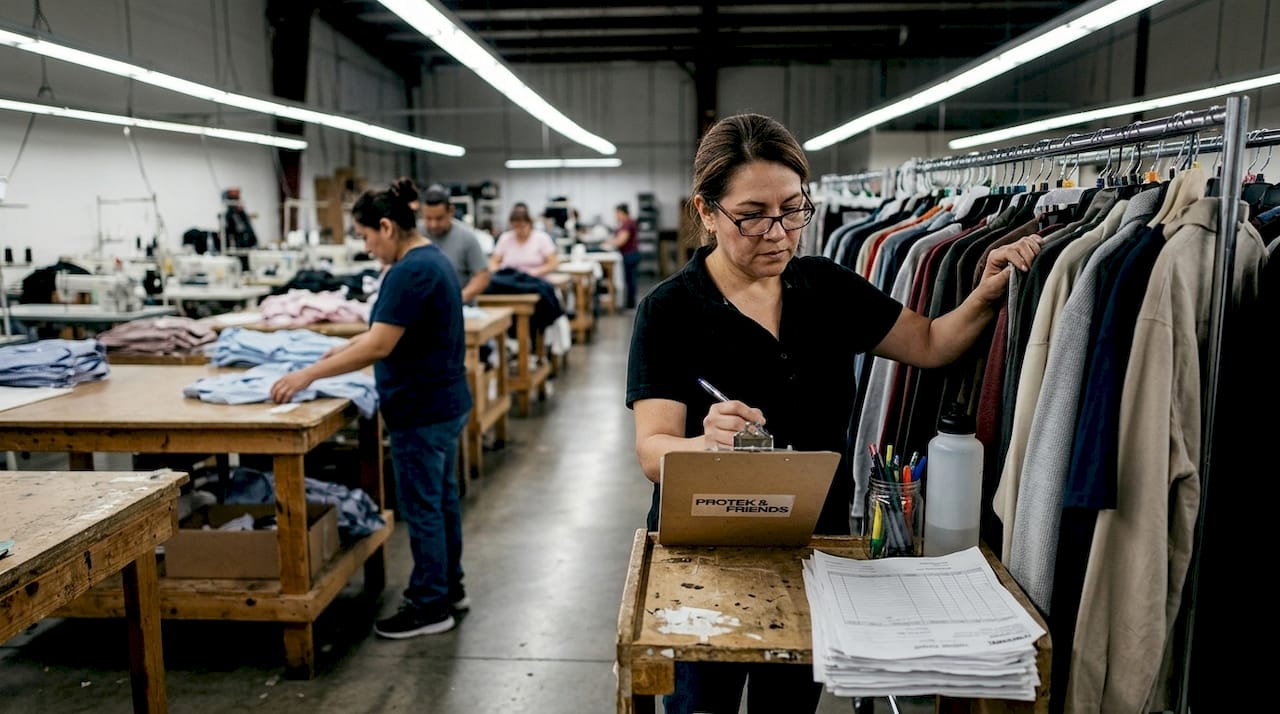
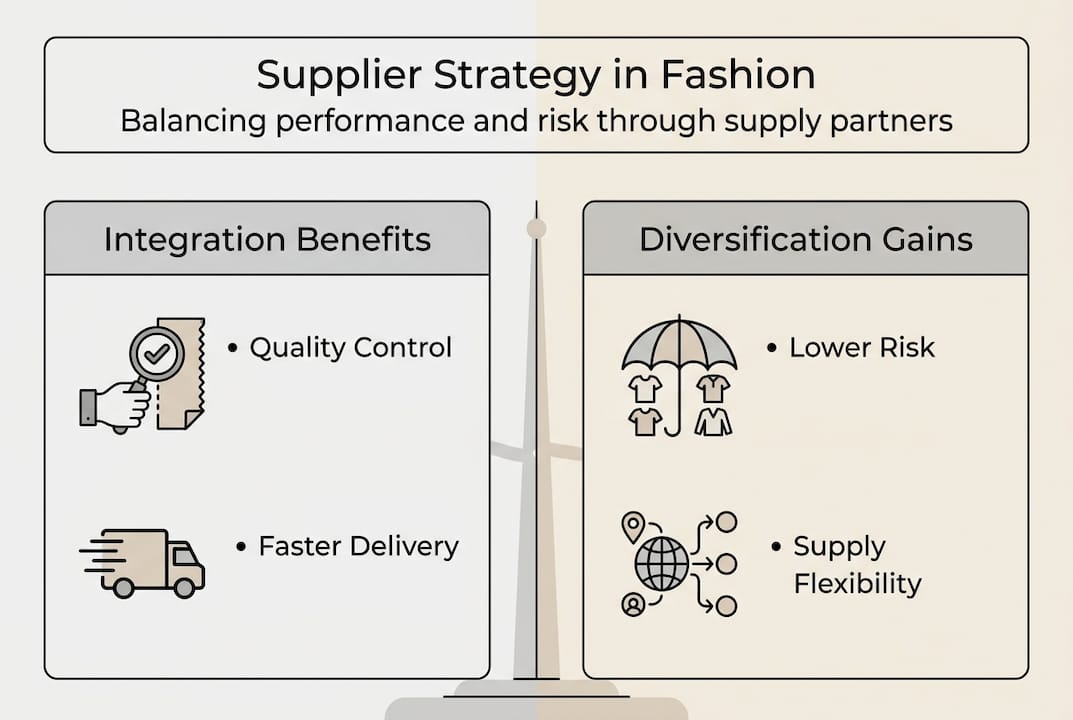
Empirical data reveals that supplier integration correlates 0.875 with firm performance in apparel manufacturing. This strong correlation means brands with deeply integrated suppliers consistently outperform competitors across multiple metrics.
Integration improves quality control because your manufacturer understands your standards intimately and catches issues before production. It enhances production capacity by giving you priority access to factory floor space and skilled workers. It increases flexibility because integrated partners adjust to your changing needs faster than transactional vendors.
Yet integration alone creates vulnerability. Supplier diversification reduces time to recovery by 20% when disruptions occur, based on analysis of over 600 factories. Spreading production across multiple qualified manufacturers protects you when one faces delays, quality problems, or capacity constraints.
| Strategy | Primary Benefit | Risk Consideration |
|---|---|---|
| Deep supplier integration | Higher quality control and production efficiency | Dependency on single source creates vulnerability |
| Supplier diversification | Faster recovery from disruptions and reduced risk exposure | Requires managing multiple relationships and standards |
| Hybrid approach | Balanced risk with strong core partnerships | More complex coordination and communication |
The Kraljic Matrix helps you decide which suppliers deserve deep integration versus diversification. Strategic items with high supply risk and high profit impact warrant closer integration. Routine items with many alternative sources benefit from diversification.
On-Time-In-Full (OTIF) metrics guide your diversification decisions. Track which manufacturers consistently deliver complete orders on schedule. Those with OTIF scores above 95% earn more of your business. Those below 85% get smaller orders or replacement.
Smart brands maintain two to three qualified manufacturers for critical production categories. This approach balances the efficiency gains from integration with the risk mitigation from diversification. You're never completely dependent on one factory, but you're not spreading yourself so thin that no manufacturer prioritizes your orders.
Understanding why brands switch manufacturers helps you build diversification strategies that actually work. The goal isn't just having backup options. It's creating a network of partners who collectively support your growth while protecting against disruptions.
Navigating relationship nuances: informal governance, transparency, and traceability challenges
Manufacturing relationships involve complexities that go beyond simple contracts and purchase orders. Guanxi, or informal relational governance, positively affects sustainable collaboration but can weaken formal contractual governance. This Chinese business concept emphasizes personal connections and mutual obligation over legal agreements.
While guanxi fosters trust and long-term commitment, it may reduce your leverage when disputes arise. A manufacturer who relies on relationship goodwill might expect flexibility on payment terms or order changes that formal contracts wouldn't allow. You need to balance personal rapport with clear documentation.
Transparency remains crucial for quality control and sustainability, but traceability pilots reveal that data sharing reluctance hinders progress. Only 34% of businesses have tier 2 supply chain visibility, meaning most brands can't track materials beyond their direct manufacturer to fabric mills and dye houses.
This visibility gap creates several challenges:
- You can't verify sustainability claims about raw materials or production processes
- Quality issues from upstream suppliers become harder to diagnose and prevent
- Ethical labor practices remain opaque beyond your direct manufacturing partner
- Cost fluctuations in materials catch you by surprise without early warning systems
"The trade-off between informal trust and formal governance shapes how effectively brands and manufacturers collaborate on quality, timelines, and problem resolution. Neither approach works perfectly alone."
Technological traceability solutions exist, from blockchain tracking to IoT sensors, but they only succeed when all supply chain partners agree to participate. A manufacturer comfortable sharing production data might refuse to pressure their fabric supplier to do the same, creating gaps in your visibility.
You face a fundamental tension: deeper relationships require vulnerability and information sharing, but too much informality weakens your ability to enforce standards. The most effective approach combines relationship building with clear documentation, regular audits, and transparent communication about expectations.
Improving communication in scalable apparel manufacturing means acknowledging these nuances rather than ignoring them. You can build strong personal relationships with manufacturer contacts while maintaining professional standards and contractual protections.
Applying relationship insights to streamline manufacturing and ensure quality
Now that you understand the dynamics, here's how to apply these insights practically. Implement structured production workflows that specify every step from design review through final delivery. Documentation reduces errors because everyone knows exactly what happens when, who approves what, and how to handle exceptions.
Use supplier segmentation to balance trust and risk appropriately:
- Strategic partners get deeper integration, early access to forecasts, and collaborative problem solving
- Qualified alternatives receive regular smaller orders to maintain relationships and capacity knowledge
- Transactional vendors handle overflow or non-critical items with standard terms and minimal integration
Maintain open, regular communication channels beyond just order updates. Weekly production calls, monthly planning sessions, and quarterly business reviews keep relationships strong and surface problems early. These conversations build the trust that makes difficult situations easier to navigate.
Pro Tip: Create a manufacturer scorecard tracking quality, on-time delivery, communication responsiveness, and flexibility. Review it quarterly with each partner. This data-driven approach keeps relationships professional while showing manufacturers exactly where they excel and where improvement helps.
Leverage technology while encouraging data sharing through mutual benefit. Show manufacturers how shared production data helps you forecast more accurately, reducing last-minute rush orders that disrupt their scheduling. Frame transparency as a competitive advantage you build together.
| Practice | Quality Impact | Efficiency Gain | Risk Reduction |
|---|---|---|---|
| Structured workflows with clear documentation | Fewer production errors and rework | Faster approvals and execution | Clear accountability when issues arise |
| Supplier segmentation and diversification | Consistent standards across partners | Optimized capacity utilization | Protected against single-source disruption |
| Regular communication beyond orders | Proactive problem identification | Better production planning | Stronger relationships during challenges |
| Technology-enabled transparency | Improved traceability and verification | Streamlined information flow | Early warning of supply chain issues |
Use pilot orders and phased scaling to test suppliers thoroughly before major commitments. A 50-piece sample run reveals more about capabilities than any factory tour or reference check. Scale gradually as performance proves reliable.
The brands that master these practices don't just avoid problems. They create competitive advantages through faster production cycles, higher quality standards, and better margins. Your clothing factory guide should emphasize relationships as much as technical capabilities.
When you implement structured apparel production workflows, you're not just organizing tasks. You're building systems that make strong manufacturer relationships scalable and sustainable as your brand grows.
How Protek & Friends supports your manufacturing partnerships
Building the manufacturing relationships described above takes time, expertise, and systems most growing brands don't have in place yet. Protek & Friends operates as your production partner, not just another factory taking orders.
We bring structure to every production relationship through clear documentation, transparent communication, and professional systems that eliminate the chaos most brands experience. Our hybrid manufacturing model gives you access to USA and overseas production with the same quality standards and project management throughout.
You get design and technical review, fabric sourcing and sampling, fit corrections, detailed cost breakdowns, timeline mapping, bulk production management, quality control checks, and delivery coordination. Every step includes clear updates and early problem solving, so you know exactly what's happening with your production.
Our typical clients have already launched at least one collection and understand production basics. They're ready to scale with better systems, value documentation over promises, and care deeply about quality control. If that describes your brand, Protek & Friends can help you build the manufacturing partnerships that support sustainable growth.
FAQ
What role does communication play in manufacturing relationships?
Effective communication reduces production errors by ensuring both brand and manufacturer understand specifications, timelines, and quality standards from the start. It builds trust that enables proactive problem solving, where manufacturers flag potential issues early rather than shipping defective goods. Clear, consistent communication aligns expectations and speeds approvals throughout the production cycle.
How can supplier diversification benefit my fashion brand?
Diversification reduces your dependency on any single manufacturer, protecting you when one faces capacity constraints, quality problems, or unexpected delays. It speeds time to recovery by 20% when disruptions occur because you have qualified alternatives ready to absorb production volume. Strategic diversification also gives you negotiating leverage and access to different manufacturing capabilities across your supplier network.
What challenges exist with supply chain traceability in fashion?
Only about 34% of fashion brands have tier 2 supply chain visibility, meaning most can't track materials beyond their direct manufacturer to fabric mills and finishing facilities. Data sharing reluctance among suppliers limits transparency efforts because each supply chain partner must agree to participate in traceability systems. This visibility gap makes verifying sustainability claims, diagnosing quality issues, and ensuring ethical practices significantly harder.
How do I start building strong relationships with new manufacturers?
Begin with small pilot orders of 50 to 100 pieces to evaluate production capabilities, quality standards, and communication responsiveness before committing to larger volumes. Communicate your expectations clearly through complete tech packs, detailed quality specifications, and transparent timelines from the first interaction. Scale collaboration gradually as the manufacturer proves reliable, treating them as strategic partners who contribute expertise rather than vendors simply executing orders.