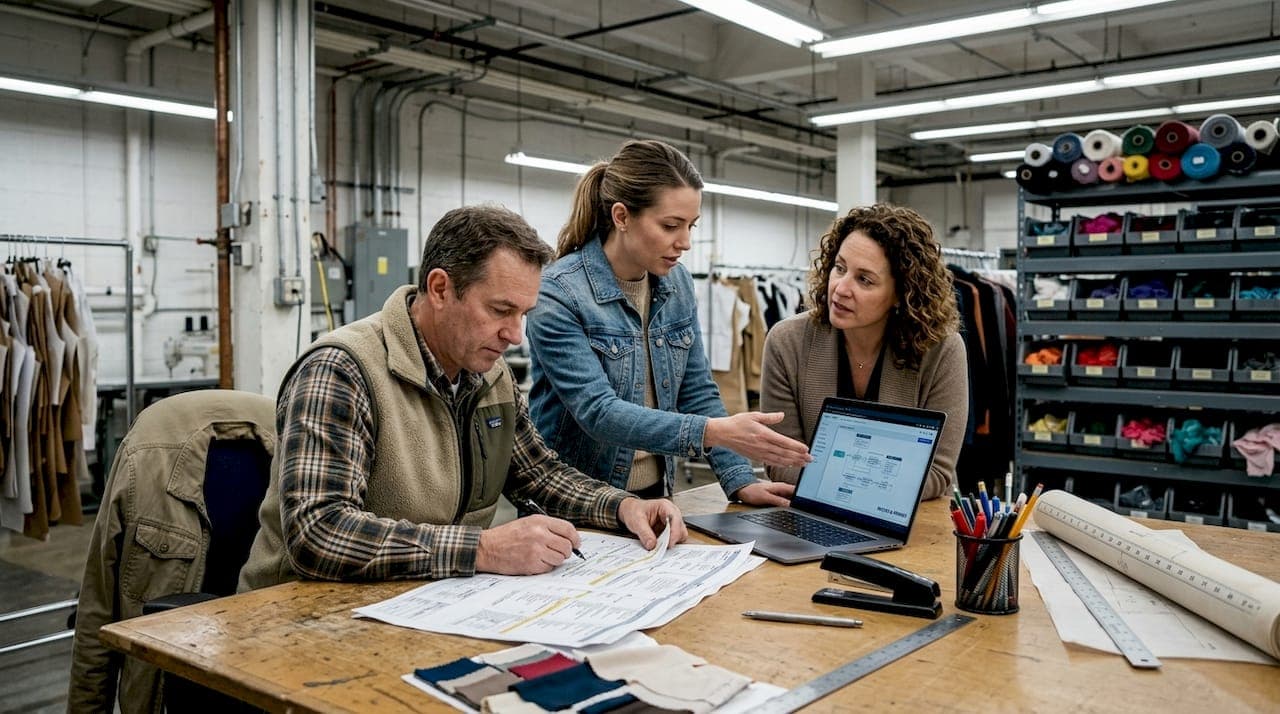
Scaling a fashion brand feels exciting until one production mistake wipes out your margin. Even the most established names in the industry are not immune. Up to 40% leather waste was reported at Louis Vuitton's Texas facility due to unskilled labor and cutting errors, nearly double the industry average of 20%. If that can happen at LVMH, it can happen to any brand scaling too fast without the right systems. This article breaks down the most critical production mistakes scaling brands make and gives you a clear, practical path to avoiding each one.
Table of Contents
- What causes costly mistakes in fashion production?
- Mistake #1: Underestimating skills and training needs
- Mistake #2: Gaps in process systems and tech integration
- Mistake #3: Poor contract management and risk transfer
- Mistake #4: Neglecting data-driven oversight and benchmarks
- Summary table: Key production mistakes, risks, and fixes
- How to solve production mistakes with expert support
- Frequently asked questions
Key Takeaways
| Point | Details |
|---|---|
| Prioritize skills training | Insufficient training leads to costly material waste and error rates as shown in industry case studies. |
| Integrate process systems | Tech systems like ERP/PLM cut lead times, errors, and boost resource use for scaled production. |
| Manage contracts proactively | Well-defined contracts protect both brands and factories from unexpected costs or delays. |
| Track critical KPIs | Ongoing measurement of core indicators ensures consistent quality and transparency as you grow. |
What causes costly mistakes in fashion production?
Most production mistakes do not come from bad luck. They come from predictable, preventable gaps in how brands manage their supply chains. When you scale, those gaps get wider and more expensive.
Here are the most common root causes:
- Lack of skilled labor at new or expanded facilities
- Missing process systems that create workflow confusion and delays
- Poor communication between brand teams and factory floors
- Risk-shifting where brands push financial exposure onto factories through cancellations and no price adjustments
- No performance benchmarking for lead times, order accuracy, or on-time delivery
The risk-shifting issue is especially damaging. UK manufacturers report that benchmark lead times fell to 14 days, but instability increased as brands continued to cancel orders and refuse price adjustments for rising costs. Factories absorb the loss. And when factories are under financial stress, quality suffers.
"The factory absorbs what the brand will not" is not just a headline. It is a warning about what happens when contracts are built on imbalance.
Building process systems for quality into your production model from the start is the most reliable way to prevent these root causes from compounding as you grow.
Mistake #1: Underestimating skills and training needs
This is the mistake brands most often overlook because it feels like a factory problem, not a brand problem. But when your product comes back with cutting errors, uneven seams, or wasted material, it is your margin that takes the hit.
The Louis Vuitton Texas example is a clear case study. 40% leather waste at a new facility versus the 20% industry average shows exactly what happens when skilled labor cannot keep pace with production demand. That gap represents real money lost on every single unit.
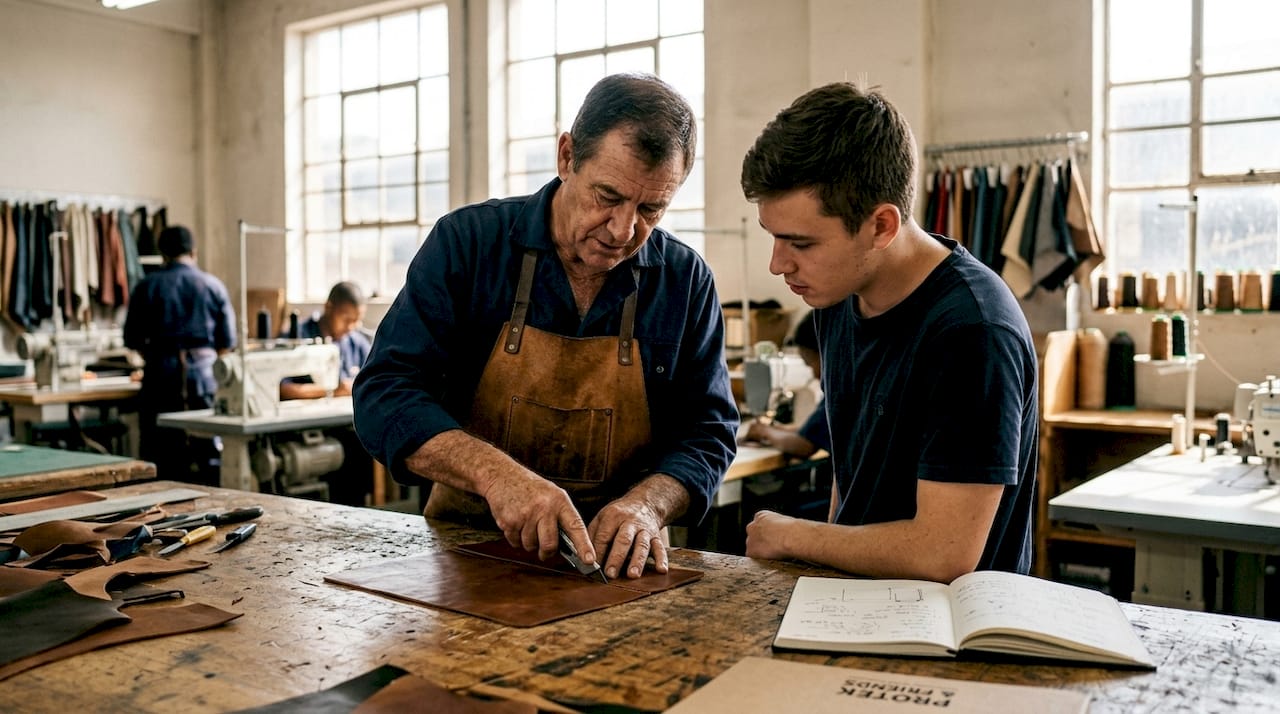
When brands scale quickly, training rarely keeps up. New workers are placed on the line before they are ready. Standards are assumed rather than documented. The result is preventable errors that compound across an entire production run.
Here is what structured training oversight looks like in practice:
- Document skill requirements for each production role before hiring
- Run a skills assessment before any worker touches your materials
- Set clear quality benchmarks at each stage of assembly
- Build a review checkpoint into the first week of any new facility partnership
These steps help you reduce production defects before they become bulk-run problems.
Pro Tip: Set up a standardized onboarding and skills assessment process every time you expand to a new facility. Do not assume the factory's existing training is aligned with your product's requirements. Verify it.
Mistake #2: Gaps in process systems and tech integration
Addressing labor issues is half the battle. The other critical weak point is how information moves through your production process. When systems are siloed or manual, errors multiply fast.
A missing tech layer means your team is chasing updates by email, tracking orders in spreadsheets, and discovering problems after they have already affected your timeline. That is not a workflow. That is controlled chaos.
Research shows that ERP-MIS integration in apparel manufacturing reduced production lead time by 18%, increased resource utilization by 23%, and improved order accuracy by 15% in simulations. Those are not small gains. They are the difference between a profitable run and a costly one.
Here is a simple comparison of what integrated versus manual systems look like in practice:
| Area | Manual process | Integrated ERP/PLM |
|---|---|---|
| Order tracking | Email chains, spreadsheets | Real-time dashboard |
| Lead time visibility | Estimated, often wrong | Tracked and benchmarked |
| Error detection | After the fact | Early-stage alerts |
| Resource planning | Reactive | Data-driven |
Steps to close the tech gap:
- Audit your current workflow for manual handoffs and information gaps
- Identify where delays or errors most often occur
- Evaluate ERP or PLM tools that fit your production volume
- Set baseline metrics before implementation so you can measure improvement
- Train your team on the system before your next production run
Building structured production workflows and learning how to improve production communication are two areas where the right systems pay for themselves quickly. Brands that want to scale quality manufacturing need both.
Pro Tip: Benchmark your production process before and after any system upgrade. Use order accuracy and lead time as your primary metrics. If the numbers do not improve, the system is not working for your operation.
Mistake #3: Poor contract management and risk transfer
Beyond systems and training, contract design shapes the stability of your entire supply chain. A weak contract does not just create legal exposure. It creates operational instability that shows up in your timelines and your product quality.
The data from UK manufacturers is striking. 31% of orders are canceled post-agreement, and 79% of factories receive no coverage for unexpected changes like minimum wage increases or regulatory shifts. Factories absorb those costs. And when they do, they cut corners somewhere else.
When a factory is absorbing your risk, they are managing their survival. That is not a partnership. That is a pressure cooker.
Here is what a stronger contract structure includes:
- Clear cancellation terms with defined notice periods and financial coverage
- Price adjustment clauses tied to labor cost or material cost changes
- Order coverage provisions for regulatory or supply chain disruptions
- Documented revision limits so both sides know what changes are included
Learning how to manage clothing production with proper documentation from the start protects both your brand and your factory relationships. Long-term partnerships are built on contracts that work for both sides.
Mistake #4: Neglecting data-driven oversight and benchmarks
Systematic tracking sharpens production. Without it, you are making decisions based on gut feeling and hoping the next run goes better than the last one.
Top brands do not operate that way. They build dashboards and track leading indicators that tell them where problems are forming before those problems become expensive. Leading brands track metrics like change frequency and development cycle time, not just revenue.
Here are the top KPIs every scaling brand should monitor:
- Development cycle time from design approval to sample sign-off
- Production lead time from confirmed order to delivery
- Order accuracy rate measuring units produced to spec
- Change frequency tracking how often specs are revised mid-production
- On-time delivery rate across all production partners
| KPI | Top brands | Average brands |
|---|---|---|
| Development cycle time | Tracked and benchmarked | Estimated loosely |
| Change frequency | Monitored as a leading indicator | Ignored until delays occur |
| On-time delivery rate | Reported per factory | Tracked overall only |
| Order accuracy | Measured per SKU | Checked at final QC only |
Strong fashion quality control starts with knowing your numbers. Pair that with solid fashion sampling best practices and a reliable scaling factory guide and you have a system that catches problems early instead of absorbing them late.
Summary table: Key production mistakes, risks, and fixes
To wrap up the list, use this table to review and prioritize which mistakes to audit and address in your brand's process.
| Mistake | Risk to your brand | Practical fix |
|---|---|---|
| Underestimating skills training | High material waste, defects | Standardized onboarding and skills assessment |
| Gaps in process systems | Late orders, inaccurate production | ERP/PLM integration with benchmarked metrics |
| Poor contract management | Timeline instability, quality cuts | Balanced contracts with clear cancellation and price terms |
| No KPI oversight | Repeat mistakes, missed deadlines | Dashboard tracking of cycle time, accuracy, and delivery |
Every one of these mistakes is preventable. The brands that avoid them are not lucky. They are structured.
How to solve production mistakes with expert support
Knowing what to avoid is a strong start. But putting the right systems in place while managing a growing brand is a different challenge entirely. That is where a production partner makes a real difference.
At Protek & Friends, we work with scaling brands that are ready to produce correctly. Our process covers technical review, fabric sourcing, sampling, fit corrections, cost breakdowns, and bulk production management with quality control built in at every stage. We use clear documentation before any payment is made, and we communicate proactively so you are never chasing updates. If you are ready to replace production anxiety with a structured process, explore our clothing production services and let's build your next run the right way.
Frequently asked questions
What are the main causes of production mistakes in fashion brands?
The most common causes are poor skills training, gaps in process systems, unbalanced contracts, and lack of KPI oversight. Even established brands like Louis Vuitton have faced significant material waste when skilled labor cannot keep pace with scaling demands.
How can brands improve lead times and order accuracy?
Integrating ERP or PLM systems helps reduce lead times and boosts order accuracy by streamlining information flow. ERP-MIS integration in apparel has shown an 18% reduction in lead time and a 15% improvement in order accuracy.
How do contract structures affect production quality?
Contracts that fail to cover order changes or price adjustments can destabilize timelines and lower product quality. When 79% of factories receive no coverage for unexpected changes, they absorb costs in ways that affect your product.
What key performance indicators should scaling brands focus on?
Track development cycle time, production lead time, order accuracy, change frequency, and on-time delivery to ensure quality at scale. Top brands monitor leading indicators like change frequency rather than waiting for revenue to signal a problem.