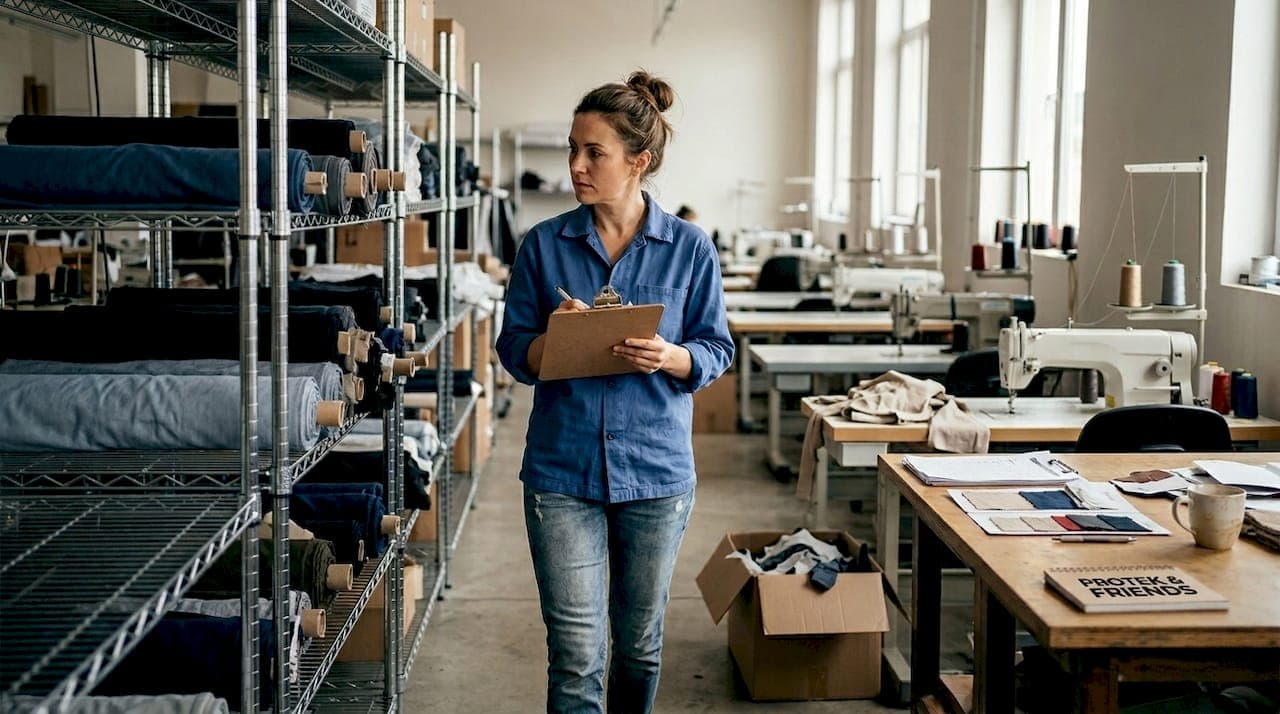
Finding a truly sustainable clothing manufacturer is harder than most brand owners expect. The term gets used loosely, and the gap between a factory's marketing claims and its actual practices can be wide. Raw materials drive 43-45% of an apparel brand's total environmental footprint, which means the choices your manufacturer makes at the sourcing level have a direct impact on your brand's credibility. This guide breaks down what genuine sustainability looks like in production, which certifications actually matter, and how to find and work with a partner who can back their claims with documentation.
Table of Contents
- What makes a manufacturer sustainable?
- Certifications and traceability: What to check and why
- How sustainable manufacturing streamlines your brand's growth
- Selecting and partnering with the right sustainable manufacturer
- Uncomfortable truths and shortcuts: What small brands get wrong about sustainable manufacturing
- Ready to choose a sustainable clothing manufacturer?
- Frequently asked questions
Key Takeaways
| Point | Details |
|---|---|
| Certification matters | Always check for GOTS, Oeko-Tex, and order-level transaction certificates to guarantee real sustainability. |
| Traceability drives trust | Verified supply chains and documented compliance help protect your brand’s reputation and quality. |
| Efficiency boosts profits | Sustainable manufacturers streamline processes, reduce errors, and support faster growth for small brands. |
| Vetting is ongoing | Maintain regular checks and direct communication to ensure your manufacturer’s standards stay high. |
What makes a manufacturer sustainable?
Sustainability in manufacturing is not a single checkbox. It covers how materials are sourced, how workers are treated, how waste is managed, and whether any of it is verified by an independent third party. A factory can call itself sustainable while still using unregulated dyes, paying below living wages, or sourcing fabric with no chain-of-custody documentation. That is why surface-level claims are not enough.
The environmental footprint of raw materials is the single largest driver of apparel's impact. This means a manufacturer who cannot tell you where their fabric comes from, or what certifications their suppliers hold, is leaving a major gap in your sustainability story.
Here is what separates a genuinely sustainable manufacturer from one that just uses the right language:
| Factor | Standard manufacturer | Truly sustainable manufacturer |
|---|---|---|
| Material sourcing | Buys from available suppliers | Sources certified, traceable fabrics |
| Certifications | May have none or unverified | Holds GOTS, Oeko-Tex, or GRS certifications |
| Worker conditions | Basic legal compliance | Third-party audited social compliance |
| Reporting | Minimal or reactive | Proactive, documented transparency |
| Waste management | No formal system | Documented reduction and disposal practices |
The certifications that carry the most weight in the industry are:
- GOTS (Global Organic Textile Standard): Covers organic fiber content and social criteria
- Oeko-Tex Standard 100: Tests for harmful substances in finished products
- GRS (Global Recycled Standard): Verifies recycled content claims
- Fair Trade Certified: Focuses on fair wages and safe working conditions
Beyond certifications, look for process systems for quality that show how the factory handles documentation, sampling, and QC at every stage. A manufacturer who can walk you through their internal systems is far more trustworthy than one who just hands you a certificate. If you are still learning the basics of factory evaluation, the guide for startups to scale smart is a useful starting point.
Certifications and traceability: What to check and why
Certifications are only as good as the verification behind them. A certificate on a factory's website tells you very little if you cannot confirm it applies to the specific materials used in your order. This is where most brands make their first mistake: they see a logo, feel reassured, and move on without checking further.
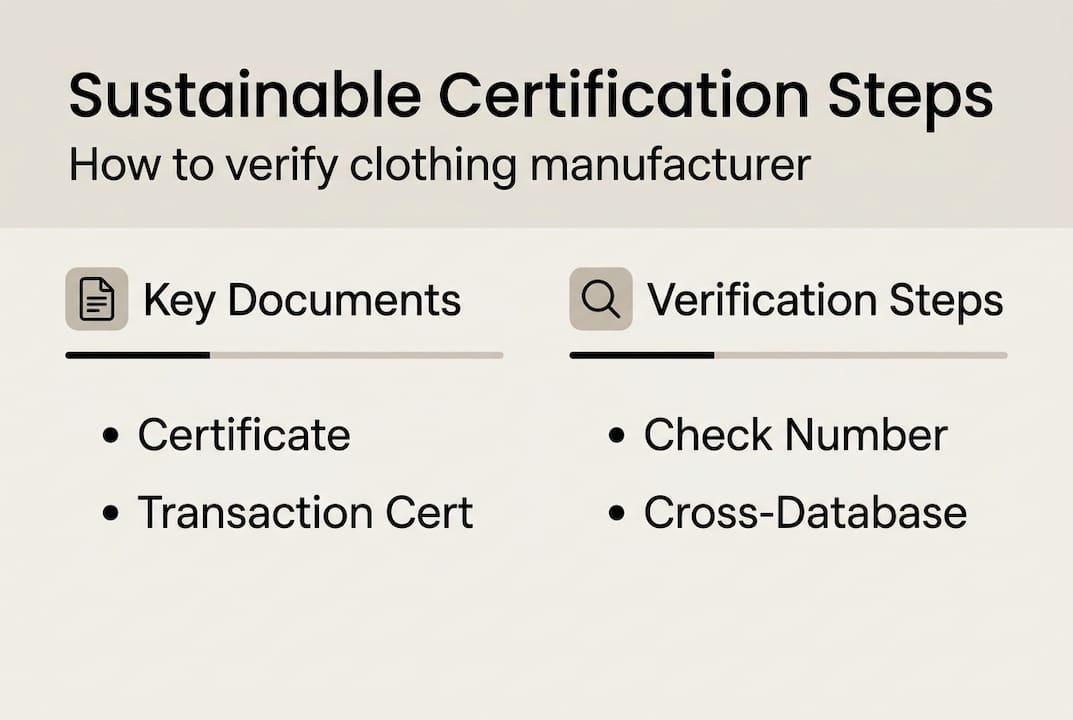
The most important document you can request is a transaction certificate (TC). A TC is issued for each individual shipment or batch of certified material. It confirms that the specific fabric or product in your order meets the certification standard, not just that the factory holds a general certification. Small brands scale better when they verify TC documents per order rather than relying on a single annual certificate.
Here is a quick overview of key certifications and what each covers:
| Certification | What it covers | Who issues it |
|---|---|---|
| GOTS | Organic fiber content and social criteria | Global Standard gGmbH |
| Oeko-Tex 100 | Harmful substance testing in finished goods | Oeko-Tex Association |
| GRS | Recycled content verification | Textile Exchange |
| Fair Trade | Worker pay and safety standards | Fair Trade USA |
How to verify documentation step by step:
- Request the certificate number from your manufacturer
- Visit the certification body's public database (GOTS, Oeko-Tex, and GRS all have searchable directories)
- Confirm the certificate is current and covers the correct product category
- Ask for the transaction certificate specific to your order batch
- Cross-reference the TC with your purchase order details
Tools like Higg and MCAP (Measurement, Analysis, and Continuous Improvement Platform) are increasingly used by factories and brands to track and report environmental performance. Partnering with a manufacturer who uses these platforms gives you better visibility into their actual footprint, not just their stated goals.
Pro Tip: Never accept a general certification as proof for a specific order. Always request a transaction certificate tied to your batch. This is a standard ask, and a credible manufacturer will not hesitate to provide it.
Understanding clothing production terms like TC, MOQ, and COC (chain of custody) will make these conversations much easier. And once you are in production, a solid fashion quality control guide will help you maintain standards at every stage.
How sustainable manufacturing streamlines your brand's growth
Sustainable manufacturing is often framed as a cost or a compromise. In practice, the opposite is true for small and mid-sized brands. The same systems that support environmental accountability, documentation, audits, and clear material traceability, are the exact systems that reduce production errors and protect your margins.
When a factory has strong internal controls, you benefit directly. Fewer material substitutions happen without your knowledge. QC issues get caught earlier. Reorders are easier because the documentation from the first run is already in place. Small brands scale through certified runs while controlling quality through verified documentation, and that structure pays off across every production cycle.
Four ways sustainable manufacturing supports your brand's growth:
- Quicker onboarding: Certified factories already have systems in place, so the setup process is faster and cleaner
- Fewer errors: Documented processes reduce miscommunication between design intent and production output
- Easier compliance: As retail partners and markets add sustainability requirements, you are already covered
- Improved reputation: Customers and buyers respond to verifiable claims, not vague language
Third-party audits also serve as a form of insurance. If a quality or labor issue surfaces, you have documentation showing you took reasonable steps to verify your supply chain. That matters both legally and reputationally.
The most overlooked benefit of working with a certified, documented manufacturer is not the environmental story. It is the control. When your production is traceable, your brand is defensible.
Pro Tip: Starting with a small certified run is one of the lowest-risk ways to test a new manufacturer. You get real data on their quality and communication before committing to a larger order.
Look at streamlined production workflows to understand how documentation-first production protects your margins. And if you are weighing whether to stay small or grow, the piece on small manufacturers for growth covers that decision in detail.
Selecting and partnering with the right sustainable manufacturer
Knowing what to look for is one thing. Knowing how to actually vet and choose a partner is where most brands slow down. The process does not need to be complicated, but it does need to be deliberate.
Critical vetting steps in order:
- Request certifications upfront and verify them through the issuing organization's public database
- Ask for a factory profile or audit report from the past 12 months
- Confirm they use traceability tools like Higg or MCAP for ongoing reporting
- Place a test order before committing to bulk production
- Review the test order output against your tech pack and quality standards
Brands should verify TC documents per order and prioritize partners who use recognized measurement platforms. This is not extra work. It is standard practice for any brand that wants to scale without surprises.
Questions to ask in your first conversation with a potential manufacturer:
- What certifications do you hold, and can I verify them directly?
- Do you provide transaction certificates for each order batch?
- How do you handle quality issues found during or after production?
- What is your process for communicating timeline changes?
- Have you worked with brands at my production volume before?
Red flags to watch for include vague answers about certifications, reluctance to share audit reports, no clear QC process, and pressure to skip a test order. A manufacturer who pushes back on basic documentation requests is telling you something important.
Building a long-term relationship with a manufacturer requires consistent communication and clear expectations from the start. Set up a shared document system for tech packs, approvals, and QC reports. Review performance after each production run. The brands that get the most from their manufacturing partners are the ones who treat the relationship as ongoing, not transactional.
If you are based in or near Los Angeles, the guide on LA-based manufacturers covers local options worth considering. And if you are thinking about leaving a current partner, the piece on switching manufacturing partners walks through how to do it without disrupting your production schedule.
Uncomfortable truths and shortcuts: What small brands get wrong about sustainable manufacturing
I have seen brands get burned by a simple assumption: that a certificate means the work is done. It does not. Certifications validate a system at a point in time. They do not guarantee that every batch, every fabric roll, and every worker on your specific order met that standard. Oversight is still your responsibility.
The brands that struggle most are the ones who outsource their trust entirely to a manufacturer's reputation. Reputation is a starting point, not a substitute for verification. Scaling quality in manufacturing requires you to stay engaged, ask questions, and check documentation even when everything seems to be going well.
Small brands also consistently underestimate compliance timelines. Getting certified materials, running proper QC, and meeting retail partner requirements all take longer than expected. Build that time into your production calendar from the start.
The long-term cost of skipping due diligence, whether that is a product recall, a compliance failure, or a damaged brand relationship, will always exceed whatever time you thought you were saving.
Pro Tip: Never skip your own verification process, regardless of how established a manufacturer appears. A quick certificate check takes ten minutes and can prevent months of problems.
Ready to choose a sustainable clothing manufacturer?
Finding a manufacturer who can back their sustainability claims with real documentation is not easy. But it is possible, and it makes every part of your production process more reliable.
At Protek & Friends, we work with brand owners who are done guessing and ready to produce with structure. Our hybrid model covers both Los Angeles clothing production and international options, and every project starts with clear documentation before any money changes hands. If you want a partner who takes certification, traceability, and quality control as seriously as you do, explore our full-package production solutions and let's talk about what your next production run should look like.
Frequently asked questions
What certifications should a sustainable clothing manufacturer have?
Look for GOTS, Oeko-Tex, GRS, and Fair Trade certifications. Beyond general credentials, always request transaction certificates for each order batch to confirm the specific materials used in your production meet the stated standard.
How do I verify a manufacturer's sustainability claims?
Ask for their certification number and look it up directly in the issuing organization's public database. Then request a TC document per order and cross-reference it with your purchase order to confirm the certified material applies to your specific run.
Are sustainable manufacturers more expensive?
There may be a slightly higher upfront cost, but structured production workflows reduce errors, returns, and rework, which often cuts total production costs by 15% or more over time.
Can small brands access low minimum orders with sustainable manufacturing?
Yes. Many certified factories now offer low-MOQ certified runs specifically designed for smaller brands, provided you can verify the order with proper transaction certificate documentation.