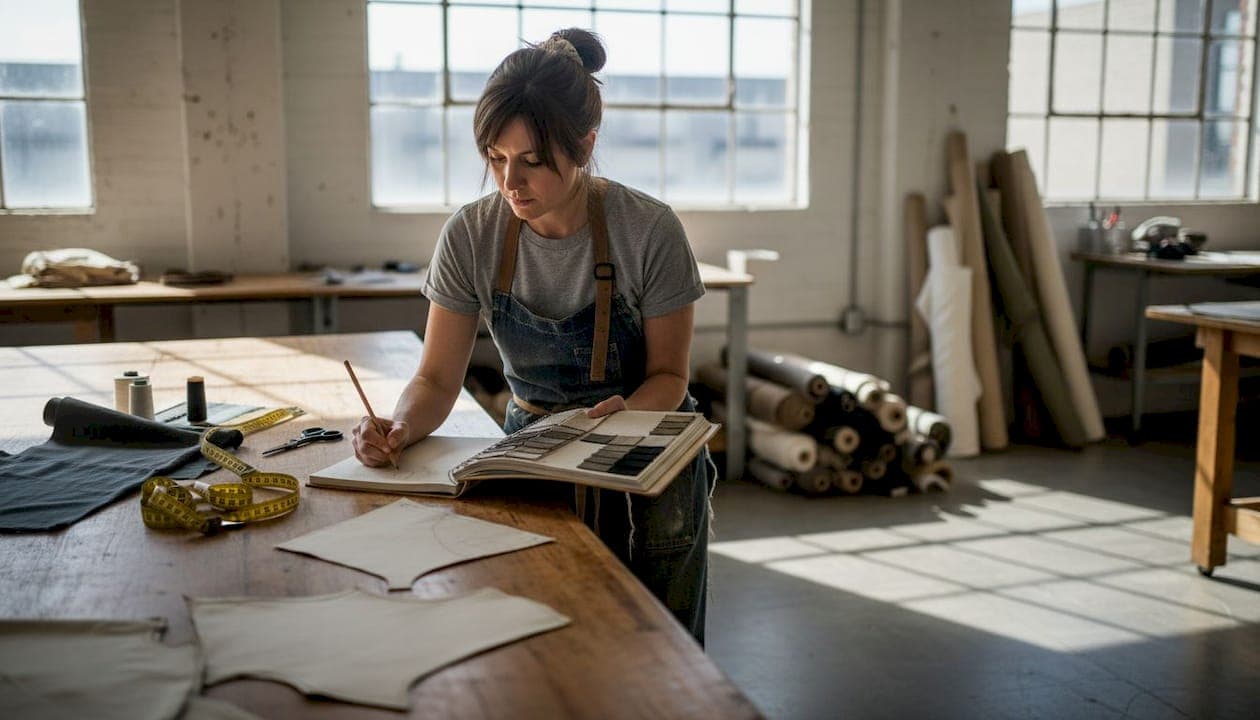
Most fashion brand owners assume that structured, high-quality manufacturing is reserved for large labels with deep pockets and established supplier networks. That assumption is costing smaller brands real money and real time. The truth is that small clothing manufacturing companies now offer serious production infrastructure, clear documentation, and flexible minimums that make scaling genuinely accessible. This guide breaks down how to choose the right small manufacturer, what to expect from their processes, and how to build a production relationship that actually supports your growth.
Table of Contents
- What defines a small clothing manufacturing company?
- How small manufacturers ensure product quality
- Structured workflows and communication: the key to reliable production
- Sourcing fabrics and trims for small-batch production
- When and how to scale up: collaboration models for growing brands
- Red flags and best practices when choosing a small manufacturer
- Take the next step: reliable small-batch manufacturing for your brand
- Frequently asked questions
Key Takeaways
| Point | Details |
|---|---|
| Flexibility | Small manufacturers adapt quickly and allow lower minimums for scaling collections. |
| Quality control | Direct oversight and clear processes help maintain high standards at every step. |
| Structured workflows | Reliable communication and frameworks prevent delays and costly mistakes. |
| Smart sourcing | Small-batch strategies open doors to trusted material suppliers and trims. |
| Strategic partnerships | Choosing the right collaboration model streamlines growth as your brand expands. |
What defines a small clothing manufacturing company?
Small clothing manufacturers typically operate with lean teams, often between 10 and 100 employees, and focus on production runs that range from 50 to 500 units per style. They are not trying to compete with massive offshore factories on volume. Instead, they compete on flexibility, communication, and the ability to adapt quickly when something changes.
These manufacturers usually offer a range of services including design consultation, sampling, small-batch cut and sew, and specialty finishes. Some operate domestically in cities like Los Angeles, while others run hybrid models that combine U.S. development with overseas bulk production. Understanding clothing production terms before your first conversation will save you a lot of confusion.
Here is how small manufacturers compare to large factories across key criteria:
| Factor | Small manufacturer | Large factory |
|---|---|---|
| Minimum order quantity | 50 to 500 units | 500 to 5,000+ units |
| Communication | Direct, responsive | Often layered and slow |
| Flexibility | High | Low |
| Customization | Strong | Limited |
| Lead time | Shorter for small runs | Longer setup time |
Key advantages of working with a small manufacturer:
- Lower MOQs that match your current sales volume
- Direct access to decision makers
- Faster sampling turnaround
- Easier to implement brand-specific requirements
Flexibility and quick adaptation for new brands are core strengths of small manufacturers, and that matters when you are still refining your product. Learning how process systems in fashion production work will help you evaluate any partner you consider.
How small manufacturers ensure product quality
Understanding size alone is not everything. Quality management practices are the backbone of a trustworthy manufacturer. A small manufacturer's biggest quality advantage is proximity. When the team is smaller, oversight is tighter and problems get caught earlier.
Effective quality control at a small manufacturer typically includes:
- Pre-production sample review: A physical sample is approved before any bulk cutting begins
- In-line inspection: Checks happen during production, not just at the end
- Final QA audit: A structured review of finished goods before shipment
- Documented specs: Every style has a written tech pack that guides every step
Direct oversight and closer relationships consistently boost quality outcomes. That is not a coincidence. It is a structural advantage that small manufacturers hold over large-volume factories.
"Small manufacturers can implement brand-specific quality checks more easily than large factories because they are not managing thousands of SKUs at once."
Technology also plays a role. Shared production tracking tools, digital proofs, and real-time photo updates keep you informed without requiring you to be on the factory floor. When you are scaling with quality as your priority, these systems are not optional extras. They are the baseline.
Pro Tip: Always insist on a pre-production sample and ask for documented inspection steps in writing before bulk production begins. If a manufacturer cannot provide this, that is a clear signal to keep looking.
Structured workflows and communication: the key to reliable production
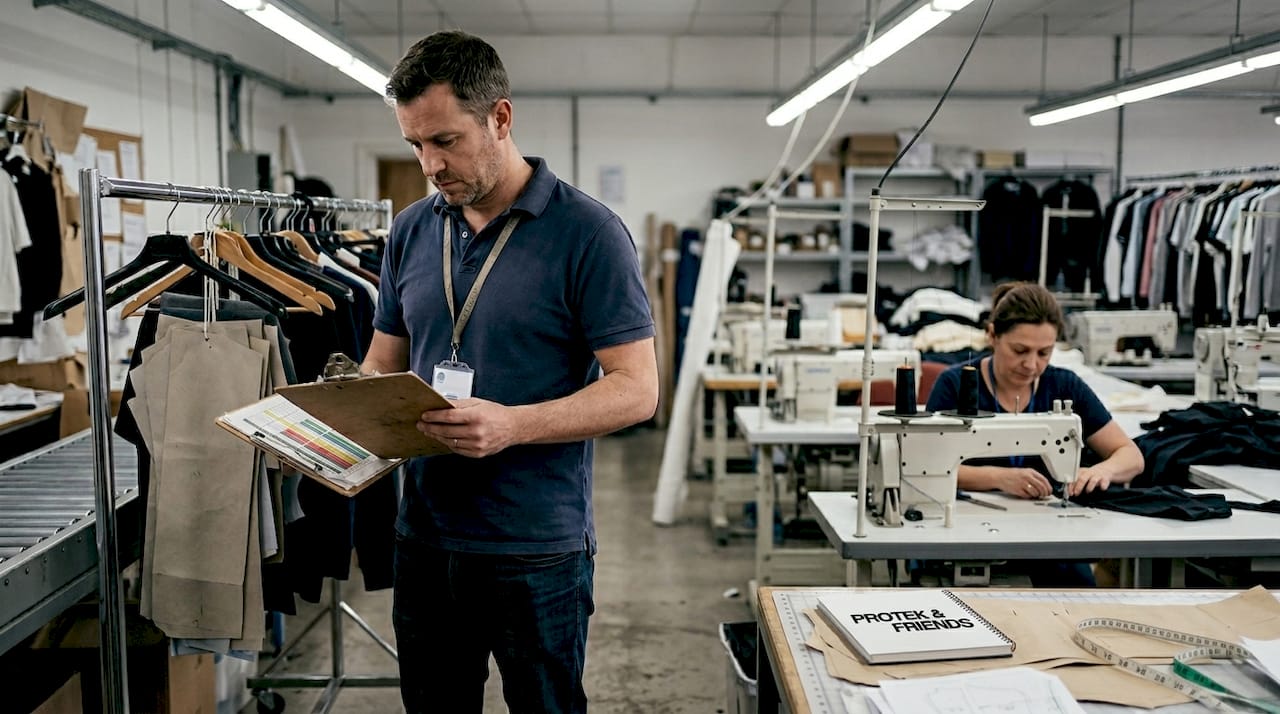
While quality is the foundation, having a repeatable process is what truly allows brands to scale reliably. Ad hoc production, where decisions are made on the fly and communication is informal, creates expensive problems. Structured workflows eliminate that.
Here is what the data shows when comparing workflow approaches:
| Metric | Ad hoc workflow | Structured workflow |
|---|---|---|
| On-time delivery rate | 55 to 65% | 85 to 95% |
| Average cost overrun | 15 to 25% | Under 5% |
| Defect rate | High variability | Consistently low |
| Brand stress level | High | Manageable |
Structured workflows minimize delays and costly errors, and the difference in outcomes is significant. Here is what a structured production process looks like in practice:
- Design brief: You share your concept, references, and requirements
- Tech pack handoff: Detailed specifications are documented and confirmed
- Sampling: A physical prototype is built and reviewed
- Approvals: Fit, fabric, and finish are signed off before moving forward
- Bulk production: Manufacturing begins with clear specs in hand
- QC checks: Inspections happen at key milestones
- Shipping: Delivery is coordinated with tracking and documentation
Knowing how to approach managing clothing production at each stage keeps you in control and reduces surprises.
Pro Tip: Schedule milestone check-ins at the sampling, pre-production, and mid-production stages. Catching a problem at sampling costs almost nothing. Catching it after bulk production is expensive.
Sourcing fabrics and trims for small-batch production
With processes clarified, material sourcing becomes the next crucial challenge. Small-batch sourcing is genuinely harder than sourcing for large orders. Fabric suppliers often set their own MOQs, and those minimums do not always align with what a growing brand needs.
Common sourcing challenges for small brands include:
- Fabric suppliers requiring 100 to 500 yard minimums per colorway
- Limited color and finish options at lower quantities
- Inconsistent supplier reliability for repeat orders
- Difficulty matching trims (zippers, buttons, labels) across production runs
This is where a good small manufacturer adds real value. They often have existing relationships with tested fabric and trim suppliers who offer lower minimums to trusted buyers. Small manufacturers help brands access lower-MOQ fabrics and trims that would otherwise be unavailable to a brand ordering independently.
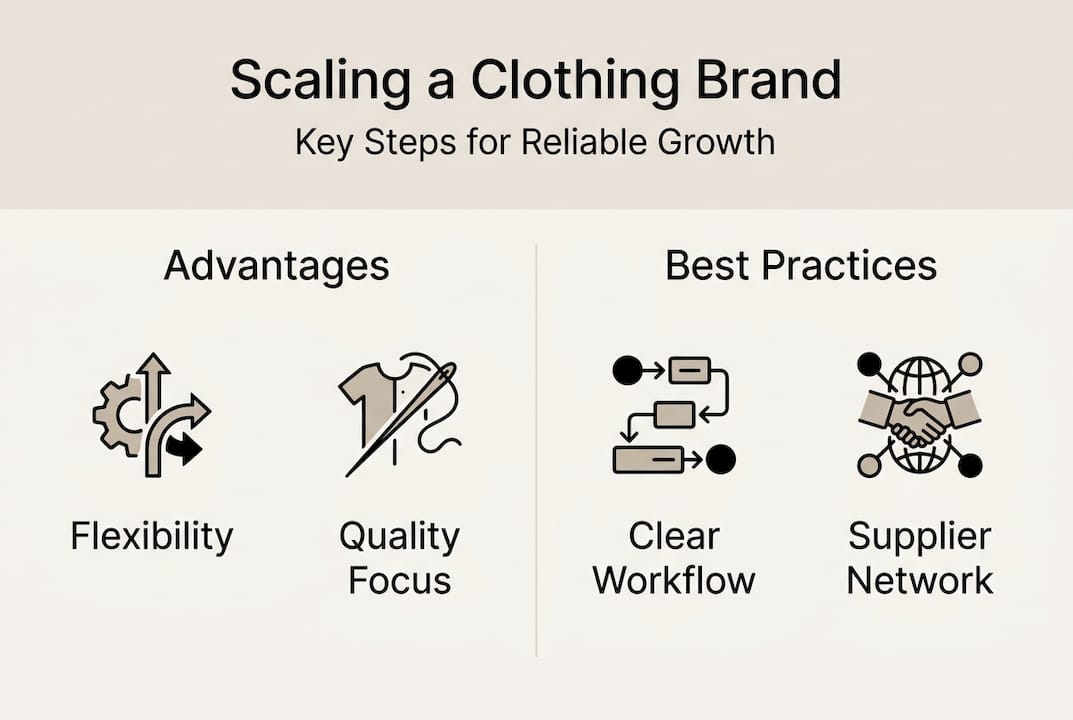
When sourcing on your own, prioritize suppliers who offer sample yardage before committing to a full order. Use that sample to test for shrinkage, color fastness, and hand feel before locking in your fabric choice. A solid fabric sourcing guide can walk you through the full evaluation process.
When and how to scale up: collaboration models for growing brands
Once you master raw materials and workflows, the next step is knowing when and how to scale your brand with the right partner structure. Not every manufacturing model fits every brand stage. Here is a clear breakdown:
| Model | Control level | Cost | Services included |
|---|---|---|---|
| CMT (Cut, Make, Trim) | High | Lower | Brand supplies all materials |
| FPP (Full Package Production) | Lower | Higher | Manufacturer handles sourcing |
| Hybrid | Balanced | Mid-range | Shared responsibilities |
Choosing the right collaboration model can make scaling smoother and reduce risk significantly. Here is how to assess which model fits your brand right now:
- Evaluate your current capacity to source and manage materials independently
- Identify which parts of production cause you the most stress or errors
- Determine your budget flexibility for higher-service models
- Consider your timeline needs and how much oversight you can realistically provide
- Review the factory guide for start-ups to benchmark your readiness
Most growing brands start with FPP or hybrid models because they reduce the operational load while keeping quality standards high.
Red flags and best practices when choosing a small manufacturer
Now that you know the models, let's make sure you are equipped to choose partners who support your success. Not every small manufacturer operates with the same level of professionalism, and the wrong choice can set your brand back by months.
Watch for these warning signs:
- No written contracts or production agreements
- Vague or verbal-only communication about timelines and costs
- Inability to provide references from current clients
- No sampling process or willingness to skip it
- Pricing that changes without explanation
Transparency and documented processes are strong signals of a trustworthy small manufacturer. If a partner cannot show you their system, they probably do not have one.
Positive indicators to look for:
- Open-book pricing with itemized cost breakdowns
- Shared workflow tools or production tracking access
- Clear sampling and approval stages
- Willingness to answer detailed questions before you commit
Before engaging any manufacturer, ask these questions: What does your sampling process look like? How do you handle timeline delays? Can I speak with a current client? What documentation do you provide before production begins? The answers will tell you everything. Reviewing best manufacturers for quality benchmarks can also help you set the right expectations.
Take the next step: reliable small-batch manufacturing for your brand
Armed with this knowledge, you are ready to confidently partner with a manufacturer who can help scale your collection without the chaos.
At Protek & Friends, we built our entire model around what growing brands actually need: clear documentation, structured workflows, transparent pricing, and real communication at every stage. We offer small-batch production services across denim, knitwear, cut and sew, and specialty finishes, with both U.S. and overseas options depending on your timeline and budget. If you are ready to stop guessing and start producing with a system behind you, let's talk. Good production should feel straightforward, and we are here to make sure it does.
Frequently asked questions
What are the minimum order quantities (MOQs) with small clothing manufacturers?
Small manufacturers offer lower MOQs for emerging brands, typically ranging from 50 to 100 pieces per style depending on the service scope and garment complexity.
Can small clothing manufacturers produce custom or complex designs?
Yes. Many small manufacturers specialize in custom development and work hands-on with brands to produce intricate designs that larger factories would not prioritize. Custom garment manufacturing is a core strength of smaller, focused production partners.
How do I vet if a small manufacturer is reliable?
Look for clear documentation, defined QC protocols, current client references, and consistent communication. Transparency and process documentation are the clearest signals that a manufacturer operates with real systems in place.
What is a typical production timeline for small-batch orders?
After sampling approval, most small-batch orders take 3 to 8 weeks depending on complexity and material availability. Structured workflows minimize lead times and help keep timelines predictable from the start.
Can small producers support both USA and overseas manufacturing?
Many do. Small manufacturers can provide both U.S. and overseas production, giving brands the flexibility to choose based on cost, timeline, and quality requirements at any given stage of growth.