TL;DR:
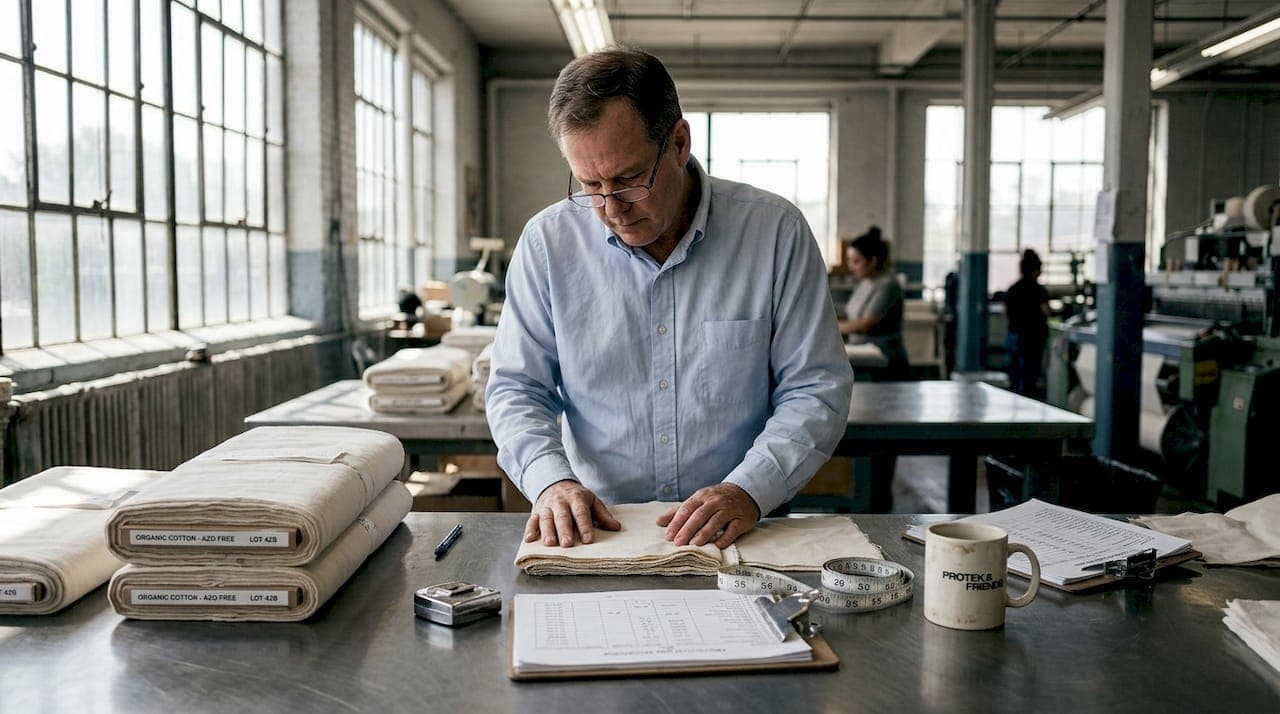
- Not all organic cotton manufacturers provide verified certifications and full supply chain transparency.
- Domestic production offers better oversight, shorter lead times, and clearer traceability compared to overseas models.
- Small brands benefit from focusing on quality control, transparent workflows, and matching manufacturing choices to their values and stage.
Not every organic cotton clothing manufacturer delivers what they promise. Some carry certifications that haven't been verified in years. Others offer vague timelines, inconsistent quality, or supply chains you can't trace past the first tier. For founders building a brand on transparency and quality, the wrong manufacturing partner doesn't just cost money. It costs credibility. This guide breaks down what separates strong organic cotton manufacturers from weak ones, how domestic and overseas models compare, what challenges you'll face in practice, and how to set up a production workflow that actually protects your brand.
Table of Contents
- What sets organic cotton clothing manufacturers apart?
- Domestic vs. overseas production: Key considerations
- Core challenges for fashion brands using organic cotton
- Workflow, materials, and dye choices: The quality equation
- Why small brands should rethink their manufacturing strategy
- See how Protek & Friends helps brands manufacture organic cotton clothing
- Frequently asked questions
Key Takeaways
| Point | Details |
|---|---|
| Certifications matter | Verified organic certifications protect your brand and reassure customers. |
| Domestic means traceability | U.S. manufacturing offers higher transparency and easier communication than most overseas setups. |
| Test before you scale | Small-batch runs uncover fit, shrinkage, and color issues before a big investment. |
| Quality control lowers risk | Hands-on processes and clear QC at each step reduce costly defects and returns. |
| Relationships drive results | Direct engagement with manufacturers leads to better outcomes and happier customers. |
What sets organic cotton clothing manufacturers apart?
Not all organic cotton is created equal, and neither are the manufacturers who work with it. The difference starts at the fiber level and runs all the way through finishing. Understanding the basics of organic cotton helps you ask better questions before signing any agreement.
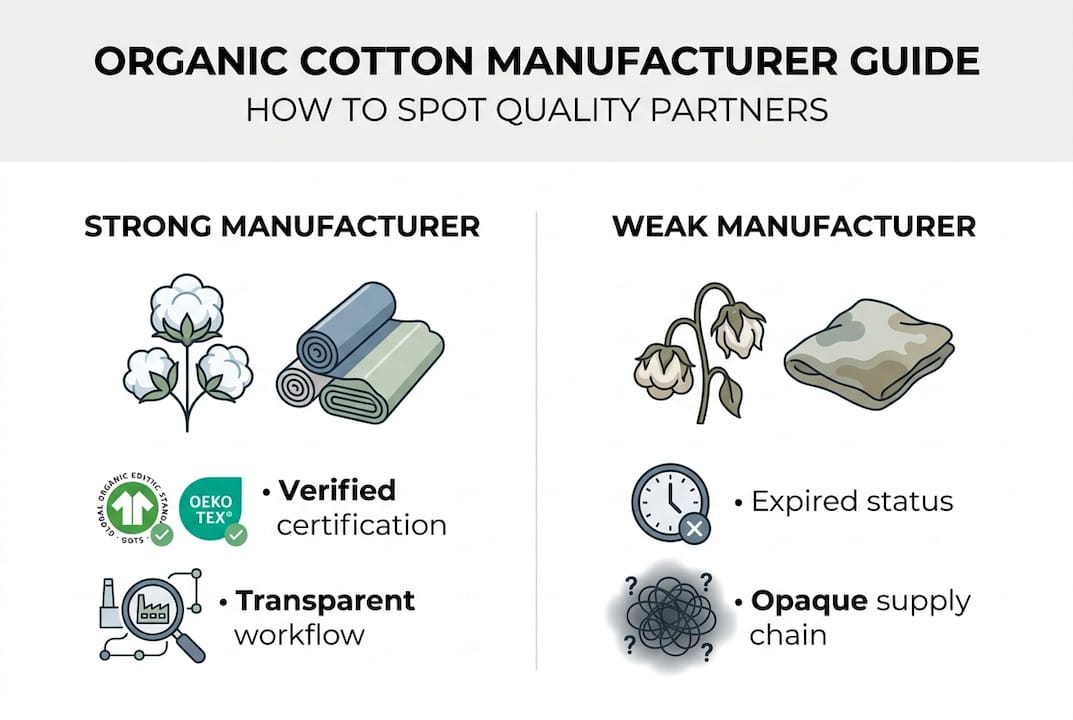
Certifications matter, but only if you verify them. The two most recognized standards are GOTS (Global Organic Textile Standard) and OEKO-TEX. GOTS covers the full supply chain from fiber to finished product, including social criteria. OEKO-TEX certifies that textiles are free from harmful substances. Both are credible, but you should always check the certification databases directly rather than taking a manufacturer's word for it. Certificates expire, and some suppliers present outdated documents without disclosing that.
Organic manufacturing also differs from conventional production in meaningful ways beyond paperwork:
- No synthetic pesticides or fertilizers in fiber cultivation
- Restricted chemical inputs during processing and dyeing
- Lower environmental impact: organic cotton reduces water use by 91% and CO2e emissions by 46% compared to conventional cotton
- Documented supply chain from farm to finished garment
Supply chain transparency is where most manufacturers fall short. A truly strong partner can tell you where the fiber was grown, who spun the yarn, and where each production step happened. Harvest & Mill, for example, uses 100% USA-grown organic cotton with a fully traceable supply chain and keeps all production steps domestic. That level of visibility is rare and worth paying attention to.
"Transparency isn't a marketing claim. It's a system. If a manufacturer can't show you the chain, they don't have one."
Here's a quick comparison of what to look for when evaluating manufacturers:
| Factor | Strong manufacturer | Weak manufacturer |
|---|---|---|
| Certification status | Current, verifiable | Expired or unverifiable |
| Supply chain visibility | Farm to finish | Tier 1 only |
| Chemical usage | Restricted, documented | Unclear |
| QC process | Stage-by-stage | End-of-line only |
| Communication | Structured updates | Reactive, slow |
For a deeper look at what separates reliable partners from risky ones, the sustainable manufacturer quality guide covers the key signals to evaluate before committing. You should also get comfortable with key production terms so you can evaluate proposals with confidence rather than guessing.
Domestic vs. overseas production: Key considerations
Once you know what makes an organic manufacturer unique, the next decision is where production happens. This isn't just a cost question. It's a quality, communication, and risk question.
Here's how the two models compare across the factors that matter most to small and mid-sized brands:
| Factor | Fully domestic (USA) | Overseas or hybrid |
|---|---|---|
| Lead times | Shorter, more predictable | Longer, more variable |
| MOQs | Often lower (100-300 pieces) | Higher for many factories |
| Communication | Same time zone, direct | Delays, language barriers |
| Traceability | High | Varies widely |
| Cost per unit | Higher | Lower |
| QC oversight | Easier to monitor | Harder to control |
For US founders, the tradeoffs are real on both sides. Fully domestic production offers shorter supply chains, easier oversight, and stronger traceability. A hybrid model, where design and development happen in the US but sewing occurs overseas, can reduce cost at scale but introduces more variables around ethics and quality control.
Here's how to think through the decision:
- Define your brand promise first. If transparency and domestic production are core to your marketing, overseas manufacturing creates a credibility gap you'll have to manage constantly.
- Calculate the true cost of overseas production. Add in shipping, duties, QC travel, sample revisions, and the cost of delays. The per-unit savings often shrink significantly.
- Assess your communication bandwidth. Managing overseas factories requires dedicated time and often a local agent. Factor that into your operating model.
- Match the model to your stage. Early-stage brands often benefit more from domestic transparency. At scale, a well-managed hybrid can work if systems are tight.
Small-batch domestic production tends to be pricier but offers more transparency and lower risk. Overseas is cheaper but introduces more uncertainty around QC and ethics. Neither is universally right. The right answer depends on your brand values, your margins, and how much oversight you can realistically provide.
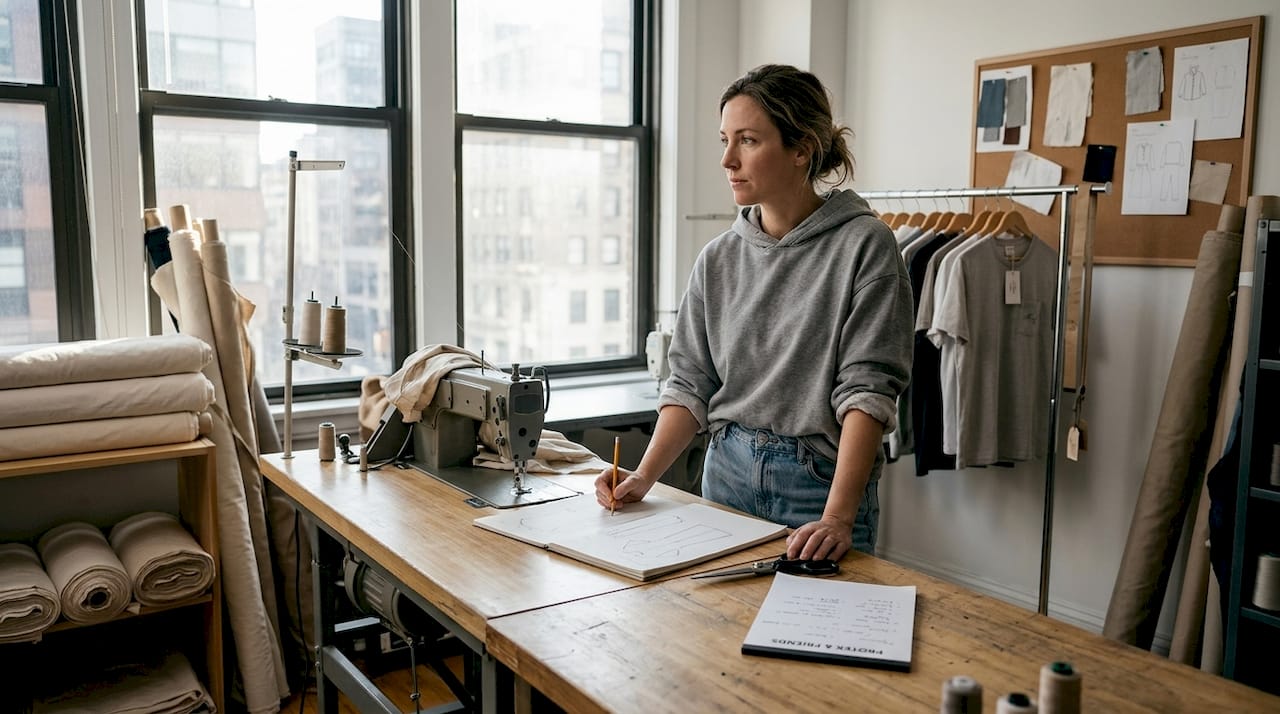
Our clothing production services are built around exactly this kind of decision. A structured production workflow helps you navigate both domestic and hybrid options without losing control of quality or timeline.
Core challenges for fashion brands using organic cotton
Now that models are clear, here's what founders most often struggle with in practice. Knowing these challenges upfront lets you build systems to manage them before they become expensive problems.
Cost premium. Organic cotton costs more than conventional. That's a fact. The fiber itself is pricier, certified processing adds cost, and smaller production runs reduce economies of scale. The key is building this into your pricing model from the start, not treating it as a surprise after sampling.
Maintaining consistent quality and aesthetics. Organic fibers can behave differently than conventional ones. Shrinkage, colorfastness, and hand feel can vary between dye lots. Testing shrinkage, colorfastness, and QC protocols with small batches before committing to bulk production is one of the most effective ways to protect your quality standards.
Supply chain opacity. Many manufacturers claim organic but can't document the chain past their own facility. Demanding full documentation, not just a certificate, is the right move. Engage upstream early, meaning before you sign any agreement.
Cross-continental communication. Time zone gaps, language barriers, and slow response cycles create costly delays. Brands that face challenges like supply chain opacity and communication breakdowns consistently report higher revision costs and longer timelines. Independent certification checks and hands-on upstream engagement are proven solutions.
Here's a practical checklist before committing to any organic cotton manufacturer:
- Verify GOTS or OEKO-TEX certificates directly in the database
- Request a full supply chain map, not just a certificate
- Run a small test batch before bulk production
- Test for shrinkage, colorfastness, and seam strength
- Confirm QC checkpoints at each production stage
- Get communication expectations in writing
Pro Tip: Don't skip the test batch even if a manufacturer has strong references. Organic fiber behavior can vary by season and dye lot. A small upfront investment in testing saves significant rework costs later.
For more on scaling with quality and QC best practices, those resources break down exactly what to check at each stage. The factory scaling guide also covers how to structure your relationship with a manufacturer as your volume grows. Understanding organic cotton challenges before you start production gives you a clear advantage.
Workflow, materials, and dye choices: The quality equation
To overcome these hurdles, focus on the specifics of workflow, materials, and dye choices. These three factors determine whether your organic cotton line meets expectations or falls short.
End-to-end workflow control is the clearest predictor of consistent quality. When spinning, cutting, sewing, and finishing all happen close together, defects get caught earlier. Harvest & Mill keeps all manufacturing steps within 20 miles of their studio, which reduces handoff errors and speeds up problem resolution. That proximity isn't just convenient. It's a quality control mechanism.
Pre-stocked materials matter more than most founders realize. Niche organic yarns and specialty dyes can have long lead times if a manufacturer sources them project by project. Pre-stocked niche yarns and dyes significantly speed up small-batch timelines. When evaluating a manufacturer, ask directly whether they carry inventory of the materials you need or source them fresh for each order.
Dye choices affect both aesthetics and your brand's environmental story. Natural and low-impact dyes are increasingly used as a differentiator for aesthetics and eco-footprint. They also require specific expertise to apply consistently. Not every manufacturer has that expertise, so ask for samples dyed in your target colors before committing.
Here's how workflow stages map to quality outcomes:
| Production stage | Key quality check | Risk if skipped |
|---|---|---|
| Fiber sourcing | Certification verification | Non-compliant materials |
| Yarn spinning | Consistency testing | Uneven fabric weight |
| Cutting | Pattern accuracy | Fit inconsistencies |
| Sewing | Seam strength testing | Returns and rework |
| Dyeing | Colorfastness testing | Color variation in bulk |
| Finishing | Shrinkage testing | Customer complaints |
Pro Tip: Ask your manufacturer for their stage-by-stage QC checklist before production starts. If they don't have one documented, that's a signal their process isn't as structured as it needs to be. For more on dye options and their impact on production, the guide on dyeing organic cotton is a practical resource.
Why small brands should rethink their manufacturing strategy
Here's an honest take that most production guides skip. The instinct to offshore for lower per-unit costs is understandable, especially early on when margins feel tight. But I've seen founders make that trade and pay for it in ways that don't show up on a cost sheet.
When you work with a domestic partner, you can visit the facility. You can see the fabric before it's cut. You can catch a fit problem in week two instead of week eight. That direct engagement lets you adapt faster than any overseas arrangement allows. And when something goes wrong, because it always does at some point, you're solving it with a partner in your time zone who speaks your language.
There's also a customer trust angle that's easy to undervalue. Brands that can genuinely say "made in the USA with verified organic cotton" carry a story that resonates. That story reduces returns, builds loyalty, and supports higher price points. The US-based production success data backs this up. Higher per-piece costs can be offset by lower return rates and stronger customer retention. Small-batch, high-quality domestic production isn't just an ethical choice. It can be a smarter financial one.
See how Protek & Friends helps brands manufacture organic cotton clothing
If you're ready to move from research to production, the right partner makes all the difference.
At Protek & Friends, we work with small to mid-sized fashion brands that are serious about quality, transparency, and getting production right the first time. We support both USA-based and hybrid production models, depending on what fits your brand's goals and budget. Our process covers everything from technical review and fabric sourcing to QC checks and delivery coordination, with clear documentation at every step. If organic cotton clothing manufacturing is your next move, explore our Protek & Friends production services and let's figure out the right approach for your brand together.
Frequently asked questions
How do I verify an organic cotton manufacturer's certifications?
Always check the GOTS and OEKO-TEX databases directly, and request current certificates from any supplier you're evaluating. Never rely solely on a manufacturer's self-reported certification status.
What is the realistic minimum order quantity for small brands?
Many US manufacturers offer flexible MOQs for startups, with small-batch runs from 100 to 300 pieces becoming increasingly common. Domestic partners tend to be more flexible on minimums than overseas factories.
Do natural or organic dyes affect the production timeline significantly?
Niche natural dye projects can face longer lead times, but working with a manufacturer who pre-stocks niche dyes and materials significantly reduces those delays. Ask about inventory before committing.
How much does organic cotton reduce a brand's environmental impact?
Organic cotton can reduce water usage by 91% and CO2e emissions by 46% compared to conventional cotton, making it one of the most impactful material choices a brand can make.
Is US-based production worth the premium for a new fashion brand?
US-based production offers unmatched traceability and supply chain transparency, along with easier QC oversight and direct communication. For growing brands, those advantages often outweigh the higher per-unit cost.